A federal planning commission unanimously approved a permanent White House visitor screening center, replacing temporary trailers the Secret Service said fall short of real security needs.
The National Capital Planning Commission voted Thursday to clear final building plans for the new facility, according to NBC News. All 12 members backed the project.
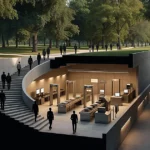
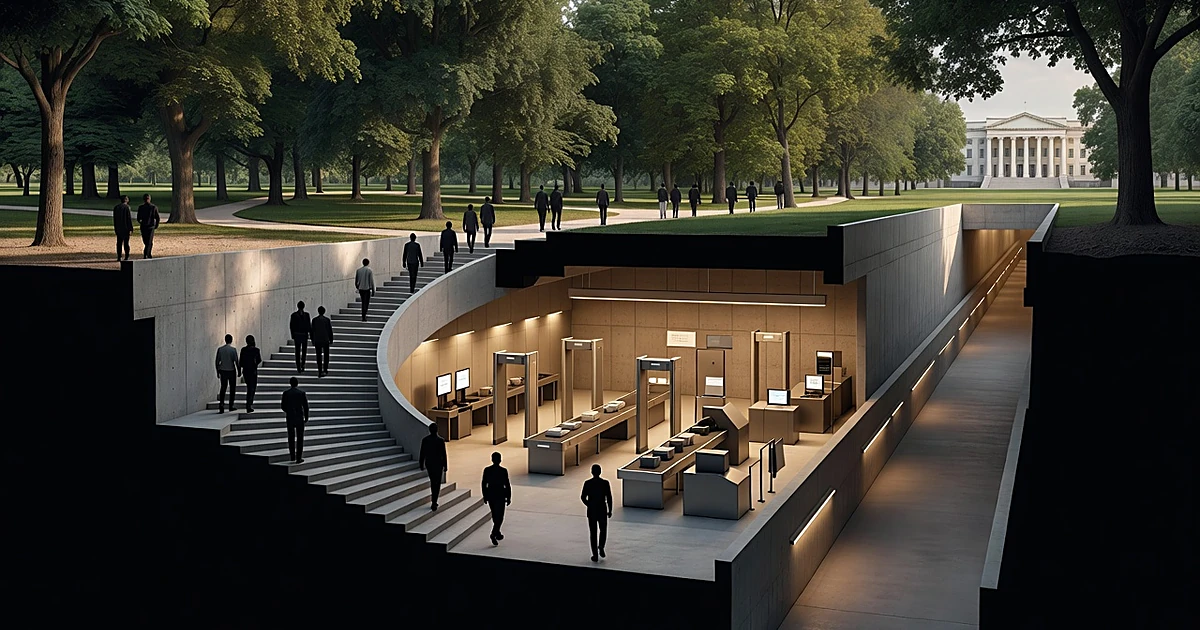
The center will rise off 15th Street in Sherman Park. Visitors will enter below ground for screening, then exit near the East Wing of the White House. Construction is expected to start within the next month and finish sometime in 2028.
Urban planner Lee Webb presented the final plans. The design calls for a versatile indoor open-floor-plan space so the Secret Service can install permanent screening technology. It will also handle significant indoor queuing for large events, with room for a 700-person occupancy.
That marks a clear upgrade from the current setup. The Secret Service has said the temporary double-wide trailers and tents on the grounds do not meet its security needs.
Commission chairman Mark Paoletta, a Trump appointee, spoke at the proceeding and welcomed the permanent structure.
"I look forward to the beautiful building being built on the White House grounds."
Paul Ingrassia, the General Services Administration representative on the board and another Trump appointee, called the facility part of a broader renewal of the presidential complex.
"an incredible part of this White House reimagining we’ve been seeing."
One presenter noted the exit will feature Corinthian columns meant to “align with the ballroom’s language.” The commission had already approved plans in April for a 90,000-square-foot ballroom at the former East Wing site.
The screening center sits inside President Donald Trump’s larger overhaul of the White House grounds. That work has included gold adornments in the Oval Office, a helipad on the White House lawn, and other projects around Washington, among them a proposed Triumphal Arch.
Trump has pressed for results across national security files, including when he demanded accountability from former FBI Director Wray over the Butler assassination attempt probe.
The 12-member National Capital Planning Commission includes representatives appointed by Washington Mayor Muriel Bowser, a Democrat. Every member still voted yes.
That consensus undercuts any claim that a permanent screening building is a partisan flourish. It is a basic physical answer to a security shortfall the Secret Service itself identified.
Visitors to the people’s house should not be funneled through temporary trailers and tents that professionals have already flagged as inadequate. A below-ground entrance with permanent technology and indoor queuing is the ordinary fix a high-threat site requires.
The same focus on concrete outcomes has marked other recent decisions, from the moment Trump signed a sweeping Russia sanctions bill into law to his push for workable defense arrangements abroad.
Webb’s presentation stressed the open floor plan’s flexibility. Secret Service teams will be able to lock in lasting screening gear instead of improvising around temporary structures. The 700-person capacity also means large event days can move people indoors rather than leaving lines exposed outside.
Work is slated to begin in the coming month. Finish date remains sometime in 2028. The September 2026 submission materials filed with the commission carried project reference 8763 and laid out the final design package.
Paoletta’s board did not split along appointment lines. Trump appointees and Bowser appointees reached the same conclusion: the temporary arrangement is not good enough for the White House.
That kind of institutional agreement is rare in Washington and worth noting. When the agency charged with protecting the president and its visitors says trailers fall short, the responsible answer is a permanent building with proper technology, not another season of tents.
Trump has likewise kept pressure on foreign-policy timelines, whether finalizing approval for Ukraine to produce Patriot missiles or citing the monthly death tolls as he presses for a deal.
The visitor screening facility is smaller in scale than a ballroom or a helipad, yet it sits at the practical center of daily White House operations. Every tour group, every credentialed guest, and every large event will pass through it.
Design details such as the Corinthian columns show the administration is not treating security as an afterthought bolted onto the grounds. The exit is meant to speak the same architectural language as the ballroom already under way.
Ingrassia’s description of a “White House reimagining” fits the pattern. Permanent screening technology, indoor capacity for 700, and a finish line in 2028 replace a stopgap the Secret Service has already judged insufficient.
Voters expect the executive mansion to look presidential and to function securely. A unanimous planning commission vote, including members named by a Democratic mayor, is evidence that this particular upgrade clears both tests.
Trump has also moved quickly to reject weak or misleading claims in the sanctions arena, as when he branded an Axios Iran sanctions report a hoax and demanded it be pulled.
Here the record is simpler. The Secret Service needed better tools. The commission approved them without dissent. Construction is set to start soon.
Secure borders and secure public buildings start with the same principle: stop pretending temporary fixes are permanent solutions. The White House is finally getting a screening center built to last.