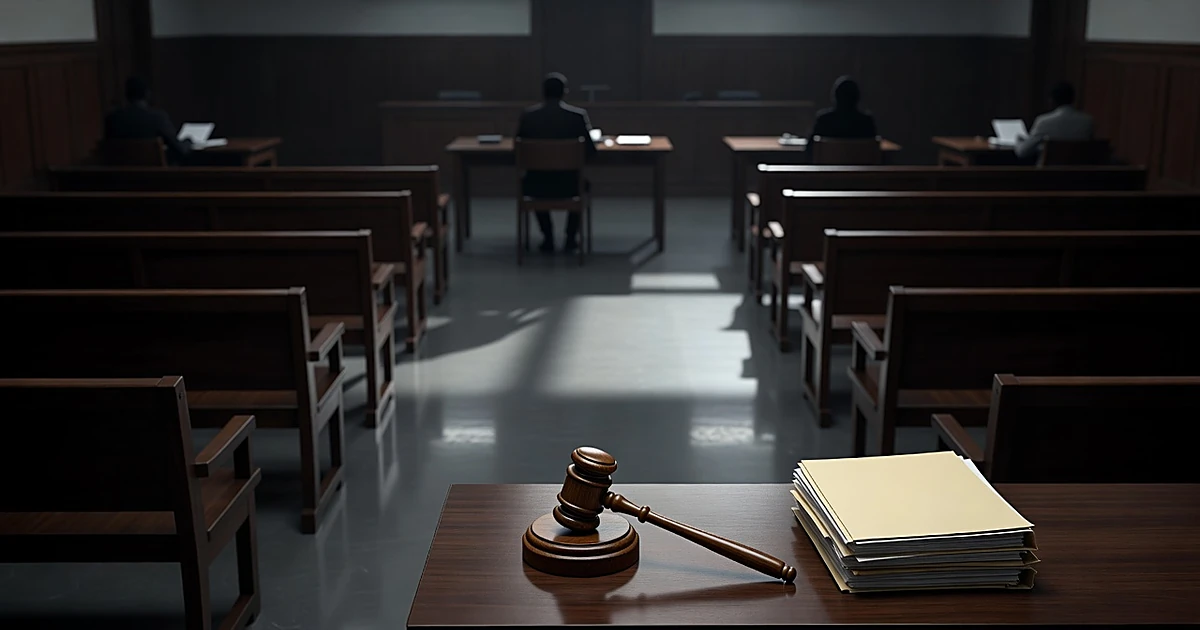




The Supreme Court turned away an appeal from alleged 9/11 mastermind Khalid Sheikh Mohammed seeking to restore plea deals that would have locked in life sentences and blocked the death penalty, leaving the government’s withdrawal intact.
In an unsigned order issued Monday in Washington, the high court rebuffed efforts by Mohammed and two alleged accomplices to revive pretrial agreements reached with military prosecutors in 2024. Those deals had been withdrawn by then-Defense Secretary Lloyd Austin. The government’s withdrawal remains in place.
CBS News reported that Mohammed, Mustafa al Hawsawi, and Walid bin 'Atash sought to overturn a lower-court decision that blocked a military judge from enforcing the agreements. Justice Brett Kavanaugh did not participate in the court’s consideration of the appeal.
Under the 2024 terms, the three defendants would have pleaded guilty to all charges tied to their alleged roles in the Sept. 11 attacks and served life sentences, avoiding capital punishment. Five of the charged crimes carry the death penalty. Austin revoked the agreements shortly after they were announced.
A military judge ruled in November 2024 that Austin’s nullification was unlawful and that the deals remained valid and enforceable. A military appeals court later said Austin could not rescind them because the defendants had begun to perform one of the terms.
The Justice Department then asked the D.C. Circuit to step in. That court sided with the government and held that the defense secretary had the authority to withdraw.
The D.C. Circuit panel stated the secretary’s power in plain terms.
"The Secretary acted within the bounds of his legal authority, and we decline to second-guess his judgment,"
The appeals court also described the defense secretary as having “indisputably” held the authority to pull out of the plea deals.
That ruling left the withdrawal standing. Monday’s Supreme Court action closed the latest attempt to reverse it. The cases remain before the military commission system at Guantanamo Bay.
Mohammed, long identified as the accused architect of the Sept. 11 plot, and the two alleged accomplices were captured in 2003. They were held in secret CIA facilities, then moved to Guantanamo Bay in 2006 and formally charged in 2008.
Prosecutors charged them before a military commission with several crimes linked to planning and carrying out the attacks. More than two decades after capture, the proceedings have still not reached a full trial.
Retired Brigadier General Susan Escallier, the convening authority overseeing the Guantanamo military court, approved the 2024 agreements after her appointment. Military lawyers had begun discussing plea options following that appointment in 2023. Austin’s revocation followed soon after the deals became public.
A judge overseeing the cases later set a trial date of June 2028, contingent on the parties meeting deadlines and milestones on time. That schedule now stands without the plea framework the defendants tried to restore.
Kavanaugh’s non-participation drew notice given his record in other high-profile matters, including cases where Kavanaugh has signaled lasting views on election rules even after short-term blocks.
The larger Court has faced sharp public pressure from multiple directions in recent terms.
Critics of soft resolutions for the Sept. 11 defendants have long argued that life pleas short-circuit full accountability for an attack that killed nearly 3,000 people on American soil. The Biden administration’s decision to revoke the deals kept the death penalty on the table. Lower military rulings briefly revived the agreements; civilian appellate review then restored the secretary’s withdrawal.
Supreme Court action in other arenas has also drawn direct pushback, including episodes in which Trump rebuked the Court over major rulings on core policy fights.
Here the justices simply declined to take the case. No signed opinion explained the denial. The practical result is clear: the plea deals stay dead, and the capital charges remain available if the military commission reaches a verdict.
Internal Court dynamics have surfaced elsewhere as well. One justice has openly urged colleagues to change pace on fast-moving matters, a tension visible when Jackson pressed the Court over its emergency docket.
For the 9/11 defendants, the path now runs through the military system without the life-sentence guarantee they sought. Mohammed and his co-defendants spent years in CIA custody before Guantanamo. The commission process that followed has been marked by repeated delays, jurisdictional fights, and contested evidence rulings.
Families of the murdered and the broader public have watched the clock run from the 2001 attacks through captures in 2003, charges in 2008, plea talks in 2024, and a projected 2028 trial window. The Supreme Court’s refusal to revive the deals keeps the original capital exposure in force rather than converting it into automatic life terms.
Separate political fights over the Court’s direction have included pointed complaints about nominee voting patterns, such as when Trump faulted his own high-court picks for frequent no votes.
None of that altered Monday’s outcome. The unsigned order left the D.C. Circuit’s judgment undisturbed and the Austin withdrawal operative. Military prosecutors can continue toward trial on the full set of charges.
The same Court that has drawn fire in election and administrative cases also declined, in a separate recent matter, to fully endorse certain ballot restrictions, a result covered when the Supreme Court sided against mail-ballot limits ahead of the next midterms.
In the Guantanamo litigation the justices chose not to intervene. The alleged plotters remain subject to the military commission process. Life sentences via plea are off the table unless new agreements are reached and sustained. The June 2028 trial date, if met, would finally put the capital counts before a panel more than a quarter-century after the attacks.
Victims’ families and the country still wait for a verdict. The Supreme Court just made sure the easiest off-ramp stays closed.