

Republican Rep. Mike Lawler of New York acknowledged a drunk driving arrest from his past in a News 12 interview that aired Wednesday night, a disclosure that lands in the middle of one of the most competitive House races in the country.
Lawler, who represents New York's 17th congressional district, sat down with News 12 reporter Tara Rosenblum for what she described as his "first one-on-one interview about a drunk driving arrest from his past." The Daily Caller reported on the interview excerpt Wednesday afternoon, noting that Lawler's office did not respond to its request for comment.
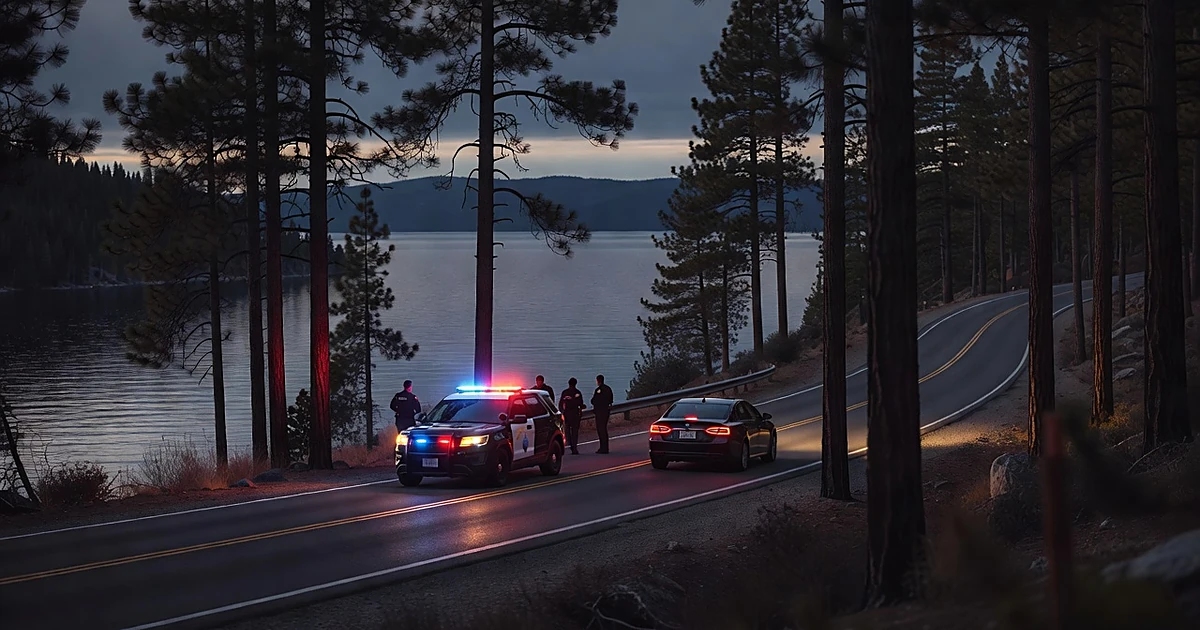
The congressman did not dodge the question. In the clip, Lawler described the circumstances plainly:
"I was going to see friends in the city and ultimately went down to the city and proceeded to drink, and ultimately made a decision to drive home. It was certainly not my proudest moment."
He added that he was grateful nobody was hurt and that "it certainly taught me a valuable lesson."
The interview excerpt left significant gaps. The date of the arrest was not disclosed. Neither was the jurisdiction, the specific charges, nor the legal outcome, whether Lawler faced a conviction, entered a plea, or had the matter dismissed. Those details may emerge when the full News 12 interview is reviewed, but as of the clip's release, the public record remains thin.
What Lawler did share was personal. He referenced his late father, whom he described as a "recovering alcoholic" who had been sober for nearly 20 years before his death. Lawler said the arrest left him feeling he had let his father down:
"It really made me sad that I had done that and disappointed him, especially in that moment."
That kind of candor is rare in politics. Whether voters in the 17th district treat it as a mark of honesty or a disqualifying lapse will depend on the details that follow, and on whether Lawler's opponents choose to weaponize the admission.
The disclosure carries an extra layer of irony. In July 2024, Lawler posted on his official congressional account that he had received the "Legislative Hero Award" from Mothers Against Drunk Driving. "Nothing is more important than the safety of our residents," he wrote, "and that will continue to be my highest priority."
That award followed Lawler's work on anti-drunk-driving legislation. He joined Democratic Rep. Debbie Dingell of Michigan in urging implementation of the HALT Drunk Driving Law, which would require new motor vehicles to include technology that prevents an impaired driver from operating the car. In a separate bipartisan bill introduced alongside Reps. Gillen and Dingell, Lawler cited grim numbers: drunk driving deaths had risen 22 percent since 2019, and someone is harmed by it every 85 seconds.
There is no inherent contradiction in a lawmaker who made a serious mistake working to prevent others from repeating it. But the timeline matters. If the arrest predated the legislative push, Lawler's advocacy could be read as atonement. If it came after, the optics shift considerably. The source does not resolve that question.
Voters will have to decide whether personal experience with a problem makes a lawmaker more credible on the issue, or less. That calculation is never purely rational, especially in a district where every marginal vote counts.
Lawler holds one of the most closely watched House seats in the country. His district, New York's 17th, is the kind of suburban swing territory that decides congressional majorities. He has already drawn attention for pushing back against the Trump administration over its termination of temporary protected status for Haitian health care workers, a move that positioned him as an independent voice but also drew fire from parts of the Republican base.
Now he faces a different kind of scrutiny. Political figures caught in legal trouble, whether criminal charges, financial controversies, or personal misconduct, face a familiar calculus: get ahead of the story or let opponents define it. Lawler appears to have chosen the former. The sit-down interview with News 12 was, by Rosenblum's own framing, an exclusive, suggesting Lawler cooperated rather than stonewalled.
That approach stands in contrast to the way other prominent political figures have handled similar situations. Getting out front with a frank admission is a better strategy than letting the facts trickle out through leaks and opposition research.
Still, transparency only goes so far without specifics. The public deserves to know when the arrest occurred, what charges were filed, and how the case was resolved. A lawmaker who asks voters for trust owes them a complete account, not just the emotional highlights.
Conservatives rightly demand accountability from public officials. That standard does not bend for party affiliation. When authority figures are caught in wrongdoing, the expectation is straightforward: own it, face the consequences, and demonstrate that the conduct has stopped.
On that front, Lawler's public statements check some of the boxes. He did not minimize the arrest. He did not blame circumstances or other people. He said he made a decision to drive after drinking, called it his lowest moment, and expressed gratitude that no one was harmed.
But words are the easy part. The harder questions are factual. Was there a conviction? Was there a plea deal? Did Lawler disclose the arrest to voters before this week, or did it surface only because a reporter dug it up? Those answers will determine whether this is a story about a man who learned from a mistake, or about a politician who kept an inconvenient fact buried until it became unavoidable.
The pattern of political figures facing belated scrutiny over past conduct is familiar enough that voters have developed sharp instincts for distinguishing genuine contrition from damage control. Lawler will need to provide the full record if he wants voters to land on the right side of that judgment.
The full News 12 interview may fill in some of the blanks. Lawler's opponents in the 2026 race will almost certainly press for more detail. And MADD, which gave Lawler its hero award two years ago, may face questions about whether it knew of the arrest when it honored him.
For now, the story is incomplete. The congressman has acknowledged a drunk driving arrest, expressed remorse, and pointed to his legislative record on the issue. He has not provided the facts that would let voters fully evaluate the episode. In a district this competitive, that gap will not stay open for long.
The security and safety concerns that dominate public life, from high-profile incidents involving public figures to the daily toll of impaired driving, demand leaders who practice what they preach. Lawler says the arrest taught him a lesson. Voters will decide whether the lesson was learned early enough to matter.
In politics, the confession is never the hard part. The hard part is the record that follows it.