


Rep. Thomas Massie forced a surprise impeachment vote against Defense Secretary Pete Hegseth on the same day the House disposed of a Democratic attempt to impeach President Trump, leaving both parties scrambling.
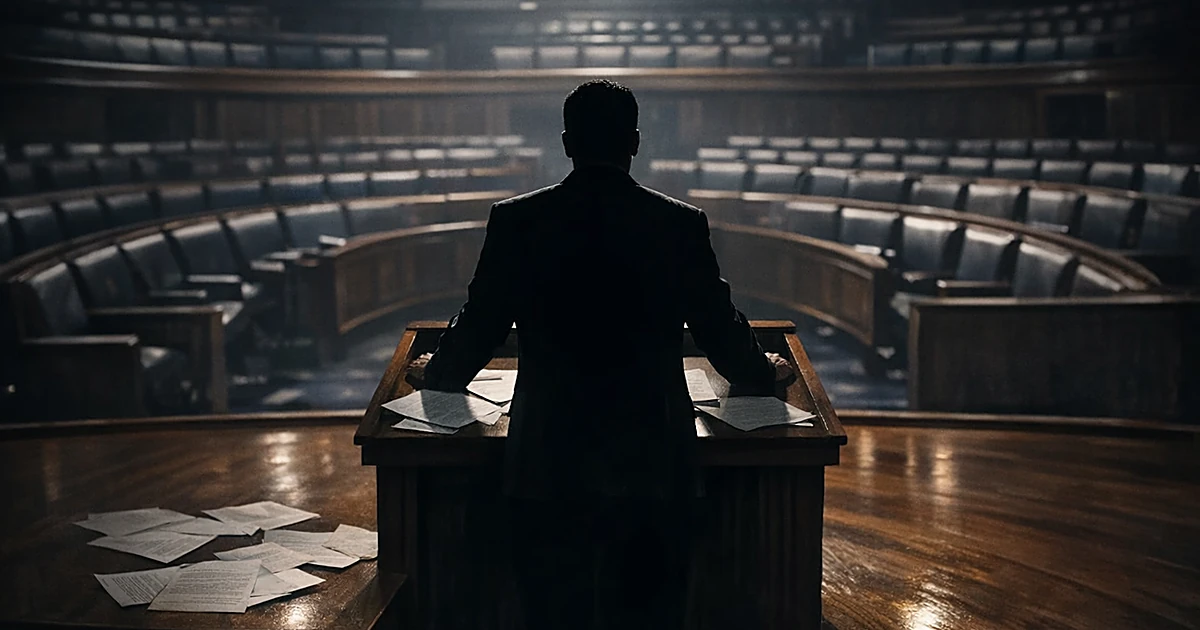
Massie, a Kentucky Republican who lost his primary earlier this year to a Trump-backed challenger, announced his intention to force a floor vote on a 34-page impeachment resolution against Hegseth on Tuesday, catching party leaders completely off guard. He spent multiple hours reading the resolution aloud on the House floor, laying out allegations that Hegseth abused his authority in conducting military operations against Iran, kept troops deployed without congressional authorization, carried out unlawful orders, and participated in what Massie called the "kidnapping of a sovereign foreign leader", a reference to the capture of Venezuelan then-President Nicolás Maduro.
The move came hours before the House voted to table a separate impeachment resolution against President Trump introduced by Rep. Al Green, a Texas Democrat. The result: a single Tuesday that forced both parties into uncomfortable procedural fights they did not want, with a seven-week recess and midterm elections bearing down on every member.
Multiple Republican sources told CNN they were furious that Massie did not inform party leaders before making his move. The congressman offered no apology. He told reporters Tuesday afternoon that secrecy was the point.
"I didn't give anybody heads-up. When they found out I was doing the Epstein discharge petition, they canceled two weeks of Congress, and I think if they found out I was going to do this, they might have canceled even more days."
The remark was a direct shot at House leadership's handling of the congressional calendar, a sore subject for conservatives who have watched legislative priorities stall as leaders shorten session weeks ahead of the midterms. Massie, who will not return to Congress next year after his primary loss, had nothing left to lose and made that clear.
His 34-page resolution lays out several charges. It accuses Hegseth of repeatedly abusing the powers of his office in leading what Massie describes as the U.S. war with Iran. It alleges Hegseth carried out unlawful orders and continued troop deployments without the congressional authorization the Constitution requires. And it accuses the Pentagon of seizing Maduro "under the guise of narcotics law enforcement, though in actuality intended to assert U.S. control over Venezuela's oil reserves."
The resolution states that Hegseth "has demonstrated that he will remain a threat to the Constitution if allowed to remain in office, and has acted in a manner grossly incompatible with his duties and the rule of law."
Attorney General Todd Blanche pushed back from the White House Rose Garden on Tuesday, defending Hegseth's record and insisting the Defense Department operates within legal boundaries.
"Secretary Hegseth is doing a phenomenal job, and the secretary of war doesn't just go off and do things. So, he follows the law. And so the DOJ plays a role in that, and we play an active role in making sure the laws are complied with."
Blanche's use of the phrase "secretary of war", the original title for the position now called secretary of defense, was notable but unexplained. His broader point was that the Justice Department actively reviews the legality of Pentagon operations, a claim that amounts to a blanket defense of every action Massie's resolution challenges.
Before Massie's surprise, Democrats had spent the day managing their own impeachment headache. Rep. Al Green forced a floor vote on articles of impeachment against President Trump, a move that Democratic leaders had been privately dreading for days. Green, who also lost his primary earlier this year and will leave Congress, has made impeachment his signature cause across both Trump administrations.
The House voted to table Green's resolution Tuesday afternoon. Green has a long history of forcing these votes. In June 2025, the House voted 344-79 to table his impeachment article accusing Trump of abuse of power over strikes on Iranian nuclear facilities, with 128 Democrats joining Republicans to defeat the effort. In a subsequent attempt, the House voted 237-140 to dismiss another Green resolution, with 47 Democratic lawmakers voting present rather than taking a firm position.
That pattern of Democratic division has been consistent. In an earlier round, 18 House Democrats crossed party lines to vote with Republicans to table Green's impeachment articles, which at that time accused Trump of abusing his authority in handling immigration enforcement agencies.
House Minority Leader Hakeem Jeffries and the Democratic leadership team tried to thread the needle on Monday night, issuing a joint statement that praised the concept of impeachment while distancing themselves from Green's execution of it. Jeffries and his deputies said impeachment is "a sacred constitutional vehicle designed to hold a corrupt executive accountable for abuse of power, breaking the law and violating the public trust." But the statement went on to note that the process requires "comprehensive investigative" work to lay out evidence and convince the American public, work, they said, that Green had not done.
Jeffries announced Democrats would vote "present" on the procedural measure, a dodge that let members avoid going on the record either for or against impeaching the president. For a caucus whose base wants Trump impeached a third time, but whose path to a House majority runs through battleground districts Trump won, the "present" vote was a political escape hatch.
The tension within Democratic ranks has been building for months. Jeffries has tried to keep his caucus focused on the cost of living, a kitchen-table message aimed at swing voters. Green's repeated impeachment gambits pull the party back onto terrain that energizes the progressive base but risks alienating the moderates Democrats need to flip seats. The frustration was evident in one unnamed Democratic aide's blunt assessment of the day's events.
"Just when you think Al Green screws us, Massie turns around and gives it right back to the Rs."
The procedural reality is straightforward. Once Massie introduced his privileged impeachment resolution, the House must hold a vote on it within the coming days, unless leadership decides to send the chamber home early. Neither option is attractive for Republicans heading into a seven-week recess with midterm campaigns in full swing.
Republicans do not want Massie to make history as the first member to impeach a Cabinet secretary from his own party, particularly a congressman who already lost his primary and is effectively a lame duck. The political optics of a GOP-on-GOP impeachment fight, with Hegseth already facing bipartisan oversight demands over his military personnel decisions, give Democrats a talking point they did not have to earn.
For Democrats, the calculus is different but no less awkward. Green's impeachment push forced members to take a position on Trump at exactly the moment Jeffries wanted them talking about grocery prices and housing costs. And while Massie's move against Hegseth briefly lifted Democratic moods, handing Republicans their own intraparty mess, it also raised the question of whether Democrats would vote for a Republican's impeachment articles against a Trump Cabinet member, a move that could carry its own political risks in competitive districts.
The day exposed a structural problem that has plagued House leadership on both sides throughout this Congress: individual members with nothing to lose can hijack the floor calendar with privileged motions, and party leaders have limited tools to stop them. Green and Massie are both leaving Congress. Neither has to face voters again. And both used the procedural rules to force votes their respective parties desperately wanted to avoid.
Strip away the political chaos, and Massie's 34-page resolution raises questions that serious lawmakers in both parties have asked in other contexts. Whether the executive branch can wage sustained military operations, against Iran or anyone else, without explicit congressional authorization is not a fringe concern. It is a debate as old as the War Powers Resolution of 1973, and Massie's allegations about unauthorized troop deployments land squarely in that tradition.
His accusation that the capture of Maduro amounted to a "kidnapping" conducted under a narcotics pretext to seize Venezuelan oil reserves is a more provocative claim, and one that the resolution's 34 pages apparently attempt to document at length. Whether those pages contain the kind of evidence that would survive scrutiny is an open question, one the House may or may not get to examine before members scatter for recess.
But the substance of Massie's charges is almost beside the point in the current political environment. With GOP leaders focused on holding the House and selling the party's economic agenda ahead of the midterms, an impeachment sideshow is the last thing leadership wanted on the floor. Massie knew that. He did it anyway.
Green, for his part, has been at this since 2017, when he first introduced articles of impeachment against Trump, charging the president with inciting white supremacy, sexism, and bigotry. Nearly a decade later, the results have not changed. Every resolution has been tabled. Every vote has revealed the same Democratic divisions. And every attempt has given Republicans a chance to paint Democrats as obsessed with impeachment rather than governing.
Tuesday's dueling impeachment spectacles did not produce a single conviction, a single removal, or a single policy change. What they produced was a vivid picture of a Congress where two outgoing members, one from each party, both freed from electoral consequences, can grind the House to a halt over grudges, principles, or some combination of the two.
When the people with nothing to lose are the ones setting the agenda, the people who sent them there are the ones who pay for it.