


A Biden-appointed federal judge ruled that a Tulsa County deputy violated the Fourth Amendment by using Flock cameras to pull weeks of a driver’s travel history, and suppressed the evidence.
U.S. District Judge Sara E. Hill held that the deputy’s use of Flock automated license plate reader data amounted to an unconstitutional search, the Washington Examiner reported.
The ruling centers on a simple fact pattern. A Tulsa County sheriff’s deputy tapped Flock license plate reader technology, pulled weeks of one driver’s travel history, and built a case from what followed. Hill ordered the evidence obtained after that search thrown out.
That is the core of the decision: not a press release about “smart policing,” but a federal finding that this use of ALPR data crossed the Fourth Amendment line.
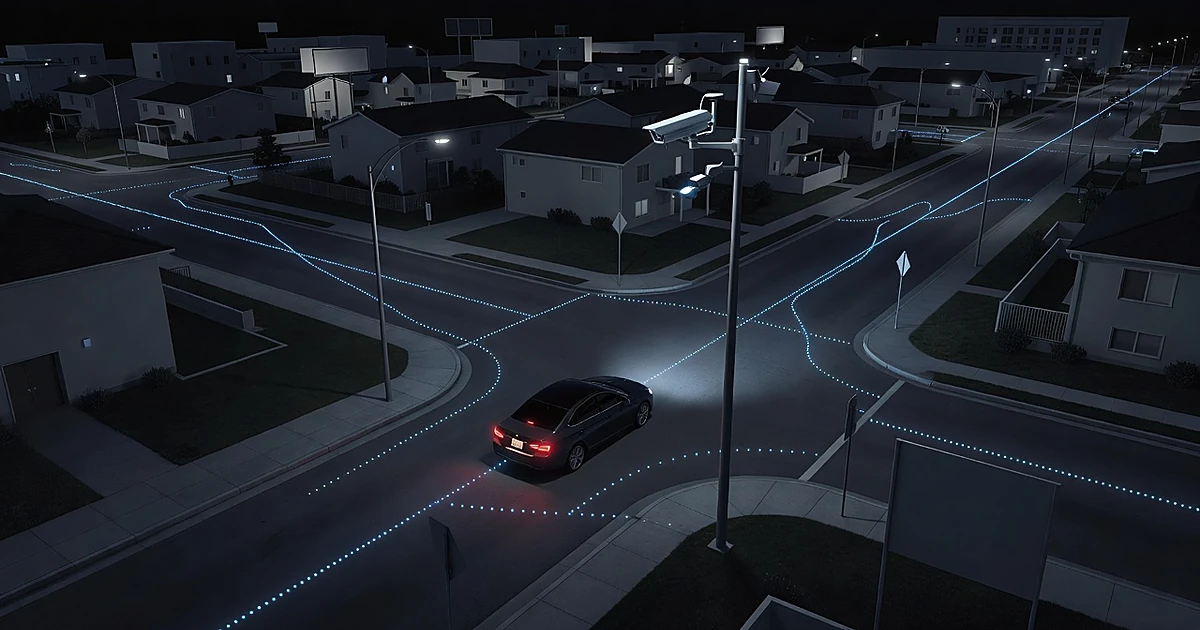
Automated license plate readers scan plates in public and log where and when cars pass fixed or mobile cameras. Flock supplies that technology to agencies across the country. In this case, the deputy did not merely spot a plate in real time. He reached back across weeks of stored travel history on a single driver.
Hill found that step was a search under the Fourth Amendment. She suppressed the evidence that came after it. The driver and the deputy were not named in the available account, and the full case caption and ruling date were not provided. What is clear is the holding: this ALPR deep dive was unconstitutional, and the fruit of it could not be used.
Hill also warned that systems like this risk creating a nationwide “dragnet” of mass surveillance. That word matters. It is the court’s own caution about scale, cameras plus long data retention plus easy queries, not a activist slogan grafted onto the file.
Biden-appointed judges have cut different ways in other high-stakes fights, including when a Biden-appointed judge struck down a major Trump administration visa policy and when another Biden appointee’s gun-ban ruling rattled progressive advocates.
Here the same appointing label sits on a privacy-and-policing fight. Constitutional limits do not bend because the tool is new or the agency is local.
Suppression is not a press conference. It means prosecutors lose the evidence tied to the unlawful search in the case before the court. Hill’s order hits that practical lever. It does not, by itself, revise every Flock contract in America. It does put a federal marker on how far officers may go when they turn a plate-reader network into a multi-week travel diary.
Open questions remain thick. The precise number of weeks, the underlying criminal investigation, the deputy’s name, and the full opinion text were not in the report. The mechanism that is known is still enough to understand the stakes: stored ALPR history, queried at length, treated by a federal judge as a search that needed to meet Fourth Amendment rules, and failed them.
Other recent bench fights show how fast federal rulings can reset the field, from a federal judge clearing a path on Temporary Protected Status to a Boston judge lifting a final block on a Trump mail-in voting order after higher-court action.
Those cases involved different statutes and facts. This one is about plates, databases, and how long law enforcement may look backward without crossing into a general tracking regime.
Police work needs good technology. It does not get a blank check because a vendor calls the product innovative. The Fourth Amendment was written for government power, not for the comfort of any one administration’s preferred enforcement style. When a deputy can pull weeks of a person’s movements from a camera network, the court is right to ask whether that is a targeted stop or the seed of a permanent watchlist on wheels.
Hill’s “dragnet” warning is the sober point. Mass collection plus easy historical search is how ordinary patrol support becomes something closer to continuous monitoring. Conservatives who want safe streets also want lawful process, particularized suspicion, and judges who can say no when the method outruns the charter.
Taxpayers fund both the cameras and the courts. They deserve agencies that catch criminals without treating every driveway and commute as fair game for retrospective mapping. A suppression order in Tulsa County will not end ALPR. It does draw a bright line on one abuse of it.
If law enforcement wants these networks to last, it will have to live inside the Constitution, not the other way around.