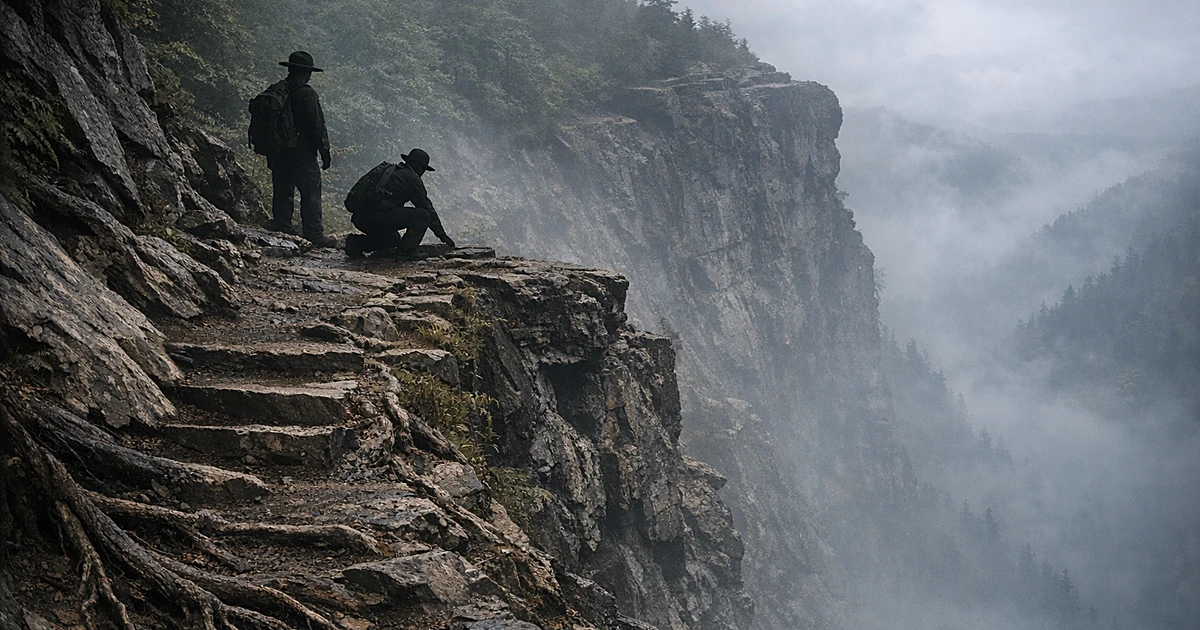





A 65-year-old woman died Saturday after falling from a roughly 60-foot cliff along the Alum Cave Trail in Great Smoky Mountains National Park, park rangers said Monday. Officials who responded to the scene said they were unable to resuscitate her.
The fatal fall occurred on one of the most popular hiking routes in the Smokies, a trail the National Park Service itself warns becomes "very steep" as it climbs toward Mount LeConte, one of the highest peaks in the range. Rangers reached the site after receiving reports that a woman had gone over the edge. No further details about how the fall happened have been released.
The woman's name has not been made public. Fox News Digital reported that it reached out to Great Smoky Mountains National Park for additional information but did not indicate whether a response had been received.
The Alum Cave Trail sits on the Tennessee side of the park, which spans remote, rugged, mountainous terrain along the North Carolina, Tennessee border. The round-trip hike covers 4.6 miles and draws heavy foot traffic from casual day-hikers and experienced backpackers alike.
The National Park Service website notes that the path grows increasingly steep as it ascends toward Mount LeConte. A 60-foot drop along that kind of terrain leaves almost no margin for error, and, on Saturday, no chance for survival.
Authorities have not said whether the woman was hiking alone or with a group, whether weather or trail conditions played a role, or whether she left the marked path before the fall. Those are basic questions the public deserves answers to, especially on a trail that funnels thousands of visitors each season toward exposed, high-altitude terrain.
The cliff fall was not the only life-threatening episode in the park that weekend. Just a day earlier, on Friday, two park visitors were hospitalized after massive boulders slammed into their vehicle during a sudden rockslide, the Charlotte Observer reported, citing the National Park Service.
Both victims in the rockslide incident were expected to survive, though their vehicle sustained heavy damage. The road involved was not identified in available reporting.
Two serious incidents in consecutive days at the same national park raise a fair question: is the Park Service doing enough to warn visitors about the real dangers of this landscape? When investigations into sudden deaths unfold elsewhere in the country, the public rightly expects transparency and urgency. The same standard should apply here.
As of Monday's announcement, critical details remain missing. Park officials have not disclosed the woman's identity, the precise location of the fall along the Alum Cave Trail, or the circumstances that led her over the cliff's edge. Whether an investigation is ongoing, and who is conducting it, has not been addressed publicly.
The gap between Saturday's incident and Monday's sparse announcement is itself notable. Rangers responded to the scene on Saturday. The public learned about the death two days later, with little more than a bare-bones confirmation.
Families planning summer trips to the Smokies have a right to know what happened and what, if anything, the Park Service plans to do about safety on a trail it acknowledges is dangerously steep. A 4.6-mile round-trip hike sounds manageable. A 60-foot cliff drop does not.
Great Smoky Mountains National Park is the most visited national park in the country. That popularity means millions of hikers, many of them families, many first-timers, walk trails that pass through genuinely hazardous terrain every year. Exposed cliffs, sudden rockslides, and steep grades are features of the landscape, not anomalies.
The Park Service posts warnings on its website. But a website disclaimer and a trailhead sign are cold comfort to the family of a 65-year-old woman who went for a hike on a Saturday morning and never came home.
When two people end up in the hospital from a rockslide on Friday and a woman dies on a cliff the next day, the agency owes the public more than a Monday press statement and silence. Accountability means answering hard questions promptly, not waiting for the news cycle to move on.
The people who visit these parks are taxpayers, retirees, and families. They deserve straight answers and safe trails, not bureaucratic quiet.