

A 27-year-old woman was found beaten to death inside her Washington Heights apartment Sunday afternoon, her battered body left near a five-year-old child who had been alone with her for an unknown stretch of time, and the suspect remains at large.
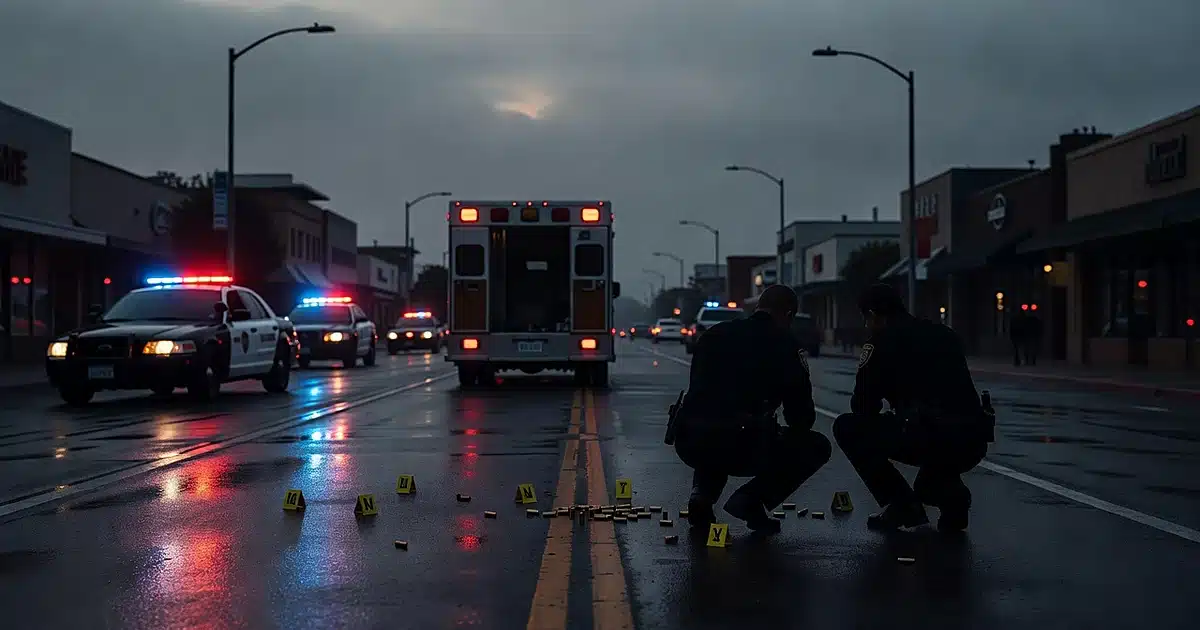
NYPD officers responding to a wellness check shortly after 1:30 p.m. forced their way into the apartment on 156th Street near Amsterdam Avenue and found Lovay Williams dead, her face and neck badly beaten, the New York Post reported. The child, described as unharmed, had been left in the apartment with Williams's body. No one else was inside.
Police described the incident as apparently domestic in nature. The suspect's identity and relationship to Williams were not immediately clear, and no arrests had been made as of publication. The New York City Office of the Chief Medical Examiner will determine the official cause of death.
What investigators have not said publicly may matter more than what they have. Who called in the wellness check, and why, has not been disclosed. How long the five-year-old spent alone with Williams's body before officers arrived remains unknown. Whether a weapon was used or recovered has not been addressed.
The bare facts of this case are grim enough. A young woman dead from a beating. A small child, five years old, found in the same apartment with no adult present. An "unknown length of time" between whatever happened to Lovay Williams and the moment officers walked through the door.
That phrase, "unknown length of time", deserves to sit with readers. It means investigators either do not yet know or have chosen not to say how long a kindergarten-age child was left with a dead woman's body before anyone checked. The wellness call that prompted the NYPD visit may eventually answer part of that question, but police have released no details about who made the call or what prompted it.
Cases like this one land hardest on the people closest to the violence, children, neighbors, family members left to absorb consequences they had no hand in creating. New York has seen no shortage of such cases. The city's record on fatal violence in public and private spaces continues to test whether its institutions can protect the most vulnerable before a wellness check becomes a body recovery.
Police said the suspect was "still on the loose" but offered no name, no physical description, and no indication of how close they might be to an arrest. Sources characterized the killing as apparently domestic, a label that typically points investigators toward someone the victim knew, a partner, an ex, a family member. But the NYPD has not confirmed any such connection on the record.
The absence of a public suspect description raises its own set of concerns. If police believe this was a domestic incident, meaning the suspect and victim knew each other, the risk to the general public may be limited. But "appears to be domestic" is a long way from a confirmed identification and an arrest warrant. Until the suspect is in custody, residents near 535 West 156th Street are left to wonder.
High-profile murder cases in New York have a way of exposing gaps in the systems meant to prevent them. Families of victims in other cases have demanded transparency from courts and investigators when they felt the process was moving too slowly or concealing too much. Whether Williams's family will face similar frustrations depends on how quickly the NYPD moves from "at large" to "in custody."
The killing took place in Washington Heights, a densely packed neighborhood in upper Manhattan where residential buildings sit shoulder to shoulder along narrow cross streets. Amsterdam Avenue, one of the area's main corridors, runs just steps from the building where Williams was found. Neighbors would have had little reason to suspect what was happening, or had already happened, inside the apartment.
Domestic violence cases are notoriously difficult to prevent because they happen behind locked doors, often with no witnesses and no prior police contact. The National Domestic Violence Hotline, referenced in connection with this case, can be reached at 1-800-799-SAFE (7233) or by texting START to 88788.
But prevention requires more than a hotline number appended to a news story. It requires a criminal justice system that treats violent offenders seriously before they graduate to homicide, a system that keeps dangerous people off the streets rather than cycling them through courts that too often fail to deliver accountability.
Cold cases and delayed identifications remind the public how easily victims can fall through the cracks. Decades-old remains have been identified through DNA long after families gave up hope. Lovay Williams's case is fresh, and the window to catch her killer is still open. The question is whether New York's law enforcement apparatus will close it before it isn't.
A five-year-old sat alone with a dead woman's body while a suspect walked free. If that doesn't concentrate the minds of the people responsible for public safety in this city, nothing will.