




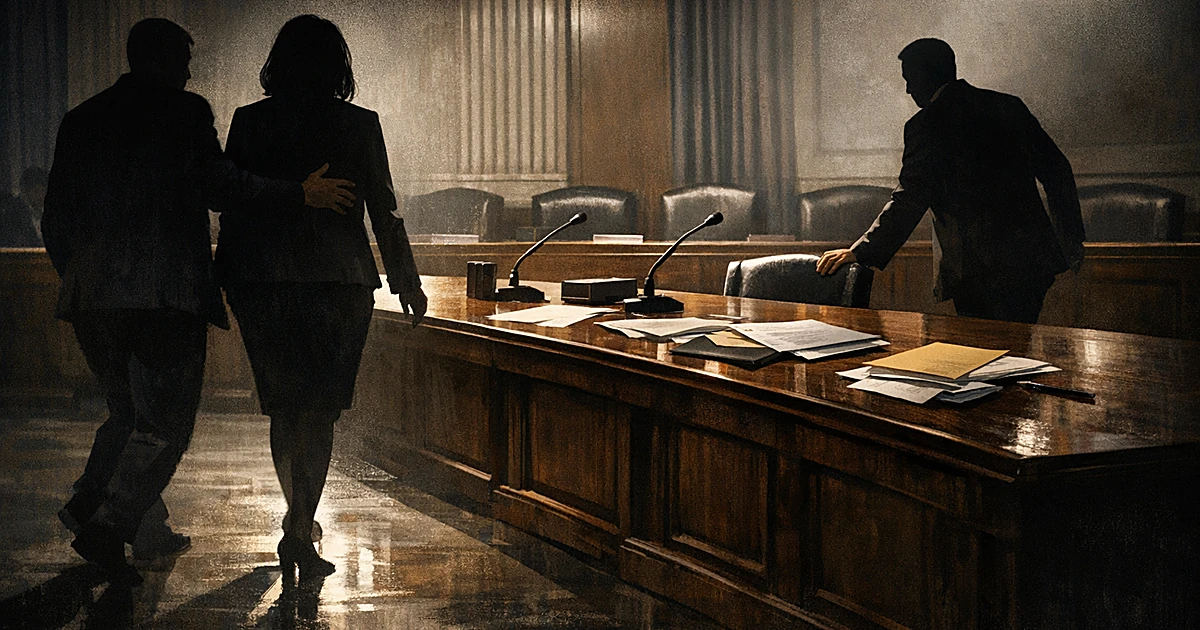
Minnesota Gov. Tim Walz removed Shireen Gandhi from the top job at the Minnesota Department of Human Services on Monday, just one day before she was scheduled to face what was expected to be a bruising confirmation hearing over hundreds of millions of dollars lost to fraud on her watch.
Gandhi, who had served as acting commissioner since early 2025 and was formally tapped by Walz for the permanent role in February, will not leave state government entirely. Instead, she was reportedly demoted back to a deputy commissioner role within the same agency she just led. John Connolly, the department's deputy administrator in charge of Medicaid, will step into her old position.
The timing tells the story. Rather than let Gandhi sit before state lawmakers and answer for a fraud scandal that has consumed Minnesota's social services apparatus, Walz pulled her out of the line of fire. The governor framed the move as a management upgrade. Critics say it was a retreat designed to spare his administration further embarrassment, and that keeping Gandhi on the payroll in any capacity insults the taxpayers who footed the bill.
At the center of the controversy is the Housing Stabilization Services program, or HSS, which Fox News Digital reported was originally estimated to cost under $3 million. By 2024, disbursements from the program had exceeded $100 million. Federal officials considered the "vast majority" of that sum to be fraudulent.
A Minnesota House probe found that providers used the names of eligible beneficiaries to obtain funds through inflated or fake reimbursement claims. The alleged fraud network has been connected to Minneapolis's Somali community. Under Gandhi's leadership, MNDHS shut down the HSS program in October, but only after the losses had already mounted into nine figures.
The state auditor went further, alleging that MNDHS itself had fabricated or backdated documents going back to before Gandhi even became commissioner. That allegation raises questions not just about Gandhi's tenure but about deep institutional rot within the department.
Gandhi herself admitted in an interview with Minneapolis's NBC affiliate that MNDHS had not acted fast enough to quash the HSS scandal. The department also created a fraud "fact-check" website, a move that struck many observers as more public relations than public accountability.
Walz described the DHS commissioner role as the "hardest job" in the state. In a statement, he cast the leadership change as a step forward rather than a concession of failure.
"Today, we're building on our success by putting an even stronger structure in place; adding leadership, improving oversight, and ensuring these programs are managed with the discipline and accountability Minnesotans expect. That's how we protect care and deliver for families."
He also said his administration is "focused on stability and results." But the record that preceded Monday's move tells a different story, one of a program that hemorrhaged taxpayer money, an agency accused of doctoring its own paperwork, and a commissioner who acknowledged her department moved too slowly.
The governor has previously rushed to claim credit when federal agents raided fraud-linked sites, even after his administration had spent months downplaying the scope of the problem.
Gandhi, for her part, said she remains honored to have led the agency under Walz and pointed to what she called her work on "aggressive and proactive" efforts to protect Minnesota's Medicaid program, detect and prevent fraud, and improve internal culture at the department.
State Sen. Paul Utke, a Republican from Park Rapids, did not mince words. He argued the problem started with the appointment itself, and that keeping Gandhi on staff compounds the mistake.
"We could have avoided this entire circus had Gov. Walz seriously considered who was best-equipped to lead DHS in the first place; someone who denies the existence of fraud was never fit to lead the agency experiencing the most fraud our state has ever seen."
Utke went further, calling Gandhi's continued employment a direct affront to taxpayers.
"Keeping [Gandhi] on board as a deputy commissioner does a disservice to every single taxpayer that has lost money to the fraud she has totally failed to address."
That criticism cuts to the core of the issue. In most workplaces, an employee who presides over a nine-figure loss and admits the organization didn't act quickly enough does not get reassigned to a slightly lower rung on the same ladder. They get shown the door.
The fraud scandal drew immediate federal attention. The White House moved to hold hundreds of millions in Minnesota Medicaid funds over fraud concerns, putting direct financial pressure on the state to clean house.
Walz responded by going on the offensive against Washington. He blamed federal Medicaid administrator Dr. Mehmet Oz and President Donald Trump for playing "politics with Minnesotans' health care." That framing, casting the state as a victim of federal overreach rather than the site of historic mismanagement, has become a recurring feature of Walz's public posture throughout the scandal.
Meanwhile, congressional Republicans have accused Minnesota officials of actively enabling welfare fraud, a charge that extends well beyond any single commissioner or program.
Fox News Digital reached out to Walz and MNDHS for additional comment. The agency oversees disbursement of social services funding, including Medicaid and housing assistance, programs that serve some of the state's most vulnerable residents and that depend on public trust to function.
The Gandhi episode does not exist in a vacuum. It fits a pattern in which the Walz administration has been slow to acknowledge the scale of fraud in Minnesota's social services programs, quick to deflect blame toward federal officials, and reluctant to impose real consequences on those who failed in their oversight duties.
Walz pledged loyalty to Somali Minnesotans at a public rally even as fraud allegations tied to the community continued to mount, a move that signaled political solidarity but did little to address the systemic failures that allowed hundreds of millions in taxpayer dollars to vanish.
The FBI raids on fraud-linked sites across Minneapolis offered a stark visual of how far the problem had spread. Empty storefronts and shuttered facilities told a story that no "fact-check" website could paper over.
And now the official who oversaw the agency at the center of it all has been quietly shuffled into a lesser role, not fired, not held publicly accountable, just moved down one floor in the same building.
Several questions hang over the shakeup. No official document or formal action formalizing Gandhi's removal or reassignment has been publicly identified. The exact scope of the Minnesota House probe's findings, beyond the summary description of inflated and fake reimbursement claims, remains unclear. The state auditor's specific allegations about fabricated or backdated documents have not been tied to a named report.
And the biggest question of all: if the "vast majority" of more than $100 million in HSS disbursements in 2024 was fraudulent, who will be held accountable, not just reassigned, but genuinely held to account?
Walz says he wants "discipline and accountability." So far, what Minnesota taxpayers have gotten is a leadership reshuffle and a press release. That's not accountability. That's choreography.