

U.S. Central Command struck Iranian missile and drone storage sites and coastal radar installations near the Strait of Hormuz on Friday, hours after Iran launched explosive drones at a commercial cargo ship in what President Donald Trump called "a foolish violation of our ceasefire agreement."
The strikes came swiftly. Trump warned reporters in the Oval Office that Iran would face consequences. Shortly after, CENTCOM announced it had carried out the retaliatory operation, which AP News reported concluded within approximately one hour.
The sequence of events, a ceasefire signed, a drone attack launched, a retaliatory strike executed, lays bare the fragility of any agreement with Tehran. Iran signed a memorandum of understanding with Washington just last week, pledging to facilitate safe passage of commercial shipping through one of the world's most important maritime chokepoints. Days later, its forces attacked a cargo ship transiting that same waterway.
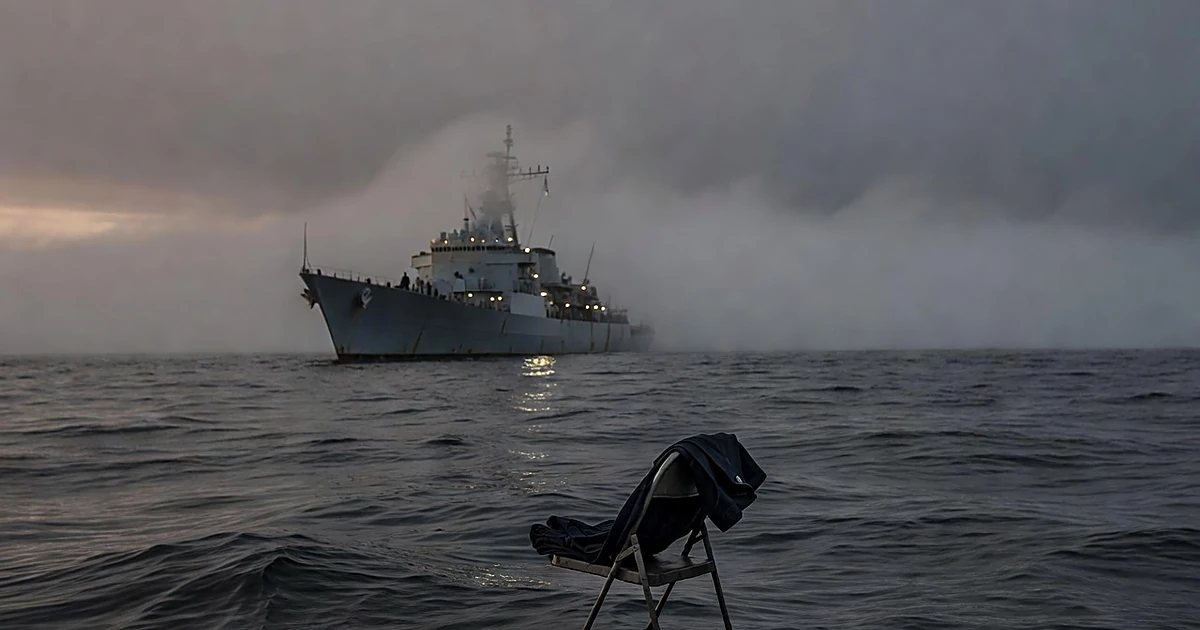
Iran launched at least four one-way attack drones at ships in the Strait of Hormuz on Thursday. U.S. forces intercepted three of them. The fourth struck the upper deck of the Ever Lovely, a Singaporean commercial cargo vessel, Breitbart reported. The ship sustained damage but exited the strait without casualties.
Trump described the attack from the Oval Office on Friday:
"I don't like the fact that they took a shot yesterday. Actually, four, we knocked down three [drones aimed] at a ship, not an allied ship, but a ship, a very expensive ship and it was fine, but it took a little beating."
When asked what would come next, Trump kept it short: "They shouldn't be doing that. So, you'll find out."
They found out within hours. CENTCOM confirmed U.S. aircraft struck Iranian missile and drone storage locations and coastal radar sites. In a statement, the command said the attack on commercial shipping "clearly violated the ceasefire."
Vice President JD Vance reinforced the message on social media. Fox News reported Vance's warning to Tehran:
"Iran signed a ceasefire agreement. We have honored it."
He added bluntly: "Violence will be met with violence."
The memorandum of understanding between Washington and Tehran established a 60-day ceasefire framework following weeks of regional military activity. Under its terms, Iran was expected to facilitate safe passage for commercial vessels through the strait without imposing transit fees. The agreement was meant to de-escalate a confrontation that had already produced significant military clashes, including Iran's downing of a U.S. Apache helicopter near the strait.
That ceasefire now looks like little more than a piece of paper Tehran signed to buy time.
The drone attack on the Ever Lovely did not come in isolation. The New York Post reported that Iran's Revolutionary Guard had issued an explicit warning just hours before the strike, declaring that ships not following Iran's own sanctioned route through the strait would be "dealt with." The IRGC statement read: "Vessel traffic outside these routes is extremely dangerous and prohibited. Violators will be dealt with."
Four additional ships were halted and turned around by Iranian forces on the same day after attempting to use a UN-backed Omani coastal route, the very corridor the international community had established to move vessels safely through the chokepoint.
In other words, Iran signed an agreement promising safe commercial passage, then attacked a ship using the agreed-upon route and physically blocked four others.
The International Maritime Organization responded by pausing its evacuation plan along the Omani corridor. IMO Secretary General Arsenio Dominguez stated: "I have been informed of an attack today in the Gulf of Oman. Seafarer safety remains paramount. To ensure coordinated approach & navigational safety, the IMO evacuation plan will be paused until further clarity."
That pause leaves stranded commercial vessels in limbo and raises the stakes for global energy markets. Roughly 20 percent of the world's oil supply transits the Strait of Hormuz. Trump said earlier in the week that oil shipments through the region had surged to record levels, a sign the ceasefire was working, at least briefly, before Iran shattered it.
The Revolutionary Guard's demand that all vessels use an Iranian-approved channel amounts to Tehran asserting sovereign control over an international waterway. The ceasefire was supposed to end exactly that kind of coercion. Instead, Iran used the breathing room the MOU provided to reassert its grip.
The Trump administration has requested $87.6 billion in supplemental funding tied to the broader conflict, with more than $70 billion designated for military costs, Newsmax reported. That is a significant price tag. But the alternative, allowing Iran to hold the world's energy supply hostage while violating agreements it signed days earlier, carries its own costs, measured in oil prices, shipping insurance premiums, and the credibility of American deterrence.
Previous rounds of escalation had already tested the administration's resolve. Trump vowed to hit Iran "very hard" after earlier military confrontations, and the administration followed through. The pattern is now established: Tehran provokes, Washington responds.
Reuters reported that Iran has promised its own retaliation for the U.S. strikes. That threat should surprise no one. Iran's playbook has not changed in decades, sign agreements under pressure, violate them when convenient, escalate when challenged, and claim victimhood throughout.
The broader regional picture remains volatile. The ceasefire MOU was negotiated amid reported internal friction within the administration over the terms of engagement with Tehran. The diplomatic complexity is real. But the operational question is straightforward: when a country attacks a commercial vessel in an international waterway one week after promising not to, what do you do?
Several details remain unclear. CENTCOM has not publicly described the full scope of its strikes or the damage inflicted on Iranian military assets. Iran has not specified what form its promised retaliation will take. The specific terms of the MOU beyond the 60-day ceasefire framework and safe-passage provisions have not been made public.
The IMO's pause on evacuation operations leaves an unknown number of commercial vessels stranded or rerouted. How long that pause lasts will depend on whether Iran decides the cost of Friday's strikes outweighs the benefit of continuing to harass shipping traffic.
The administration's earlier success in pressuring Iran to halt strikes after a direct ultimatum showed that Tehran responds to credible force. Friday's retaliatory operation tested that proposition again. The answer will come in what Iran does next, not in what it says.
Ceasefire agreements work only when both parties honor them. When one side treats them as a pause to reload, the other side has no obligation to pretend diplomacy is still operating. The administration acted accordingly, and the burden now sits squarely where it belongs, on Tehran.