



President Donald Trump announced Tuesday that he is pausing “Project Freedom,” the U.S. effort tied to the movement of ships through the Strait of Hormuz, while keeping what he called “the Blockade” in place.
The decision, described in New York Post reporting on Trump’s Truth Social statement and administration comments, comes as Trump publicly signals “Great Progress” toward what he called a “Complete and Final Agreement with Representatives of Iran.”
For Americans who have watched Washington drift between bluster and retreat in the Middle East, the key detail here is not the pause itself. It’s the sequence: an operation described as defensive, early ship movement through a chokepoint, then a pause “for a short period of time” to test whether diplomacy can actually close.
Trump’s statement tied the pause to a request from Pakistan and other countries, to what he called “tremendous Military Success” in the campaign against Iran, and to negotiations he says are nearing a finish line, without dropping the leverage of the blockade.
And unlike the hazy “process” talk Americans often get from foreign-policy officials, the White House is laying out a direct premise: pressure stays; the tactical posture shifts; a deal must be finalized and signed.
Trump put the terms plainly in his own words, writing that the U.S. and others “have mutually agreed” to a temporary halt. He also said the blockade would continue.
Trump wrote on Truth Social that the decision was driven by requests from “Pakistan and other Countries,” military success against Iran, and progress in talks. He added that “while the Blockade will remain in full force and effect,” the ship-movement mission “will be paused for a short period of time” to see whether the agreement “can be finalized and signed.”
That distinction matters. A pause can be a negotiating tool. Dropping pressure is what weak administrations do when they want the headline but not the enforcement.
The administration’s basic posture also matches how it has been talking about the conflict more broadly in recent days, including at the White House, an atmosphere readers will recognize after other high-tension moments around the complex, such as the incident when the Secret Service shot an armed man near the National Mall and press were evacuated from White House grounds.
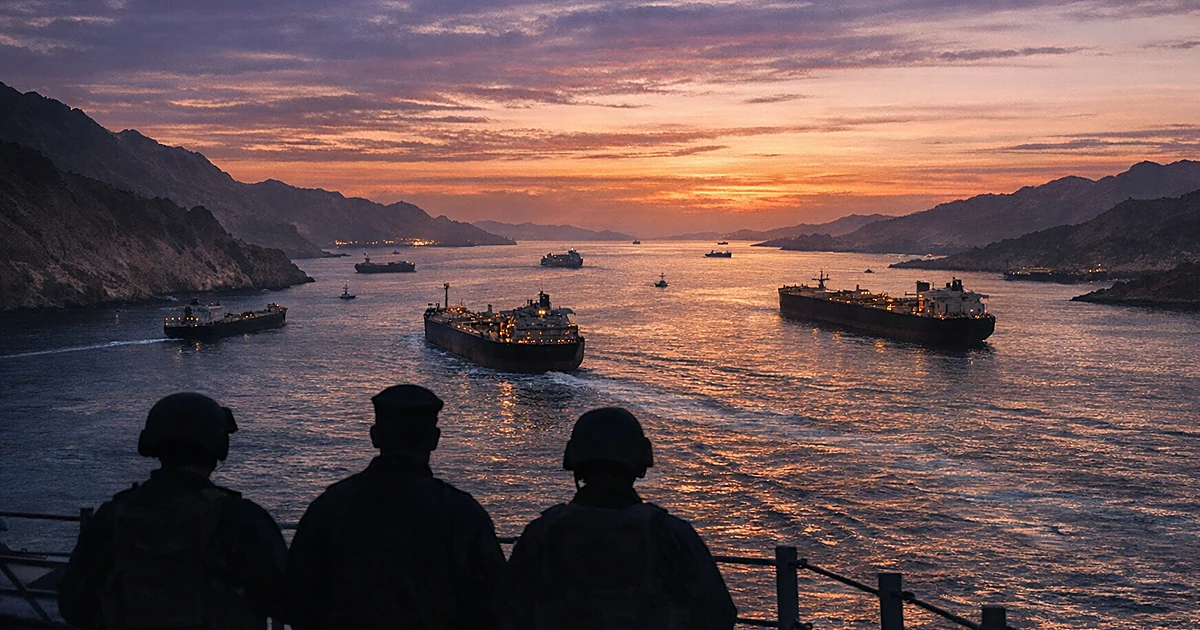
The Pentagon description in the reporting frames “Project Freedom” as defensive: a military operation “aimed at making it safer for ships to get out of the narrow waterway in the Persian Gulf.”
That detail undercuts the familiar media storyline that every assertive U.S. move must be an offensive escalation. A defensive operation to move shipping can be entirely consistent with deterrence, if the policy is coherent and enforced.
Secretary of State Marco Rubio leaned into that point as he spoke to reporters during a White House press briefing, calling it a “favor to the world,” while also describing the stakes of getting people out.
In a separate account, Newsmax reported Rubio saying the U.S. offensive campaign against Iran, “Operation Epic Fury”, has ended. Rubio told reporters, “The operation is over, Epic Fury, as the president notified Congress. We’re done with that stage of it.”
Rubio also described the transition in blunt terms: “We’re done with that stage of it. Okay, we’re now on to this Project Freedom.”
This is how a serious government should talk: define phases, state objectives, and explain what changes, and what doesn’t. If the blockade stays in “full force and effect,” then the pause is not about relaxing pressure. It’s about testing whether Iran will make binding commitments.
It’s also a reminder that the biggest obstacle to stable outcomes is often the regime’s internal machinery, not American “tone.” Rubio said diplomacy has been hard because “an offer will be made and then it takes 5 or 6 days to get a response because you have to get it through the whole system.”
Rubio described that system in personal terms: “They have to find the supreme leader wherever he hides. They got to get him to sign off. And that’s their system. Their system has always been multilayered in this way.”
Americans have seen this movie before: the U.S. is told to show patience while hostile regimes stall, regroup, and pocket concessions. Rubio’s point suggests the administration is not pretending delays are “misunderstandings.” It’s calling them what they are, built into the structure.
That kind of clarity has been missing from too many foreign-policy debates in Washington, where the same political class that lectures about “norms” at home can’t define a win abroad. Readers following Trump’s latest domestic clashes, like when he raised an impeachment question after Hakeem Jeffries called the Supreme Court “illegitimate” on MSNBC, know how quickly elite rhetoric turns into institutional pressure without accountability.
The reporting included early indicators of ship movement: at least 11 ships crossed the chokepoint in the 24 hours under the initiative, while just two ships passed through on Monday.
Rubio also gave a sweeping figure for civilians caught up in the Gulf situation. He said nearly “23,000 civilians from 87 different countries” have been trapped since the war broke out on Feb. 28.
He described them as “trapped inside the Gulf, and left for dead in the Persian Gulf by this Iranian regime.” Those are Rubio’s words, but the meaning is straightforward: the pressure isn’t academic, and it isn’t cost-free for innocents.
And that’s exactly why Americans should demand discipline from U.S. leaders. If the goal is to move ships safely, protect civilians, and force a serious agreement, then the policy cannot swing wildly between threats and retreats. It has to be steady enough that allies trust it and adversaries fear it.
The policy hinge in these talks, as described, is nuclear leverage. Trump has been adamant that he would not allow Iran to continue producing or holding enriched uranium under any peace agreement.
The reporting also said Trump has insisted the U.S. must be allowed to remove about 1,000 pounds of uranium believed to have been buried deep underground in Iran, following last summer’s Operation Midnight Hammer airstrikes on the regime’s nuclear facilities.
That demand is a litmus test. A deal that leaves a hostile regime with material it can hide, shield, or redeploy is not a “final” agreement in any meaningful sense. It’s a pause button dressed up as diplomacy.
Trump’s public posture here also fits the harder line he has signaled elsewhere on Iran’s capabilities, including his earlier messaging as the ceasefire held, covered in our own report on how Trump signaled intent to destroy Iran’s remaining missile capability.
The Washington Examiner also described the mission as defensive and tied the pause to continuing negotiations, while noting the blockade remains in place even as the ship-movement operation pauses.
The point of emphasizing “defensive” is not public relations. It’s rules of engagement and intent. A defensive posture can still be firm, especially when paired with a blockade that stays “in full force and effect.”
That’s the part the Biden-era foreign-policy mindset never seemed to grasp: restraint without leverage isn’t prudence. It’s an invitation.
Trump’s statement includes two levers at once: a pause in one operation, and continued pressure through the blockade. That is closer to negotiation as Americans understand it: keep your strongest cards on the table, then see if the other side will sign something real.
Rubio added a line that should ring true to anyone who has watched regimes absorb punishment and keep going: Iran may “have a high pain threshold,” he said, but they “don’t have an unlimited pain threshold.”
That’s not chest-thumping. It’s an argument for why leverage matters, and why keeping the blockade in place while pausing “Project Freedom” could still move the ball. If a regime’s pain threshold is high, you don’t quit early. You keep pressure consistent until the incentives change.
Republicans on Capitol Hill have been trying to push that kind of clarity in the broader debate over authority and escalation, including in our coverage of how Speaker Mike Johnson backed Trump on Iran and said “we are not at war” as a War Powers deadline arrived.
Not all of Trump’s messaging is about de-escalation. Fox News reported additional Truth Social language from Trump that links an end state to Iran accepting terms, and threatens renewed bombing if it does not.
Trump wrote: “Assuming Iran agrees to give what has been agreed to... the [already legendary Epic Fury] will be at an end, and the highly effective Blockade will allow the Hormuz Strait to be OPEN TO ALL, including Iran,” and he added, “If they don’t agree, the bombing starts, and it will be, sadly, at a much higher level and intensity than it was before.”
One can debate the wisdom of broadcasting the stick alongside the carrot. But there is no confusion about conditionality: Iran agrees, the operation ends; Iran refuses, pressure returns harder. That is the opposite of the vague, open-ended diplomacy that so often becomes a cover for doing nothing.
Trump said the pause will last “a short period of time,” but no exact duration was given. The statement also referenced “other Countries” besides Pakistan, without naming them, and it did not identify which “Representatives of Iran” are involved.
Those gaps matter because they point to the next accountability question: what does success look like, in writing, and how fast will the administration insist on real signatures rather than more delays?
Americans have spent decades watching foreign-policy elites treat deadlines as optional, and enforcement as impolite. The result is predictable: adversaries learn to wait out Washington, and allies learn to hedge.
The country doesn’t need perfect rhetoric. It needs a government that keeps its word, protects American interests, and refuses to confuse “talks” with results.
Diplomacy backed by leverage is how serious nations act; diplomacy without leverage is just a press release.