

President Trump on Sunday dismissed Iran's most recent response in ongoing peace negotiations as "TOTALLY UNACCEPTABLE," drawing a hard line after Tehran refused to put its nuclear program on the table and instead pushed for sanctions relief and an end to the American naval presence in the Persian Gulf.
The rejection came after Iran delivered its counterproposal through Pakistani mediators, a response that, by multiple accounts, sidestepped the central American demand: that any deal must address the Islamic Republic's nuclear capabilities. Instead, Tehran tried to redirect talks toward ending the broader military conflict and gradually reopening the Strait of Hormuz.
Trump made his position clear on Truth Social, writing:
"I have just read the response from Iran's so-called 'Representatives.' I don't like it, TOTALLY UNACCEPTABLE!"
He followed with a second post accusing Iran of a decades-long pattern of delay, as the New York Post reported: "Iran has been playing games with the United States, and the rest of the World, for 47 years (DELAY, DELAY, DELAY!"
The Wall Street Journal reported that sources familiar with the deal said Iran suggested that, if the United States agreed to its terms first, nuclear issues could be negotiated over the next 30 days. Iran allegedly offered to suspend uranium enrichment for an undisclosed period and transfer some atomic materials to a third country, but the proposed moratorium would fall well short of the 20-year freeze Washington demanded.
Tehran also sought assurances that it would get its uranium back if the United States failed to comply with its end of any agreement.
Breitbart reported that Iran refused to dismantle nuclear facilities or surrender long-term enrichment control. Instead, the Islamic Republic's response emphasized sanctions relief, the release of frozen assets, an end to the U.S. naval blockade, and preserving Iranian control over the Strait of Hormuz, a waterway that handles roughly 20 percent of the world's oil transports.
A 10-point plan allegedly laid out by Supreme Leader Mojtaba Khamenei called for the full withdrawal of American ships and bases from both the Strait of Hormuz and the Persian Gulf. What other concessions Iran might be demanding remains unclear.
The Fars News Agency, described as semi-official with close ties to the Islamic Revolutionary Guard Corps, published Tehran's vision for the region. The picture that emerges is of a regime that wants the benefits of peace, lifted sanctions, unfrozen money, an open strait, without surrendering the nuclear leverage that made the standoff necessary in the first place.
U.S. Ambassador to the United Nations Mike Waltz left no ambiguity about the administration's position. He called the dismantling of Iran's nuclear program a "very clear red line" for the president, adding that "President Trump has been clear they will never have a nuclear weapon and they cannot hold the world's economies hostage."
Trump himself, speaking to "Full Measure with Sharyl Attkisson" on Sunday, said of Iran's nuclear materials: "We'll get that at some point." He pointed to the surveillance capabilities of the U.S. Space Force, which he created during his first term.
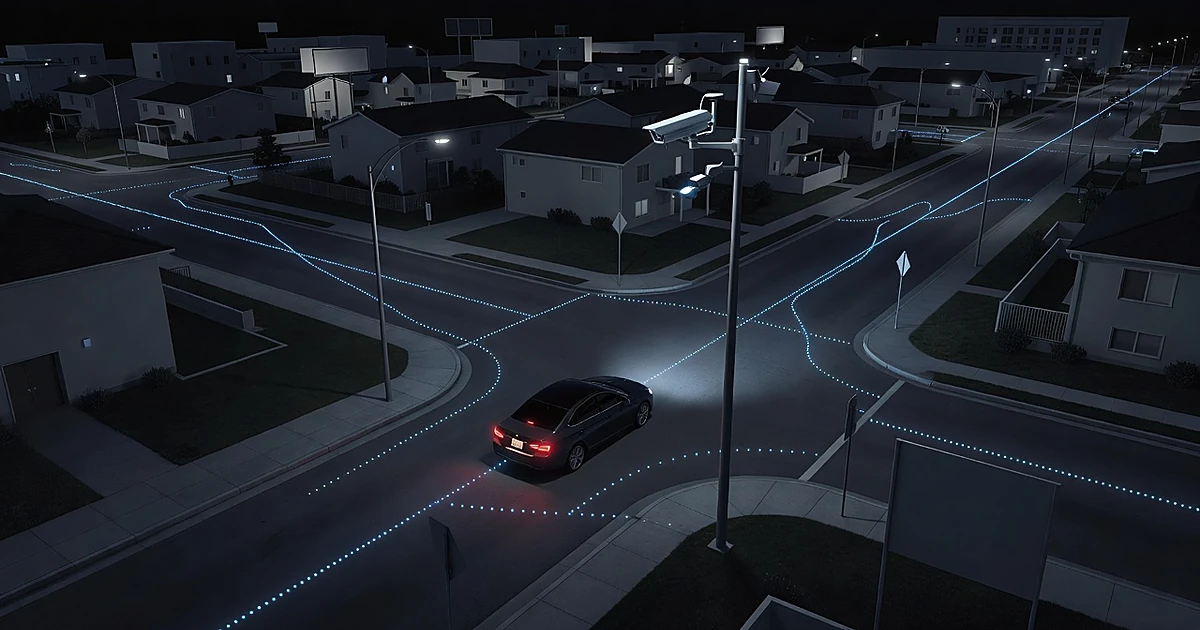
"We have it surveilled. You know, I did a thing called Space Force, and they are watching. If somebody walked in, they can tell you his name, his address, the number of his badge. We have that very well surveilled. If anybody got near the place, we will know about it, and we'll blow them up."
That warning carried particular weight given satellite imagery from June 2025 showing tunnel construction activity near Iran's Natanz nuclear facility and underground complex in Pickaxe Mountain. The administration has clearly been watching, and wants Tehran to know it.
This latest confrontation follows a period in which Trump had paused military operations in the Strait of Hormuz as earlier rounds of talks showed signs of progress. That restraint appears to have run its course.
Israeli Prime Minister Benjamin Netanyahu echoed Trump's position in an interview with CBS News' "60 Minutes," making clear that Israel views Iran's nuclear program as the non-negotiable issue.
"It's not over because there's still nuclear material, enriched uranium, that has to be taken out of Iran. All that is still there, and there's work to be done."
When pressed on how to resolve the problem, Netanyahu was blunt: "you go in, and you take it out."
The alignment between Washington and Jerusalem on this point is striking. Both governments have now stated publicly that no peace deal is worth the paper it's written on if Iran retains the capacity to build a bomb. The Washington Examiner noted that Iran delivered its response through Pakistani Prime Minister Shehbaz Sharif, who has served as an intermediary, a detail that underscores how indirect and fraught these negotiations remain.
The failed ceasefire effort is already rippling through global markets. AP News reported that the Persian Gulf standoff has disrupted shipping and pushed energy prices higher, with photos from Tehran showing anti-Trump propaganda, including a newspaper cartoon about opening the Strait of Hormuz and a billboard depicting the president with sewn lips.
The president also used the moment to draw a sharp contrast with the approach of former President Barack Obama. Trump accused the Obama administration of allowing the Islamic Republic to thrive despite its open hostilities with the United States.
"He was not only good to them, he was great, actually going to their side, jettisoning Israel, and all other Allies, and giving Iran a major and very powerful new lease on life."
Trump claimed Tehran received "Hundreds of Billions of Dollars" from the United States under Obama, writing: "They had never seen money like this, and never will again." He accused Iran of having "finally found the greatest SUCKER of them all, in the form of a weak and s***** American President."
The comparison is pointed. The Obama-era nuclear deal, the Joint Comprehensive Plan of Action, released billions in frozen Iranian assets and eased sanctions in exchange for temporary restrictions on enrichment. Trump withdrew from that agreement during his first term, and his current posture makes clear he has no interest in repeating what he views as a one-sided bargain.
Trump's willingness to walk away from a deal tracks with his broader approach to foreign adversaries. He brokered a ceasefire and prisoner swap in the Russia-Ukraine conflict when the terms met his standards, and he has shown he will signal tougher military action against Iran when diplomacy stalls.
The rejection leaves several questions unanswered. Iran has said it will refuse to negotiate on its nuclear and missile programs "for the time being", a phrase that could mean weeks or could mean indefinitely. The 30-day window Tehran floated for nuclear discussions was contingent on the United States accepting Iran's preconditions first, a sequencing the administration clearly finds unacceptable.
Newsmax reported that the dispute centers on three interlocking issues: ending the broader war, reopening the Strait of Hormuz, and forcing Iran to roll back its nuclear program. Iran wants to separate those issues and deal with them on its own timeline. The Trump administration wants them bundled.
The standoff also raises the question of what "whatever possible" means in practice. Trump vowed Sunday to do whatever he could to confiscate the Islamic Republic's nuclear materials. Combined with the Space Force surveillance remarks and Netanyahu's "go in, and you take it out" language, the diplomatic temperature has dropped considerably since the earlier pause in hostilities.
The domestic political debate over war powers and Iran policy will only intensify now that the latest round of talks has collapsed. Congressional support for the president's hard line has been strong on the Republican side, but the longer the standoff drags on, and the higher energy prices climb, the louder the calls for resolution will get.
Trump's third Truth Social post on the matter carried the sharpest edge. He accused Iran of 47 years of stringing America along, "killing our people with their roadside bombs, destroying protests, and recently wiping out 42,000 innocent, unarmed protestors, and laughing at our now GREAT AGAIN Country."
He ended with five words: "They will be laughing no longer!"
Iran wants sanctions relief, unfrozen cash, and an American retreat from the Persian Gulf, all without giving up the nuclear program that created the crisis. That is not a peace proposal. That is a wish list written by a regime that has spent nearly half a century betting it can outlast American resolve.
Trump just told them the bet is off.