A 24-year-old worker at a popular Tokyo amusement park died Tuesday after she became trapped inside the mechanism of a ride during a routine monthly inspection, spending roughly five hours pinned before rescuers could free her.
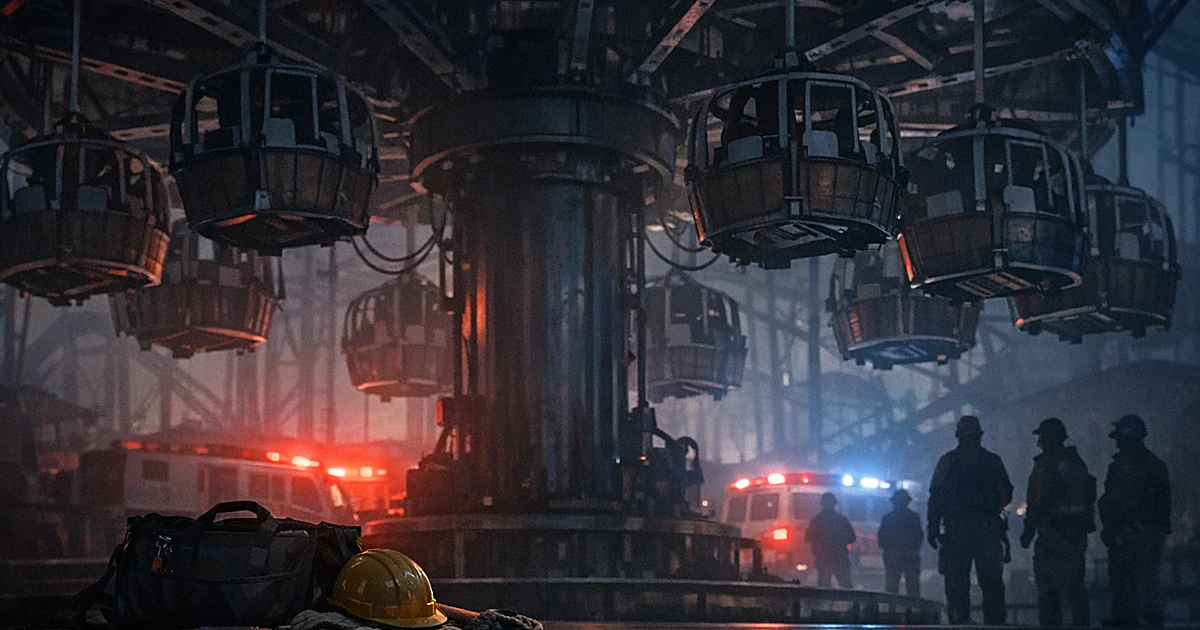
Kamimura Hina was conducting maintenance on the "Flying Balloon" ride at Tokyo Dome City Attractions when raised seats on the 12-seat attraction reportedly fell without warning, crushing her against the ride's central pillar. She was transported to a hospital after the hours-long rescue effort, where her death was confirmed.
The park immediately shut down every attraction on its grounds. A full-scale investigation is now underway, and so far, no one has explained how a standard inspection turned fatal.
The Flying Balloon is a relatively modest attraction. It rises to a height of roughly 30 feet and carries 12 seats. It is not the kind of ride that typically makes headlines. But on Tuesday, it became the site of a workplace death that has drawn national attention in Japan.
Fox News Digital reported that Kamimura and five colleagues had accessed the ride's mechanisms as part of the operator's monthly inspection. NHK World Japan, the Japanese public broadcaster, reported that Kamimura is believed to have been standing on a stepladder when the raised seats suddenly dropped, trapping her against the central pillar of the gondola mechanism.
It took approximately five hours for personnel to free her. The New York Post reported that the death occurred during routine maintenance, not while the ride was operating with guests aboard.
Police identified the victim as 24-year-old Kamimura Hina. No further details about her background have been made public.
Tokyo Dome City Attractions released a statement acknowledging the incident and confirming the employee's death. The company said:
"During routine maintenance work on the ride, one of our employees became trapped within the ride's gondola mechanism. Following rescue operations, the employee was transported to a hospital, where their death was subsequently confirmed."
The company also offered condolences to the worker's family and apologized to visitors and stakeholders affected by the sudden closure. Its statement pledged a thorough investigation:
"We offer our deepest prayers for the repose of the deceased employee's soul, and we extend our profound condolences and apologies to their bereaved family."
The corporation said it is coordinating with police and the fire department as it works to determine the cause of the accident. Operations at all attractions across the park have been suspended until further notice.
That last detail matters. Shutting down an entire amusement park, not just a single ride, signals that the operator either does not yet understand what went wrong or cannot guarantee the safety of its other equipment. Either way, it is the right call when a worker has just died on your property.
The five-hour timeline between when Kamimura became trapped and when she was freed raises hard questions. What made the rescue so difficult? Was the ride's mechanism designed in a way that made extraction dangerous or slow? Were emergency procedures in place for exactly this kind of failure?
Fatal accidents involving industrial and commercial machinery are not limited to amusement parks. A Ford employee in Ohio was killed when a press machine malfunctioned during routine maintenance, a grim reminder that the people who maintain heavy equipment often face the greatest risk from it.
In this case, the inspection itself appears to have been standard. NHK World Japan reported it was a monthly check. Six workers, including Kamimura, were involved. Nothing in the available reporting suggests the team was doing anything unusual or unauthorized.
Yet the seats fell. And a 24-year-old woman standing on a stepladder had no way to escape.
Separately, the grim reality of workers dying in confined or mechanized spaces has surfaced in other recent cases. An Ohio contractor was found dead inside a CVS trash compactor, another incident that underscored the lethal danger posed by equipment that most people never think twice about.
No confirmed cause of the accident has been released. The corporation's statement committed to "thoroughly investigating the cause of this incident and implementing measures to prevent its recurrence," but offered no specifics about what failed or why.
Several questions remain open. Were the ride's seats supposed to be locked in place during maintenance? If so, what mechanism failed? Was there a lockout-tagout procedure, the standard industrial safety practice of disabling equipment before workers enter a danger zone, and was it followed? Were there any prior incidents or maintenance flags on the Flying Balloon?
None of those answers are available yet. Japanese police and fire authorities are involved, but no public statements from investigators have been reported beyond the identification of the victim.
The park itself sits in central Tokyo and draws a steady stream of visitors. Its sudden, indefinite closure affects not just staff but thousands of would-be guests. But that is a minor inconvenience compared to the loss borne by Kamimura Hina's family and colleagues, the five coworkers who were right there when the seats came down.
Theme parks sell fun. They promise that every ride, every mechanism, every bolt and cable has been checked and rechecked so families and workers alike go home safe. When that promise fails, the public deserves more than condolences and vague pledges.
Tokyo Dome City Attractions has said the right things so far. It shut down operations. It expressed sorrow. It promised a full investigation. Those are the minimum expected responses when a young employee dies on your watch.
But words are cheap. The investigation needs to produce clear, public answers about what went wrong on that ride, mechanically, procedurally, and institutionally. Kamimura Hina was doing her job. She was performing a routine inspection that her employer scheduled and her colleagues participated in. She should have come home.
When the people who maintain the machines are the ones the machines kill, something has gone badly wrong, and no corporate statement, however carefully worded, can substitute for the truth about why.