


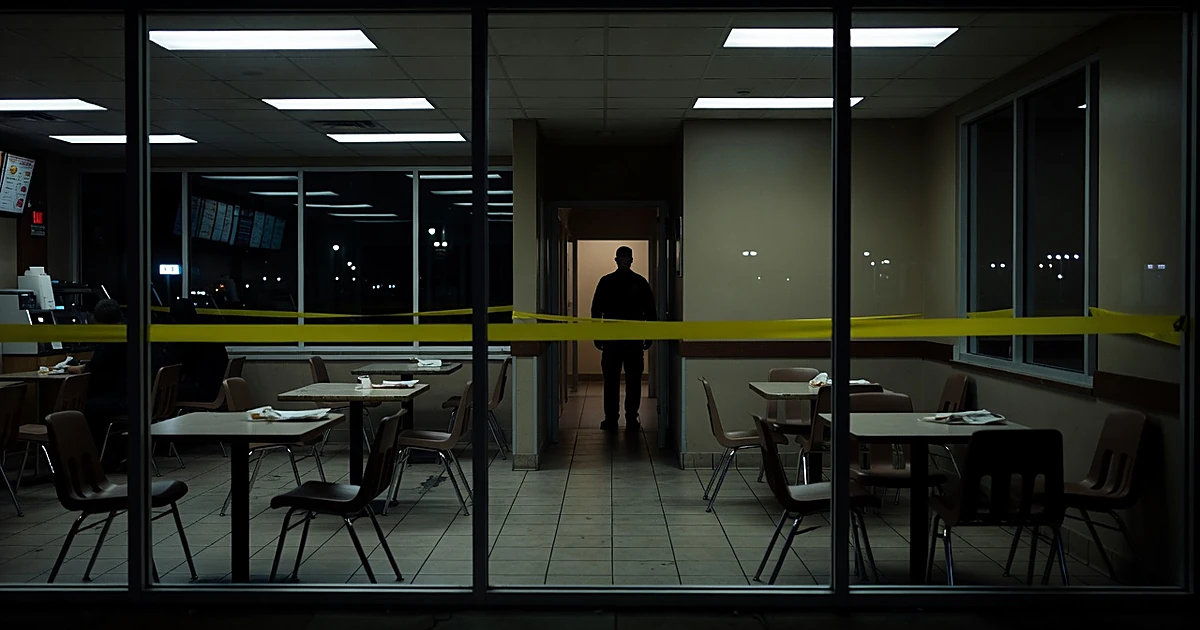
Three young women were pulled from the English Channel off Brighton beach early Wednesday morning, all fully clothed, after what local accounts describe as a packed night of partying at a nearby beachfront nightclub. More than a day later, police still had not identified any of the three, and their families, Sussex police said, remained unaware they had lost loved ones.
Sussex police chief superintendent Adam Hays confirmed that officers initially responded to a welfare report about a single person in the sea near Black Rocks car park on Madeira Drive. When they arrived, they recovered two more bodies from the water nearby.
The deaths have shaken Brighton, the popular south-coast resort town about 50 miles south of London, and raised sharp questions about what happened in the gap between a club event that reportedly ended around 4 a.m. and the recovery of three bodies roughly two hours later.
Local accounts pointed to Quarters, a beachfront nightclub that had been hosting a weekly student event called "CU Next Tuesday." The night in question featured a David Attenborough-themed party that locals described as "packed out," with crowds spilling onto the beach before the event wrapped around 4 a.m.
By approximately 5:45 a.m., the New York Post reported, local authorities were pulling the women from the water. The Daily Mail reported the women were fully clothed. A club worker told the Mail that police had been speaking to people from the club and that coastguard officers were seen searching for personal belongings, handbags, a coat, phones.
One local told The Sun that conditions that morning included strong winds, cold weather, and rough, choppy seas, the kind of water that could push someone toward Brighton Palace Pier.
Locals also noted that crowds can still be found on Brighton beach drinking as early as 7 a.m. most days. The beach culture there is not unusual. Three bodies in the Channel before dawn is.
Hays issued two public statements. In the first, he asked the community to keep its distance from the scene:
"This is a tragic incident and fast-moving enquiries are ongoing to confirm the identities of three women and understand exactly what has happened. I know this is concerning for the community, but I would ask the public to stay away from the scene at this time while emergency services continue their work."
His second statement acknowledged the wider impact but urged restraint. The women's identities had not been confirmed, their families had not been located, and the investigation remained in its earliest stages.
"This is a sensitive investigation and we know the public are keen to understand the full circumstances. But our priority at this time is identifying these three women and location of their families, who at this point remain unaware they have lost loved ones. I would ask for people's patience while we conduct these enquiries and to avoid speculation while this is ongoing."
That last line, "avoid speculation", is a familiar refrain from British police. It is also, in a case this thin on public facts, an invitation for exactly the kind of speculation Hays wants to prevent.
Breitbart reported that more than a full day after the recovery, police still had not identified any of the three women. Officers said they believed the women were aged between 20 and 30. They also confirmed they did not yet know how or why the women entered the water and were exploring several lines of inquiry.
Brighton & Hove City Council leader Bella Sankey called the situation "all the more heart-breaking and distressing" because the women remained unidentified and their loved ones uninformed.
That detail alone should trouble anyone following the case. Three women, believed to be young, possibly students, at a student-themed event, and no one has come forward to say they are missing. No friends from the party. No roommates. No family members checking in after a night out. The silence is its own kind of evidence, though of what, no one yet knows.
When suspicious deaths raise unanswered questions, the public's instinct is to demand answers fast. But the facts here remain genuinely scarce.
Police have not said whether foul play is suspected or ruled out. They have not confirmed whether the three women were at Quarters that night, that detail comes from local accounts and press reports, not from an official police statement. No witnesses have been publicly identified as having seen the women enter the water.
The cause of death has not been released. The mechanism, how three fully clothed women ended up in the English Channel in the dark, in rough and cold conditions, is the central unanswered question.
Were they together? Did they know each other? Did anyone see them leave the club? Were they on the beach voluntarily? These are not speculative questions. They are the minimum facts the public needs to understand whether this was a terrible accident, a crime, or something else entirely.
Cases involving high-profile deaths that raise broader public questions tend to move fast in the press and slow in official channels. Brighton may follow that pattern.
Brighton beach is not a remote stretch of coastline. It sits in the middle of a busy resort city, flanked by the Palace Pier and the remains of the old West Pier. Madeira Drive runs along the seafront. Black Rocks, where police responded, is a well-known local landmark near the eastern end of the beach.
The area around Quarters and the beach clubs draws large crowds on warm nights and event nights alike. The fact that a packed event ended at 4 a.m. and three women were dead in the water by 5:45 a.m. means the window is narrow. Whatever happened, it happened fast.
British police have asked for patience. That is reasonable, for now. But patience has a shelf life, especially when three young women are dead, no one knows who they are, and the only confirmed facts are a welfare call, a cold sea, and a nightclub that was open until the small hours.
Accountability in cases like these often depends on how aggressively investigators pursue the timeline. Law enforcement under political pressure sometimes moves cautiously to a fault. Brighton's community, and three unknown families, deserve better than caution for its own sake.
Brighton is used to late nights, crowded beaches, and the occasional rough morning after. It is not used to pulling three bodies from the Channel before sunrise.
The investigation is early. The facts are thin. But the outline of the story is already grim: a packed student party, a cold and windy night, a dark stretch of water, and three women who never made it home. No one has claimed them. No one has named them.
Chief Superintendent Hays said the priority was identifying the women and finding their families. That is the right priority. But the public also deserves to know, in due course, whether anyone, a venue, a promoter, a bystander, an institution, failed in a duty of care that might have kept three young women alive.
When officials ask the public to avoid speculation, they take on an obligation: fill the vacuum with facts, or someone else will fill it for them.
Three women went out for a night in Brighton. They never came home. Somewhere, three families don't even know to grieve yet. That fact alone should keep this investigation moving at something faster than a bureaucratic pace.