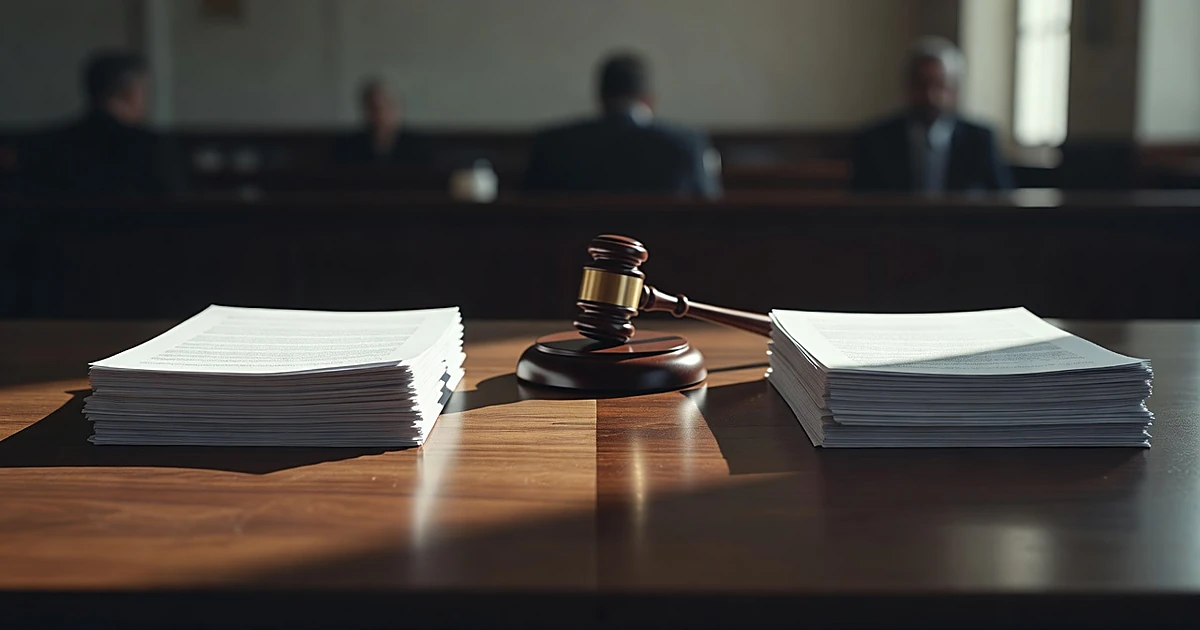


Justice Clarence Thomas filed a 91-page dissent after the Supreme Court struck down President Trump's executive order restricting birthright citizenship, arguing the majority misread history and handed down a decision that diminishes the meaning of American citizenship itself.
The ruling, issued on a 5-4 vote with Chief Justice John Roberts writing for the majority, held that the Fourteenth Amendment guarantees citizenship to children born on U.S. soil, including those born to parents in the country illegally or on temporary visits. Roberts, joined by Justices Kavanaugh and Barrett alongside the Court's three liberal members, rejected Trump's 2025 executive order outright.
Thomas, the longest-serving conservative currently on the bench, was not persuaded. He was joined in dissent by Justices Samuel Alito and Neil Gorsuch.
Thomas did not read his dissent aloud from the bench. He let the written opinion speak for itself, and at 91 pages, it had plenty to say. His central argument: the Citizenship Clause of the Fourteenth Amendment was never intended as a blanket grant of citizenship to anyone born within U.S. borders, regardless of the parents' legal status or ties to the country.
As The Hill reported, Thomas wrote that the majority erred by interpreting the phrase "subject to the jurisdiction thereof" through the lens of English common law's feudal principle of allegiance, which was then codified as "not subject to any foreign power" in the Civil Rights Act. That reading, Thomas argued, stretches the clause far beyond its original meaning.
Thomas contended the clause was a targeted remedy, designed to secure citizenship for freed slaves who were born in the United States and had no other country to call home. It was not, in his view, a universal birthright for every child delivered on American soil.
"The Citizenship Clause was enacted for people who were born in this country and called it home."
He traced the historical record in detail. The Fourteenth Amendment, ratified in 1868, was "designed and understood to secure equal rights for the freed blacks," Thomas wrote. But the majority, he charged, had "repurposed" it "for political projects that the Reconstruction Congress did not support."
Thomas cited multiple historical figures, including Representative Bingham, Senator Trumbull, and Justice John Marshall Harlan, as supporting his reading that the clause excluded children of temporary visitors. The Washington Examiner reported that Thomas accused the majority of relying on "alternative history" in reaching its conclusion.
Chief Justice Roberts, writing for the majority, framed the question as settled. Children born in the United States are "subject to the jurisdiction of the United States," Roberts wrote, and therefore "satisfy both elements of the Citizenship Clause."
"They are born in the United States and subject to the jurisdiction thereof. Under the Constitution, they are citizens at birth."
Thomas pushed back hard on the scope of that reasoning. He pointed to the 1898 Wong Kim Ark ruling, the landmark precedent most often cited in favor of broad birthright citizenship, and argued it should not be extended to cover children of foreign temporary visitors or illegal immigrants. The facts in Wong Kim Ark involved the child of lawful, permanent residents. Stretching it further, Thomas suggested, distorts the precedent.
That distinction matters. Trump's Day 1 executive order specifically targeted children born to parents who were in the country illegally or on temporary visas, not the children of lawful permanent residents. Thomas argued much of the order was "consistent with the original public meaning" of the Citizenship Clause and should have been upheld.
The growing frustration among conservatives with certain Trump-appointed justices adds context to the fault lines exposed by this ruling. Barrett and Kavanaugh both sided with Roberts and the liberals, leaving Thomas, Alito, and Gorsuch as the only dissenters.
Thomas closed his dissent with a rare forward-looking statement, one that reads less like legal analysis and more like a direct challenge to the majority's legacy.
"I am not sure that today's opinion will stand the test of time. The Citizenship Clause added greatly to the dignity and glory of American citizenship. Today's opinion devalues that citizenship."
That language is deliberate. Thomas was not merely disagreeing with the majority's reasoning. He was questioning whether the decision would endure, and warning that its consequences would weaken the very thing the Fourteenth Amendment was supposed to protect.
Thomas has long been willing to stake out positions that put him at odds with the rest of the Court, including its conservative wing. His willingness to call on the Court to reexamine established legal doctrines is well documented. This dissent fits that pattern, a methodical, historically grounded argument that the Court got it wrong and that the error will compound over time.
The AP noted that the ruling exposed a sharp public rift between Thomas and Justice Ketanji Brown Jackson, underscoring the depth of disagreement on the bench. The divisions were not merely ideological, they cut to fundamental questions about how the Constitution should be read and who gets to define its meaning more than 150 years after ratification.
The White House did not accept the ruling quietly. Border czar Tom Homan called the decision a national security problem and pointed to birth tourism as a growing concern.
Homan, speaking after the ruling, cited specific examples. Fox News reported his claim that during the Biden administration, maternity beds at hospitals in Yuma and El Paso were entirely occupied by illegal immigrants.
"During the Biden administration, the Yuma hospital, the El Paso hospital, 100% maternity beds are illegal aliens. That's not a coincidence. That's not by accident."
Homan pledged the administration would "triple, quadruple down" on birth tourism investigations and urged Congress to pass legislation addressing the issue. With the Court having closed the executive-order path, the legislative route is now the only option, and one that faces its own steep political obstacles.
The ruling also raises questions about the Court's internal dynamics at a moment when speculation about potential retirements continues to swirl around the Court's oldest conservative members. Thomas, at this stage, shows no sign of stepping back, and his 91-page dissent suggests he intends to keep pressing his originalist case as long as he holds the seat.
The practical effect of the ruling is clear: Trump's executive order is gone. Children born on U.S. soil to parents who are here illegally or on temporary visas remain citizens under the Fourteenth Amendment, as the majority of the Court now interprets it.
But Thomas's dissent ensures the legal and constitutional debate is far from over. His argument, that the Citizenship Clause was written for a specific historical purpose, that it was consistently interpreted for decades after ratification to exclude children of non-domiciled parents, and that the majority's expansion of it distorts both text and history, now sits in the record as a detailed roadmap for future challenges.
Whether Congress takes up the issue, as Homan urged, remains to be seen. The political appetite for a legislative fight over birthright citizenship is uncertain, even among Republicans. And the Court, as currently composed, has now spoken, with three Trump-appointed justices siding against the president who put them there.
The Court's upcoming appearance before Congress on budget matters may add another layer of public scrutiny to an institution already under intense political pressure from both sides.
Thomas's dissent will not change the outcome of this case. But it may change the terms of the argument going forward. His reading of the Fourteenth Amendment, grounded in the words of the men who wrote it, the decades of practice that followed, and the specific historical wrong it was meant to remedy, offers a foundation that future litigants and legislators will almost certainly build on.
When the longest-serving conservative on the Supreme Court writes 91 pages to explain why the majority got it wrong, the debate is not settled. It is just getting started.