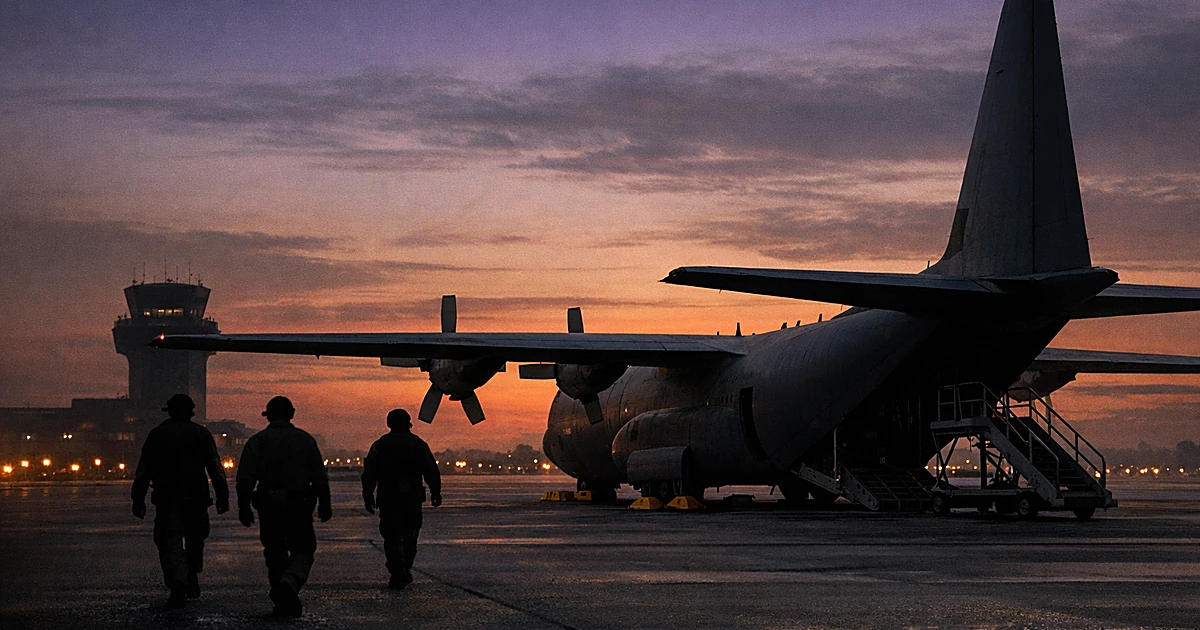





Spain shut its airspace to American military aircraft tied to the Iran conflict on Monday, a move that goes beyond Madrid's earlier refusal to let U.S. forces use two joint bases on Spanish soil. Spanish Defense Minister Margarita Robles confirmed the escalation in blunt terms, telling reporters the policy had been communicated to the Pentagon from the start.
The decision cuts off another logistical pathway for U.S. operations at a moment when American and Israeli forces are actively striking targets inside Iran. It also raises a pointed question about what, exactly, NATO membership means when a treaty ally refuses to support, or even permit transit for, a major U.S. military campaign.
For American taxpayers who have underwritten European security for decades, the answer from Madrid is not encouraging.
Robles left no room for ambiguity. As Fox News Digital reported, the defense minister confirmed that Spain denied both airspace access and the use of the Rota and Morón bases in southern Spain for any operations tied to the Iran conflict.
"Neither the bases are authorized, nor, of course, is the use of Spanish airspace authorized for any actions related to the war in Iran."
She added that this was "made perfectly clear to the American military and forces from the very beginning." Robles also described the broader conflict in terms that tracked closely with her prime minister's rhetoric, calling it "profoundly illegal and profoundly unjust."
Prime Minister Pedro Sánchez had already labeled the Iran campaign "illegal," "reckless," and "unjust." Economy Minister Carlos Cuerpo reinforced the party line in a radio interview, framing Spain's stance as a matter of principle rather than a diplomatic snub.
"This decision is part of the decision already made by the Spanish government not to participate in or contribute to a war which was initiated unilaterally and against international law."
When asked whether the move could strain ties with the United States, Cuerpo treated the question as secondary to Spain's reading of international law and national sovereignty. The Spanish embassy, for its part, could not immediately be reached for comment.
Naval Station Rota and Morón Air Base sit in southern Spain and serve as key hubs for American forces moving between the United States, Europe, and the Middle East. Rota supports U.S. Navy operations across the Mediterranean and hosts warships tied to the U.S. Sixth Fleet. Some of those warships have been operating in the broader Iran conflict.
Spain's earlier refusal to allow base use for Iran-related operations had already forced U.S. aircraft, including refueling tankers, to relocate to other European bases in Germany and France. Monday's airspace closure tightens the squeeze further, removing overflight as a fallback option.
The practical effect: American military planners must now route flights around the Iberian Peninsula entirely, adding time, fuel costs, and complexity to operations already underway. For a NATO ally that benefits enormously from the American security umbrella, the message is hard to read as anything other than active obstruction dressed up in legalese.
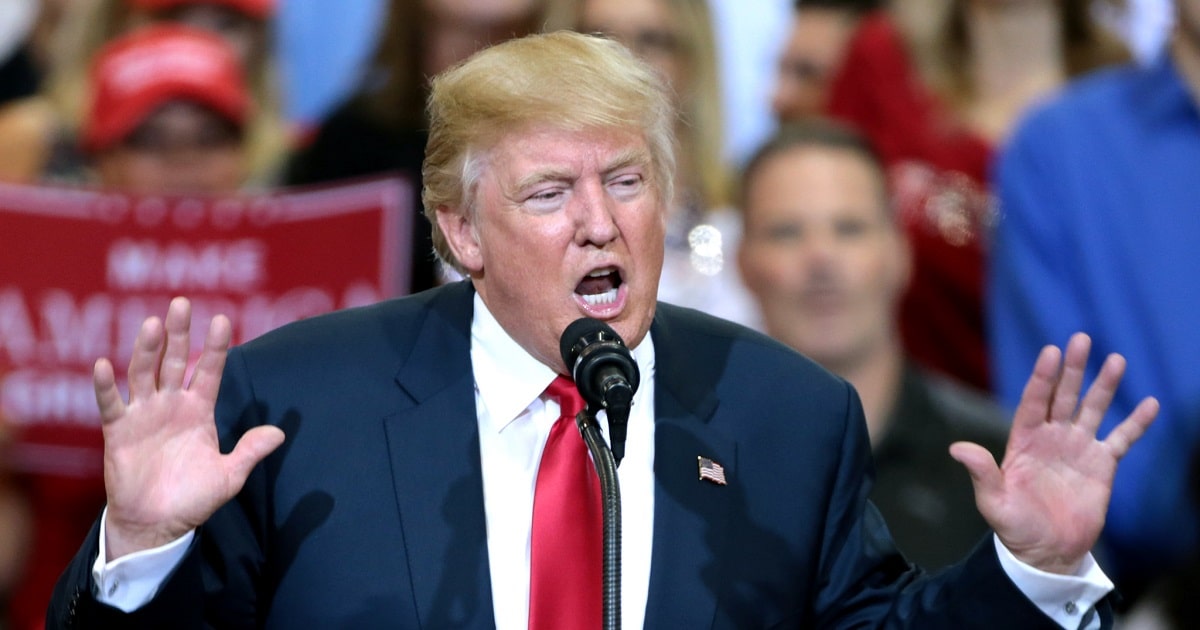
President Trump had already fired a warning after Spain's initial denial of base access.
"We're going to cut off all trade with Spain. We don't want anything to do with Spain."
The White House did not back down after Monday's escalation. A White House official downplayed Spain's latest move in comments to Fox News Digital, projecting confidence in the ongoing operation.
"The United States Military is meeting or surpassing all of its goals under Operation Epic Fury and does not need help from Spain or anyone else."
That statement carries a clear subtext. Washington will remember who stood aside, and who stood in the way.
The dispute between Washington and Madrid reflects friction within NATO over defense spending, burden-sharing, and a widening divide over how member states should respond to the Iran conflict. NATO itself could not immediately be reached for comment, Fox News Digital noted.
Spain's position is not unprecedented in kind, European allies have declined to support specific American military operations before. But the combination of denying base access, closing airspace, and publicly condemning the campaign as illegal goes further than quiet non-participation. It is open defiance from a country that hosts American warships and benefits from the deterrent power those warships provide.
The Sánchez government's framing, that Spain is simply upholding international law, conveniently ignores the degree to which Spanish security depends on American power projection through the very bases Madrid is now restricting. Rota and Morón exist because Spain recognized, decades ago, that American military presence served its interests. That calculation apparently changes when domestic politics make it convenient to grandstand.
Several questions hang over the standoff. The specific U.S. military aircraft or units blocked from Spanish airspace have not been identified publicly. The precise legal or bilateral agreement basis Spain cited, beyond general references to international law and sovereignty, remains unclear. And the full operational impact on U.S. and Israeli strikes inside Iran, where plumes of smoke rose over Tehran following reported explosions, has not been detailed by the Pentagon.
Whether Trump follows through on his trade threat, and what form that retaliation might take, will test whether Madrid's posture holds when the economic consequences arrive. Spain's economy is not well positioned to absorb a trade rupture with the United States, and Sánchez's coalition government faces its own domestic pressures.
For now, the U.S. military says it is on track. Operation Epic Fury continues. American forces have rerouted around Spain before, and they will do it again.
But allies who block the door when the mission is live should not expect a warm welcome when they come knocking for something later.