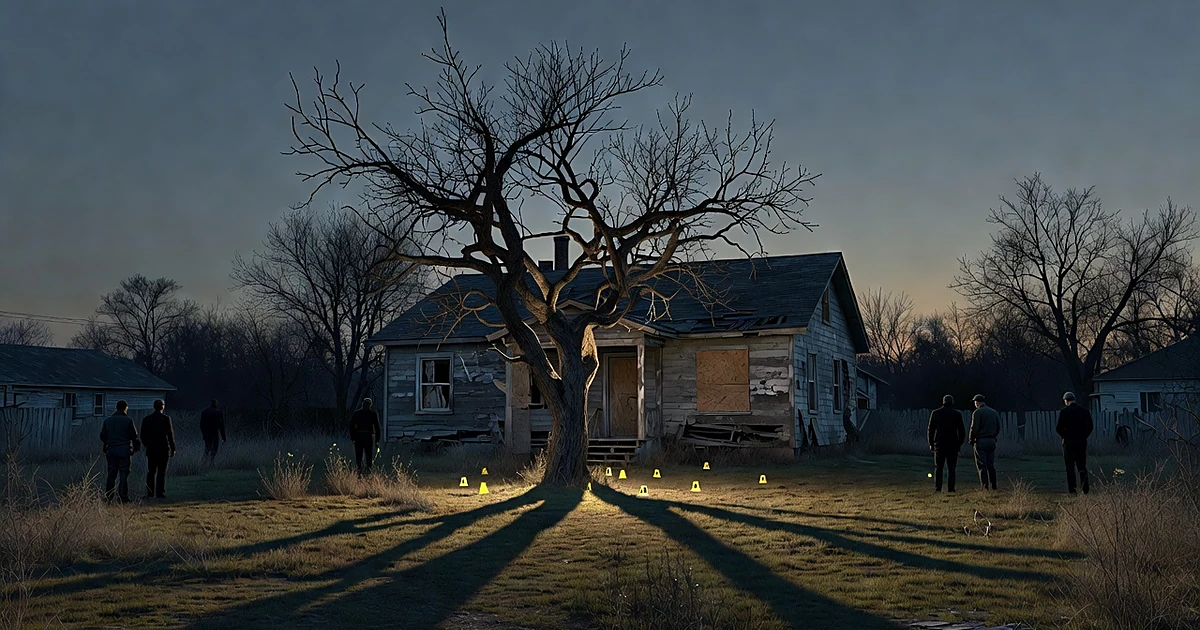



Jackson police say Tasia Fortune was killed in a drug dispute and her body staged to appear hanged, undercutting early lynching fears that drew global media attention.
Tasia Fortune, a 29-year-old Black mother of four, was found hanging from a tree behind a vacant home in Jackson, Mississippi, on Aug. 3. What first looked like a possible lynching quickly became a homicide investigation after the state medical examiner classified her death as a killing, not a suicide or a historic hate crime tableau.
Investigators now say Fortune was already dead when her body was put in the tree. At a Sept. 25 court hearing, a Jackson detective told the court the medical examiner’s opinion is that she was killed in a drug dispute and the hanging was staged afterward. Two men have been arrested on murder-related charges. A warrant for a third suspect went to the U.S. Marshals Service.
That sequence matters. Early coverage and online reaction treated the tree and the rope as proof of racial terror. Police work pointed somewhere else: a local drug fight, a dead woman, and a crude attempt to disguise how she died. The murder arrest in the Tasia Fortune case undercut the rush to call it a lynching before the facts were in.
On Sept. 11, authorities classified Fortune’s death a homicide and took Jarques Ratliff, 51, into custody on a murder charge. Ratliff, a Black Jackson resident who knew Fortune, pleaded not guilty. Just the News reported police had secured search and arrest warrants for him and that he had a prior personal connection to the victim.
Eleven days later, on Sept. 22, Earnest Lloyd Jr., 25, was arrested in connection with the same death. He also pleaded not guilty. Police say more warrants may still come. The case against Ratliff then moved into a preliminary hearing to test whether enough evidence exists to send it to a grand jury.
True Crime News reported the arrests and hearing timeline as the investigation widened beyond the first suspect. The third warrant, already in Marshals’ hands, shows police are not treating this as a one-man crime.
Ratliff allegedly told the court he and Fortune were friends. Friendship does not erase a murder charge. It does underline how close the circle around this killing appears to have been, local people, local dispute, local cover story.
Detective Samuel Dukes testified Sept. 25 that, in the medical examiner’s opinion, Fortune was killed in a drug dispute before her body was staged to look as if she had been hanged. The New York Post reported Dukes’ account that the hanging itself was staged and that Fortune was already dead when she was put in the tree.
Breitbart carried the same core finding from the hearing: Fortune was apparently killed in the drug dispute, then hung in a staged scene behind an abandoned home in the state capital. The staging is the point. Someone wanted the public to see a hanging. Investigators say the hanging was theater after a homicide.
National Review reported investigators’ belief that the hanging was staged and that the medical examiner found she was dead before she was placed in the tree. That is the opposite of a live lynching. It is a body moved and displayed after the killing.
The hearing’s job was narrow: decide whether the case against Ratliff has enough evidence for a grand jury. It recessed and was set to resume Sept. 30. No jury has convicted anyone. The charges and the medical opinion are what the public has now, and they do not match the first viral storyline.
Jackson Police Chief RaShall Brackney addressed the heat around the case after Fortune’s body was found. The image of a Black woman hanging from a tree in Mississippi triggered old and raw history. National and international outlets flooded in. So did demands for federal probes framed around racial terror.
"We understand that this case has received media attention from across the globe and across the community. We understand the questions and the desire for answers given Mississippi's history."
That is how Fox News quoted Chief Brackney as the department pushed back against a narrative running ahead of the evidence. The chief did not deny the state’s past. She pointed the public back to the investigation that was still open, still active, and still producing arrests.
Fortune’s body was discovered in the backyard of a vacant property. Police later tied the killing to drugs, not to a mob or a noose party. Two Black men face charges. A third suspect is sought. The racial-lynching frame collapsed under the simplest police work: who knew her, what the fight was about, and what the medical examiner actually found.
High-profile body discoveries often pull in outside storylines before local facts catch up, much like when a body recovered off a Mississippi barrier island forced patient identification work instead of instant conclusions. Jackson’s case followed the same hard rule. Pictures travel faster than autopsy findings.
Ratliff faces a murder charge and has pleaded not guilty. Lloyd pleaded not guilty after his Sept. 22 arrest. Exact additional counts on Lloyd were not fully detailed in early reports, and the third suspect remains unnamed in public accounts while Marshals handle the warrant. Additional warrants were described as forthcoming.
That is how a real homicide case looks before trial: arrests, pleas, a preliminary hearing, and more paper still moving. It is not a closed morality play. It is also not the racial atrocity some voices announced in August when the only clear fact was a woman in a tree.
Families destroyed by violence rarely get neat endings on the first news cycle. Other recent cases show the same grind from discovery to charging decisions, including when a Kansas City mother faced charges after her infant was found dead and the legal path shifted over time. Fortune’s children lost their mother. The courts still have to sort guilt.
What the record already shows is enough to retire the first false frame. Police and the medical examiner describe a drug-dispute killing dressed up as a hanging. The suspects now in the system are not a night-riding mob. They are local defendants tied, by investigators, to a local fight over drugs.
Mississippi’s history is real. So is the duty to tell the truth about this death. When activists and cable panels draft a lynching before the coroner finishes, they use a dead woman as a prop. Fortune deserved better than a script. She deserved an investigation, and that is what Jackson police say they ran.
Rush the race narrative, miss the crime. Taxpayers and grieving families both pay when politics outruns the evidence.