
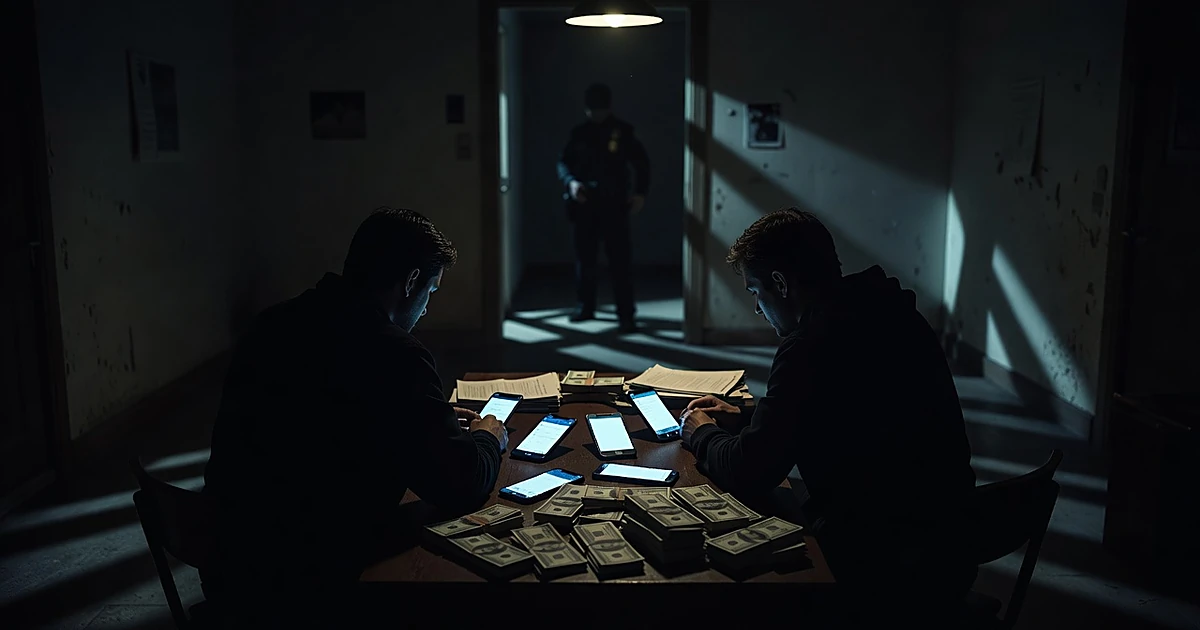



The Pentagon recently elevated Israel's counterintelligence threat level to "critical," as multiple reports allege that Israeli intelligence has been monitoring conversations involving senior Trump administration officials, including the special envoy leading peace talks with Iran.
NBC News reported Friday that three anonymous current and former U.S. officials confirmed the upgraded threat designation. A day later, The New York Times reported that U.S. intelligence indicates Israel made efforts to listen in on conversations involving Special Envoy Steve Witkoff, one of the lead negotiators in ongoing Iran-war peace talks.
If the reports hold up, the implications are serious: a close ally, sustained by American defense funding and diplomatic support, allegedly conducted espionage against the very officials trying to end a conflict that ally helped initiate. The White House flatly denied the reports. Israel called them false. But the Pentagon declined to comment, and the counterintelligence threat level speaks for itself.
A White House official pushed back hard, as the Daily Caller News Foundation reported:
"This entire story is false and sourced to someone who doesn't have any knowledge of what's going on."
An Israeli Embassy spokesperson in Washington offered a categorical denial:
"Israel does not gather intelligence on American entities, let alone US government officials."
The spokesperson called the reports "completely false." Neither the White House nor the Department of War responded to the Daily Caller News Foundation's requests for comment. The Pentagon declined to comment to both NBC News and The New York Times.
That pattern, vehement denial from the political offices, stony silence from the defense establishment, is worth noting. When the Pentagon raises a counterintelligence threat level but won't explain why, the denial from the diplomatic side carries less weight.
Joe Kent, the former Director of the National Counterterrorism Center who resigned his post over opposition to the conflict with Iran, posted on X in response to the reports. Kent has maintained that Israel pressured the United States into the ongoing conflict despite his assessment that Iran did not pose an "imminent" threat.
Kent didn't hold back:
"Israel targeting senior U.S. officials cannot be accepted by our government. This is not standard practice, especially considering the fact that Israel survives on our defense funding & diplomatic top cover. Until we actually take away the support we give Israel they will keep playing us as fools."
That's a former senior national-security official, not a fringe voice, saying plainly that a dependent ally is treating its benefactor with contempt. Whether one agrees with Kent's broader position on the Iran conflict, the factual question he raises is straightforward: Should a country that depends on American military aid and diplomatic cover be spying on the Americans negotiating on its behalf?
The broader political landscape in Washington has grown increasingly fractured over questions of allied loyalty and foreign entanglements, as recent controversies on the National Mall have illustrated in a different context.
The espionage allegations land against a specific backdrop. In early April, The New York Times reported that Israeli officials convinced the Trump administration to wage war on Iran after pitching an attack plan at a top-secret White House meeting. U.S. and Israeli forces launched joint attacks on Iran on February 28, seventeen days after that alleged meeting.
CIA Director John Ratcliffe reportedly denounced the Israeli attack plan as "farcical." Secretary of State Marco Rubio called it "bulls***." Yet the war proceeded.
Now, months into a conflict that senior U.S. officials apparently viewed with skepticism from the start, reports surface that Israel has been listening in on the American officials trying to negotiate an end to it. The sequence raises an uncomfortable question: Was the ally that pushed for war also trying to control the terms of peace?
Former CIA officer and whistleblower John Kiriakou offered a broader frame during an interview with Theo Von that aired Friday. When Von asked whether the United States also spies on Israel, Kiriakou's answer was blunt:
"No. And that's written in stone at the CIA. We do not spy on Israel, but they openly spy on us. They're all over the country stealing defense secrets."
Kiriakou attributed the asymmetry to a "political decision" made by the White House and Congress. He claimed the United States spies on "almost every" other country, but Israel remains off-limits.
During a July 2025 appearance on Valuetainment with Patrick Bet-David, Kiriakou went further. He claimed Israel was banned from CIA headquarters in Langley, Virginia, after repeated attempts to bug the building through gifts containing listening devices. When Bet-David asked what percentage of those gifts had bugs, Kiriakou responded: "100%."
"We don't allow the Israelis into CIA headquarters because they would always come with gifts and the gifts had always listening devices packed inside them. And, you know, somebody brings you a gift, you X-ray it. It's the normal process."
Kiriakou added: "And we're like, 'You guys can't keep coming back here every single time trying to bug our conference rooms.'" He said the Israelis "were serious. They were hoping one would slip through."
These are the claims of a single former officer, a whistleblower with his own history and perspective. They should be weighed accordingly. But they track with the broader picture now emerging from NBC News and The New York Times: a pattern of Israeli intelligence activity directed at American institutions, tolerated for decades as a cost of the alliance.
The question of how far allied nations will go to influence American policy decisions is hardly new, and the long history of political adversaries exploiting institutional relationships is well documented in other contexts.
Two anonymous senior U.S. military officials told The New York Times that American personnel make it a point to protect phones and other electronics when traveling to Israel. That operational detail, military officers guarding their devices from an ally, says more than any diplomatic statement.
The New York Times's Saturday report also noted that Israel and the United States have both long spied on each other and have known about and tolerated such actions. But the current moment is different. The United States is fighting a war alongside Israel, a war that key U.S. officials apparently opposed, while Israel allegedly monitors the very negotiations meant to end it.
Tolerance has limits. And a counterintelligence threat level of "critical" suggests the Pentagon has reached one.
The reports raise more questions than they answer. What specific conversations involving Witkoff were allegedly targeted? What exact intelligence reports form the basis of The New York Times's claims? What actions has the Pentagon taken beyond raising the threat level? And what, if anything, will the Trump administration do about it?
Kent's resignation over the Iran conflict, and his insistence that Israel maneuvered the United States into a war it didn't need to fight, adds political weight to the espionage allegations. If Israel was willing to push for a war that senior American officials called "farcical," was it also willing to spy on the peace process to protect its preferred outcome?
The White House says the story is false. Israel says it doesn't spy on America. The Pentagon won't talk about it but quietly raised the threat level to its highest designation.
Readers can judge which of those responses carries the most credibility.
For conservatives who believe in strong alliances, this is not a comfortable story. Israel has been, and in many respects remains, America's most important partner in the Middle East. But alliances built on American taxpayer money and American military commitment require honesty. They require, at minimum, that the ally not spy on the officials conducting negotiations on both nations' behalf.
Kent put it plainly: Israel "survives on our defense funding and diplomatic top cover." That is not an anti-Israel statement. It is a factual description of the relationship. And it is precisely why the espionage allegations, if true, represent something more than routine intelligence-gathering between friendly nations.
An ally that takes American money, fights alongside American troops, and then allegedly bugs the phones of the American envoy trying to end the war, that is not an ally acting in good faith. That is an ally acting in its own interest while expecting America to foot the bill.
Accountability isn't hostility. Expecting an ally to behave like one is the lowest bar there is, and right now, the Pentagon apparently isn't sure Israel is clearing it.