
The Ninth Circuit Court of Appeals on Wednesday blocked California from enforcing a state law that would have required federal immigration agents to remove their masks and display visible identification while conducting operations, a decisive legal defeat for Gov. Gavin Newsom's escalating campaign to obstruct federal enforcement efforts.
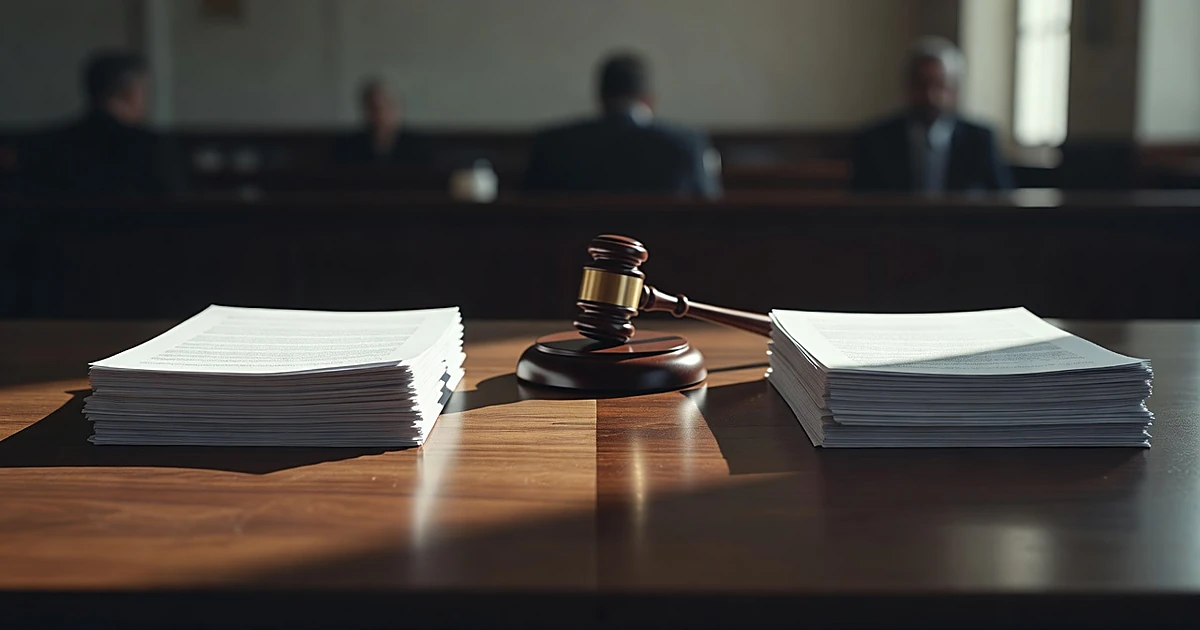
A three-judge panel held that Section 10 of the state's No Vigilantes Act violated the Supremacy Clause of the Constitution because it attempted to dictate how federal officers carry out their duties. The ruling permanently enjoins California from enforcing the provision, the Daily Caller News Foundation reported.
The decision marks the latest in a string of courtroom losses for Sacramento's strategy of using state law to hamstring Immigration and Customs Enforcement. And it raises a straightforward question that California's political leadership still refuses to answer: Why does a state government want to make it easier for people to identify, and target, federal law enforcement officers?
Judge Mark Bennett, a Trump appointee, authored the panel's opinion. The language left little room for ambiguity. Bennett wrote:
"We conclude that § 10 of the No Vigilantes Act attempts to directly regulate the United States in its performance of governmental functions. The Supremacy Clause forbids the State from enforcing such legislation."
The ruling elaborated that Section 10 "expressly applies to federal officers" and "seeks to control their conduct in performing law enforcement operations." That framing matters. The court did not treat this as a close call or a balancing test. It treated the California law as a direct intrusion into federal authority, and rejected it on those terms.
The Trump administration had argued in court papers that the state law was "straightforwardly invalid" because it directly regulated federal operations, Fox News reported. The administration also contended the law endangered officers by exposing them to harassment, doxing, and violence.
Newsom signed the No Vigilantes Act into law in September 2025. Section 10 required federal law enforcement officials on patrol to display identification showing which agency they worked for and either their name or a badge number. It carved out narrow exceptions for undercover operations and for officers "working in the state", though the exact scope of that exemption remained unclear.
Failure to comply was classified as a misdemeanor. In other words, California wanted the power to criminally charge federal agents for following their own agency's operational protocols.
The practical effect was obvious to anyone paying attention. ICE agents conducting enforcement operations in hostile jurisdictions would have their names or badge numbers displayed for anyone, bystanders, activists, or violent offenders, to photograph and circulate online. In a state where a federal judge had already struck down California's separate anti-mask law targeting ICE agents, the pattern was clear: Sacramento was building a legal architecture designed to expose federal officers to personal risk.
That risk was not theoretical. The Department of Justice arrested ten defendants in October 2025 on charges of violence against law enforcement stemming from an anti-ICE demonstration at a marijuana farm in California. Demonstrations had consumed parts of Los Angeles the previous summer. Against that backdrop, a law forcing agents to display their identities reads less like a transparency measure and more like a targeting tool.
A spokesperson for Newsom's office told the Daily Caller News Foundation that "these laws shouldn't even be necessary." The spokesperson added:
"We shouldn't have unidentified, masked men terrorizing our communities. We will continue demanding federal accountability and fighting against Trump and Miller's reign of terror against our communities."
Notice what the statement does not do. It does not engage with the constitutional question the court answered. It does not address the safety of federal officers. It does not acknowledge that California lost, again, on the same legal grounds. Instead, it pivots to political rhetoric about "terror" and "masked men," language designed for a press release, not a legal brief.
That rhetorical posture fits a governor whose political ambitions extend well beyond Sacramento. Newsom has been taking his book tour to New Hampshire as 2028 presidential jockeying heats up. Picking public fights with federal immigration enforcement plays well with the Democratic primary electorate. Whether it serves the people of California is another matter.
The Ninth Circuit's ruling did not arrive in a vacuum. It followed an earlier legal setback for Sacramento when U.S. District Judge Christina Snyder blocked the state's separate mask-ban provision for federal agents, though she allowed a badge-identification requirement to stand at that stage. The Trump administration had challenged Newsom's Senate Bill 627, arguing it interfered with federal operations, the New York Post reported.
Attorney General Pam Bondi noted at the time that the Ninth Circuit had "issued a FULL stay blocking California's ban on masks for federal law enforcement agents." U.S. Attorney Bill Essayli told reporters the state "needs to familiarize itself with the Supremacy Clause."
Essayli celebrated Wednesday's ruling as well. He wrote on X that the decision represented a "huge legal victory this morning in the Ninth Circuit, where the court permanently enjoined California's unconstitutional mask law targeting federal agents."
The AP reported that the appeals court ruled the law "likely violates the Supremacy Clause because it directly regulates federal operations," reinforcing a legal principle that California's leadership has now collided with repeatedly.
The Ninth Circuit's decision to block California's identification mandate fits a broader pattern of federal courts drawing a firm line against state attempts to regulate immigration enforcement from below.
California was not acting alone. Democratic Sens. Cory Booker of New Jersey and Alex Padilla of California led a push in July 2025 for a nationwide version of the maskless bill at the federal level. That effort stalled, but it revealed the scope of the strategy: if state-level laws could not survive constitutional scrutiny, Democrats hoped to impose the same restrictions through Congress.
Meanwhile, Senate Democrats attempted to attach ICE reform provisions, including body cameras and a ban on face masks, to Department of Homeland Security funding. DHS remains shut down as those negotiations drag on. The Trump administration sued California in November over the law, arguing it would "threaten the safety of officers who are facing harassment, doxing and violence" and violated the Constitution, Newsmax reported.
The strategy amounts to this: if you cannot stop federal immigration enforcement through legislation, try to make it so dangerous and legally fraught for individual agents that enforcement slows on its own. Courts have now rejected that approach at multiple levels.
Newsom's disapproval rating has hit new highs, with a majority of Californians now considering leaving the state. Whether his ongoing confrontation with federal authority is a cause or merely a symptom of that discontent, the courtroom results speak for themselves.
Several questions remain unanswered. It is unclear whether California will seek further review, en banc rehearing or a petition to the Supreme Court. The Newsom spokesperson's statement promised to "continue fighting," but the legal ground beneath Sacramento keeps shrinking.
The court's opinion addressed only Section 10 of the No Vigilantes Act. Other provisions of the broader law were not at issue in this ruling. Whether those survive future challenges will depend on whether they, too, attempt to regulate federal conduct.
For now, ICE agents operating in California will not be forced to hand their names to hostile crowds as the price of doing their jobs. The Supremacy Clause still means what it says, even in Sacramento.