


Gov. Gavin Newsom signed Eid al-Fitr and Eid al-Adha into California state holiday law before clearing similar Jewish observance bills, a sequence critics call a signal of his 2028 plans.
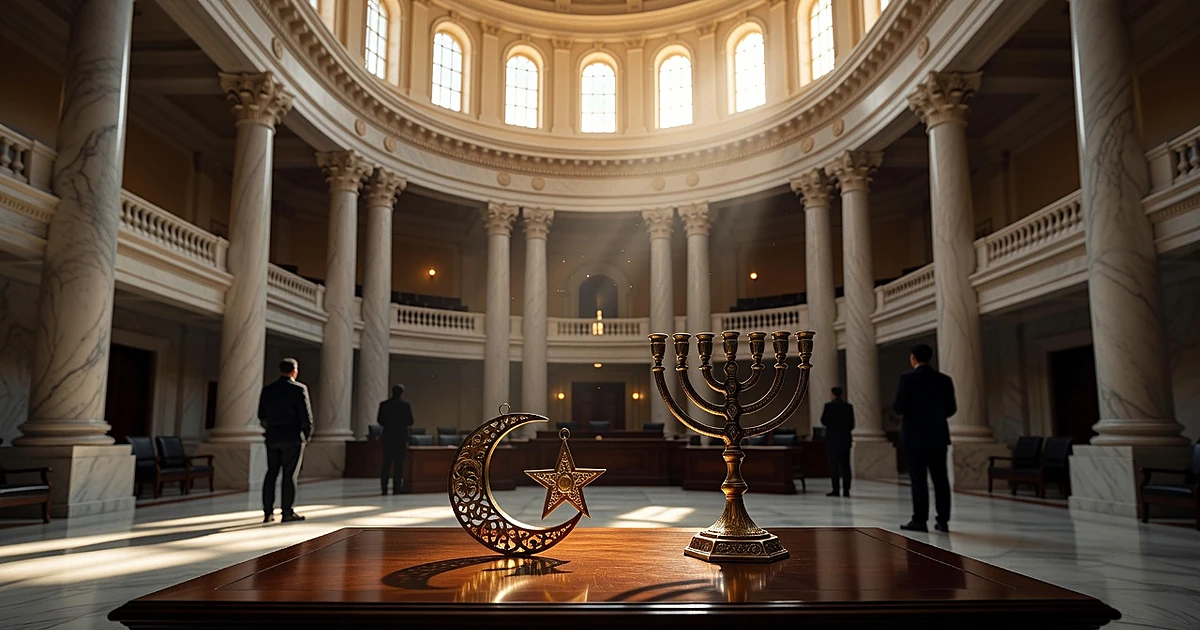
Fox News Digital reported that California Gov. Gavin Newsom signed Assembly Bill 2017 on a Sunday, formally adding Eid al-Fitr and Eid al-Adha to the list of state holidays.
California became the second state after Washington to pass statewide legislation recognizing the two Muslim holidays. The law permits public schools and colleges to close and makes state employees eligible to observe them. Schools and businesses are not required to shut down, and courts must stay open.
The timing drew sharp pushback. Before Newsom signed AB 2017, he already had multiple bills on his desk covering other religious observances, including Jewish holidays such as Rosh Hashanah and Yom Kippur. AB 395 had reached him days earlier than the Eid measure.
He did not sign the additional religious-observance bills until Wednesday, just before the midnight deadline. Those measures were AB 395 and AB 1763. He also signed SB 1387, which recognizes Jewish identity as an ethnicity.
Elizabeth Barcohana, chair of Jewish engagement for the California Republican Party, told the Cleveland Jewish News the signing order revealed Newsom’s priorities as he looks toward a national run.
"The fact that Newsom chose to sign the Eid law before the law that protected other religious observance speaks volumes about the direction he is moving as he eyes a 2028 run for the presidency."
Barcohana went further, framing the Eid recognition as something more than equal treatment. She argued the measure fits a pattern of special handling.
"People may think this is alarmist, but this is an example of American laws adopting a Sharia law framework."
She described what she saw as uneven privileges: special protections other religious observances do not receive, the option to shut down public institutions for a holiday that until now only Christian holidays received, and curriculum in public schools that is religious in nature about a faith that emphasizes conversion.
The New York Post likewise noted Republican disbelief over Newsom’s decision to move first on the Muslim holiday bill while Jewish holiday protections waited.
That sequencing debate lands against a broader backdrop of Newsom’s national standing, including recent shifts in 2028 Democratic nomination odds that have put other party figures ahead of him.
AB 395 would codify Jewish holidays, among others, into state law. It would also require state agencies and facilities such as schools to “make every reasonable effort” to avoid scheduling significant functions on those days.
AB 1763 would guarantee K-12 students excused absences for religious holidays. Together with the Eid measure, the package expands formal recognition and workplace and school accommodations across multiple faiths.
Newsom has signed other contested measures that drew Republican fire, including a bill critics labeled the “Stop Nick Shirley Act” for shielding immigration nonprofit workers from scrutiny. The holiday package fits a familiar pattern of high-profile signings under tight deadlines.
Not every Jewish voice shared the sequencing complaint. David Bocarsly, CEO of Jewish California, told Fox News Digital his organization was focused on results rather than order.
"With more than 1,000 bills in front of him this past month, we aren't concerned with the sequencing of Assembly Bill 395 and Assembly Bill 1763, as long as they got signed, and they did. We're thrilled to see these two critical religious freedom protections become law and to recognize three Jewish holidays in California statute for the first time."
Bocarsly’s group celebrated the Jewish-holiday protections and the SB 1387 ethnicity recognition once they cleared the governor’s desk. The practical effect is that three Jewish holidays now appear in California statute where they had not before, while the two Eids join the state holiday list.
A spokesperson for Newsom’s office rejected the idea that the governor was ranking religions against one another. The office framed the decisions as routine legislative process.
"This is not about manufacturing a scorecard among faiths. The Governor signs bills based on the substance of the legislation and the constitutional process governing when he receives and acts on bills. California is proud to continue strengthening its religious freedom, something our nation’s founders strongly believed in, too."
The statement did not address why AB 395, which arrived earlier, sat unsigned while the Eid bill moved first on Sunday. It also did not explain the Wednesday rush to finish the remaining religious-observance measures before the deadline.
Newsom has often cast himself as a defender of California’s choices against federal pressure, including when he pointed at Trump over a DOJ probe that reporting showed began earlier. Religious-holiday legislation gives him another chance to set state policy on contested cultural ground.
AB 2017’s core mechanics remain limited: schools may close for the Eids but do not have to; businesses face no closure mandate; courts stay open; state workers gain eligibility to observe. The political fight is less about the text than about which faiths cleared the desk first and what that order suggests about the governor’s national calculations.
California voters and taxpayers now watch whether equal treatment under the law means equal urgency from the governor’s pen, or whether some holidays move to the front of the line while others wait until the final hours.