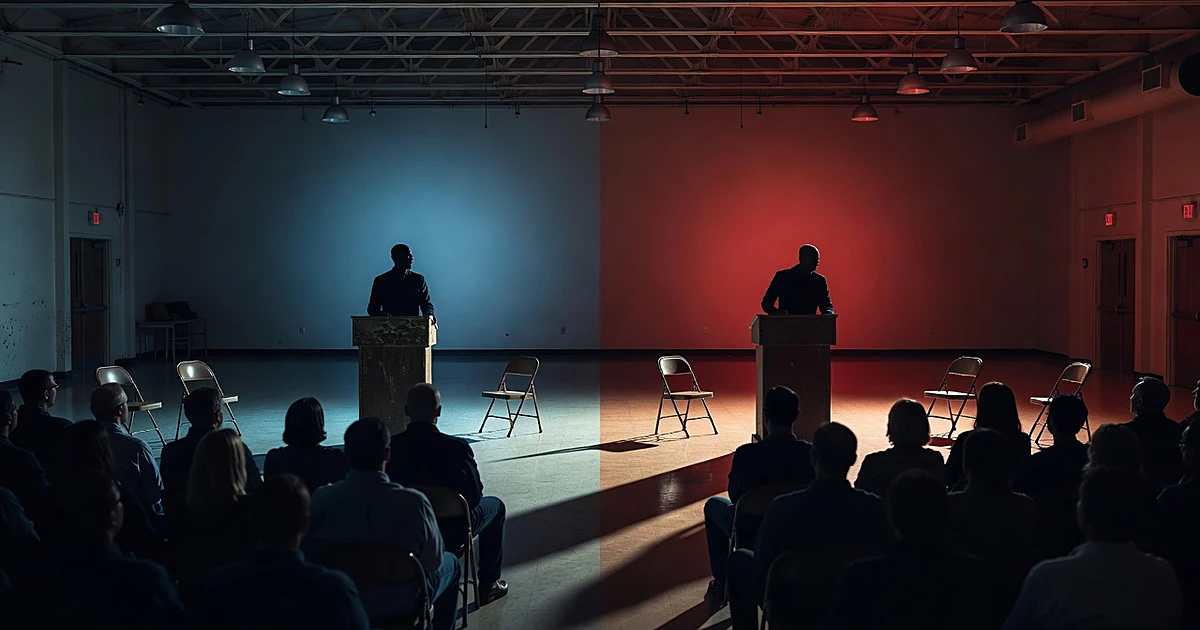

Fox News host Brian Kilmeade predicted Tuesday that the United States will enter a "kinetic war" with Iran before Labor Day, a forecast that lands as gas prices surge, midterm elections loom, and U.S.-Iran negotiations remain stalled.
Kilmeade made the prediction on Fox News's "The Five," framing it as the logical next step after weeks of American economic and military pressure on Tehran. He argued that financial pain alone would not force Iran to the table and that direct military confrontation was coming within weeks.
The Hill reported Kilmeade's on-air comments, which came one day after former Defense Secretary Mark Esper said the Trump administration appeared to be on its "back foot" in managing the broader Iran strategy, even as American strikes have hit Iran's air force, navy, militias, and ballistic missile forces hard.
Kilmeade told viewers he believed President Trump would first tighten economic pressure on Iran over "the next several weeks," then move to military force. He cited Iran's "misery index", a broad measure of economic distress, as running at 91 percent, a figure he offered without sourcing on air.
"I think the real story is what we do next in Iran. I think the president's going to put the economic squeeze on them. I think the misery index is up to 91 percent."
Then came the sharper prediction. Kilmeade did not hedge it or frame it as one possibility among many. He stated it as his expectation.
"So, just my point is this: I think we end up in a kinetic war to finish this thing off before Labor Day because the Iranians need to understand who the superpower is."
The term "kinetic war" refers to active combat operations, bombs, missiles, ground engagements, as opposed to the economic sanctions, cyber operations, and diplomatic maneuvering that can precede open fighting. Kilmeade's use of the phrase signals he expects a significant escalation beyond the strikes the U.S. has already carried out.
That prediction did not come out of nowhere. Months earlier, Kilmeade's own Fox News Radio show featured NATO experts and insiders discussing what they described as a "90% chance" of kinetic military action targeting Iran's nuclear and missile programs. Retired NATO Supreme Allied Commander Gen. Phil Breedlove and Michael Makovsky of the Jewish Institute for National Security of America were among the guests who laid out that assessment.
So Kilmeade has been building toward this conclusion for months, not improvising on a Tuesday afternoon.
President Trump struck a different tone over the weekend. In an interview with Axios published Sunday, Trump described the U.S. posture toward Iran as deliberately restrained, at least on the diplomatic front.
"We are only semi-negotiating with them. We are just watching Iran with its huge inflation and the fact they have no money."
Trump also characterized his approach as "low-keying it," a phrase that sits in tension with the scale of military operations Esper described. Whether "low-keying it" means the president is content to let economic pressure do the work, or simply that he is downplaying the pace of escalation, remains an open question.
Kilmeade has not always aligned neatly with Trump's public framing on Iran. In a prior episode, the Washington Examiner reported that Kilmeade publicly disagreed with Trump's decision to blame the Obama administration's $1.7 billion cash payment to Iran during a presidential press conference on the conflict.
"You have got to bring people together as the president, and to continue to take shots at President Obama three and a half years later doesn't make any sense," Kilmeade said at the time. His co-hosts pushed back, defending Trump's remarks as highlighting failed Democratic appeasement policies. The exchange showed Kilmeade is willing to break from the expected Fox News line when he thinks the moment calls for it, a tendency that gives his current war prediction a different weight than a generic partisan talking point.
Fox News has seen its share of internal friction among its on-air personalities in recent months, and Kilmeade's willingness to stake out positions that don't track with White House messaging is part of that pattern.
Former Defense Secretary Mark Esper offered the most detailed public assessment of what U.S. strikes have accomplished so far. Speaking Monday on NewsNation's "The Hill," Esper said American forces had inflicted serious damage across multiple domains of Iran's military.
"Tactically, we have imposed a lot of pain on them through our U.S. military strikes against their air force, their navy, their militias, their ballistic missile forces, done a lot of tactical damage."
But Esper paired that assessment with a warning. He said the administration appeared to be on its "back foot" regarding broader war strategy, a phrase that suggests tactical success has not yet translated into a clear path to resolution. Winning individual engagements is not the same as winning the conflict, and Esper's framing implied the White House has not yet articulated how the current campaign ends.
That gap between tactical results and strategic direction is exactly where Kilmeade's prediction gains its force. If the administration's own former defense secretary sees drift, and the president describes his posture as "low-keying it," then the question of what comes next is not hypothetical. It is the central question of the conflict.
The Iran conflict is not playing out in a political vacuum. Average U.S. gas prices sat at roughly $4.04 a gallon as of last week, according to AAA, up sharply from approximately $3.14 a year earlier. That 90-cent jump, roughly a 29 percent increase, lands directly on the household budgets of the voters who will decide the midterm elections in about two months.
Republicans are already concerned about holding their House and Senate majorities this fall. The Iran war has put pressure on Trump's polling numbers, and rising gas prices compound the problem. Voters who backed Republicans expecting economic stability and strong but measured foreign policy are now watching fuel costs climb while the path forward in Iran remains unclear.
Other Fox News hosts have warned that conservative voter enthusiasm could flag heading into the midterms if key promises remain unfulfilled, and the Iran situation adds another layer of uncertainty for Republican candidates trying to run on competence and results.
Kilmeade's Labor Day timeline is significant partly because of what follows it: the final sprint to Election Day. A shooting war launched in late August or early September would dominate the fall campaign. It could rally the country behind the commander in chief, or it could deepen the anxiety of voters already stretched by high prices and an open-ended military commitment.
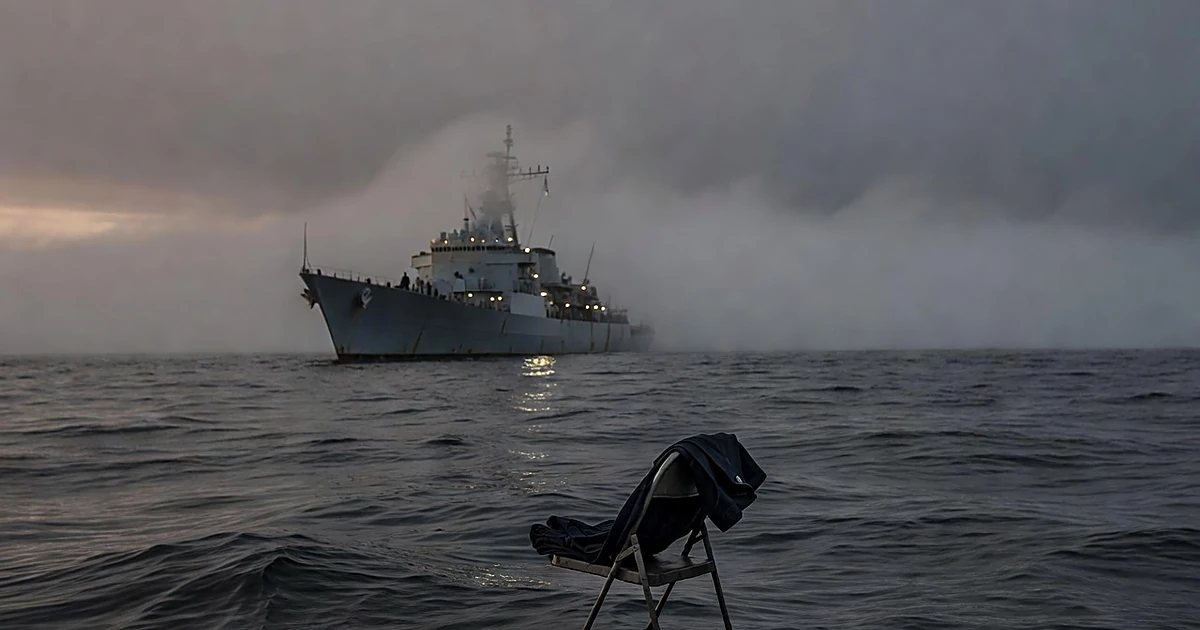
The day after Kilmeade's prediction, Fox News reported that U.S.-Iran negotiations over the Strait of Hormuz, the narrow waterway through which a large share of the world's oil passes, were "deadlocked." Trump claimed the U.S. Navy had established a "wall of steel" blockade, restricting Strait traffic to under ten percent of pre-war levels. Iranian officials rejected those claims and warned of a "prolonged conflict" with severe disruptions to international shipping.
If those figures are accurate, the economic stakes extend well beyond American gas pumps. A near-total blockade of the Strait of Hormuz disrupts global energy markets, pressures allied economies, and raises the cost of the conflict for every nation that depends on Middle Eastern oil. It also raises the question of how long the current posture can hold before one side or the other forces a resolution, by negotiation or by escalation.
Trump's relationship with Fox News anchors has itself become a recurring subplot. The president has publicly pushed back on Fox News coverage he considers unfavorable, and the network's hosts have at times found themselves navigating between loyalty to their audience, their own analysis, and the White House's preferred narrative.
Kilmeade is a television host, not a Pentagon official. His prediction carries no operational authority. No U.S. official quoted in any of the available reporting has confirmed or denied that a kinetic escalation is imminent. The prediction is Kilmeade's own analysis, delivered on air, based on his reading of the situation.
But Kilmeade is not a random commentator. He has covered this conflict closely, hosted military and intelligence experts who have laid out the case for escalation, and shown a willingness to break from both the White House line and the Fox News consensus when he thinks the facts point elsewhere. His prediction reflects a view that the current middle ground, heavy strikes, partial blockade, stalled talks, rising costs, is not sustainable.
The open questions are substantial. What specific military operations would a "kinetic war" entail beyond the strikes already underway? What is the congressional authorization basis for a broader campaign? What polling data supports the claim that the war is damaging Trump's numbers? None of these are answered in the available reporting.
Meanwhile, Fox News's broader roster continues to generate headlines of its own. The network's personalities have become newsmakers in their own right, from programming decisions on Fox Nation to on-air clashes that spill into the conservative media ecosystem.
Kilmeade's Labor Day deadline gives the country a concrete marker to watch. If he is right, the next three weeks will bring a dramatic escalation. If he is wrong, the prediction will join a long list of cable-news forecasts that overestimated the speed of events. Either way, the underlying problem remains: a conflict with no clear endgame, rising costs at home, and an election bearing down on a party that needs results, not predictions.
When the people paying $4.04 a gallon head to the polls this fall, they will not be grading on the curve of good intentions. They will be grading on outcomes, and right now, the scorecard is incomplete.