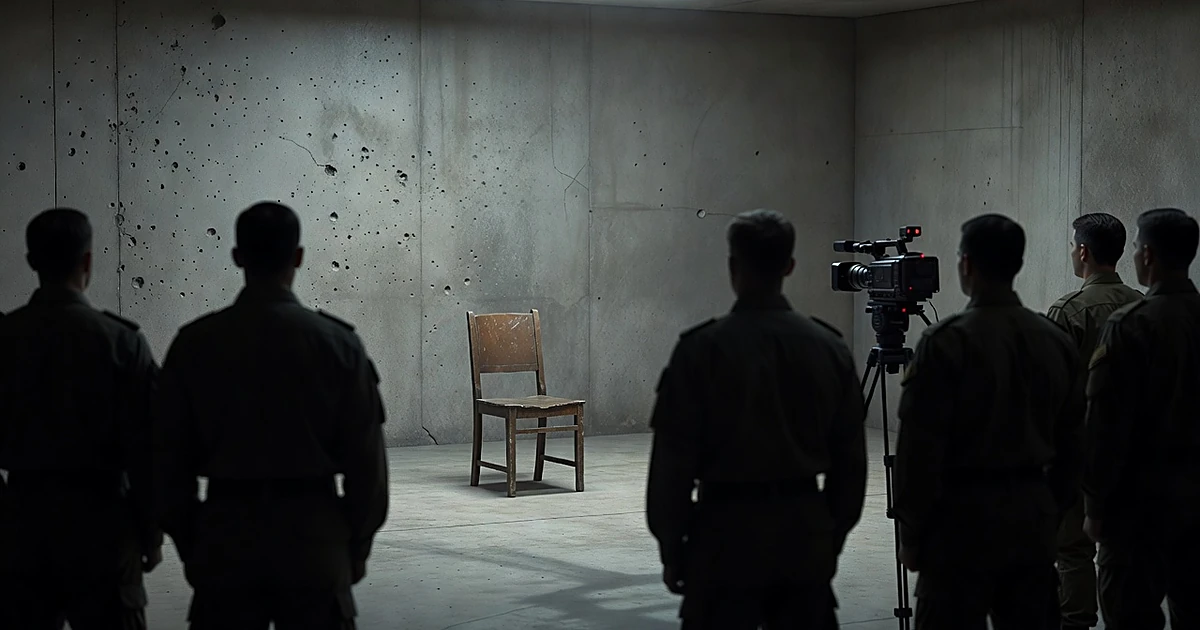
Alabama put Jeffery Lee to death by lethal injection for a 1998 double murder at a small-town pawnshop, three months after a federal judge blocked the state from using nitrogen gas, calling it unconstitutionally cruel.
Lee, 49, was pronounced dead at 6:22 p.m. Thursday at William C. Holman Correctional Facility in Atmore, Alabama. The execution began just after 6 p.m., roughly 98 days after a judge's ruling spared him from a scheduled nitrogen gas death on June 11. The New York Post reported that Lee clenched his fists on the gurney as the injection was administered, then closed his eyes. His spiritual adviser held his feet and appeared to pray.
Lee's final words were brief. He told witnesses: "All is well. I just want to say to my family, I love them. To my brothers on life row, I love them." Minutes later, he was dead, 28 years after the crime that put him on death row.
The crime dates to December 12, 1998, at Jimmy's Pawn Shop in Orrville, a small town about 65 miles west of Montgomery. A surviving employee testified that Lee walked into the store, asked to look at wedding rings, and told staff he would return after getting money from his grandmother. He came back with a sawed-off shotgun.
Lee shot and killed the shop's owner, Jimmy Ellis, and an employee, Elaine Thompson. A third employee was also shot but survived by falling to the floor and playing dead. Once Lee left, the survivor called 911.
Ellis was more than a small-town pawnshop owner. He was a singer whose voice resembled Elvis Presley's, performed under the masked persona "Orion," and was the subject of a 2015 documentary. His murder, and Thompson's, left a lasting mark on the community.
Lee was convicted of capital murder and attempted murder in 2000. The jury voted 7, 5 to sentence him to life in prison. The judge overrode that recommendation and imposed a death sentence instead, a practice Alabama later recognized was flawed enough to abolish. In 2017, the state passed a law ending judicial override in capital cases, stripping judges of the power to swap a jury's sentencing decision. But the law was not retroactive. Lee's sentence stood.
Governor Kay Ivey declined to intervene in Lee's clemency bid. After the execution, she issued a statement connecting the case to the 2017 reform:
"In June, after Mr. Lee attempted to avoid his deserved death sentence, I reaffirmed my commitment that justice would ultimately be served. Tonight, that promise was fulfilled for his victims, Jimmy Ellis and Elaine Thompson, as well as for their loved ones who have long-awaited his sentence to be carried out."
Ivey said the case "underscores exactly why" the 2017 law did not apply to existing death sentences. Alabama Attorney General Steve Marshall echoed the sentiment, stating Thursday evening that "justice was finally served."
For Lee's attorneys, the judicial override was the central injustice. They released a statement after the execution arguing that the state had condemned a man under a rule it later admitted was wrong:
"His death sentence rested solely on judicial override, an old law that Alabama has repealed. The State itself concluded this practice was wrong enough to abandon yet still put a man to death under it. That is a moral failure, not just a legal formality."
That argument did not persuade the courts. The U.S. Supreme Court denied Lee's request to stay the execution Thursday afternoon, turning back the appeal without comment. Cases involving graphic evidence of violent crime often stir public debate over the justice system's handling of the most severe punishments, and Lee's case was no exception.
The path to Thursday's execution was anything but straightforward. Lee had filed a lawsuit in 2016 challenging Alabama's lethal injection protocol. In 2018, after the state authorized nitrogen gas as an execution method, Lee agreed to dismiss that lawsuit. The deal was clear: if Lee was to be executed, the state would use nitrogen hypoxia.
Alabama began carrying out nitrogen gas executions in January 2024. The method has been used in eight executions nationwide, seven in Alabama and one in Louisiana. But when the state moved to execute Lee by nitrogen gas on June 11, a federal judge stepped in.
U.S. District Judge Emily C. Marks permanently blocked Alabama from executing Lee by nitrogen gas, ruling the method violates the Eighth Amendment's ban on cruel and unusual punishment. Fox News reported that the 11th U.S. Circuit Court of Appeals had found the three minutes it could take for an inmate to lose awareness under nitrogen gas represented an "intolerable" time frame given the likely suffering involved.
Judge Marks, however, noted that Alabama still has two other authorized execution methods, lethal injection and the electric chair, and that Lee was not entitled to block those. Breitbart reported Marks wrote in her ruling:
"The Constitution does not guarantee a painless death, and human life cannot be purposefully extinguished without some risk of pain. The Court, the condemned, and the State must all confront that sobering reality."
The Supreme Court declined to lift the judge's ruling on June 11. The very next day, Marshall's office filed paperwork to set a new execution date, this time by lethal injection. The attorney general argued nothing precluded the switch. Lee's lawyers countered that the 2018 agreement bound the state to nitrogen hypoxia, but that argument failed to gain traction in the courts.
The broader legal question, whether the Supreme Court will ever rule a state's execution method unconstitutional, remains unresolved. The high court has never done so. Accountability in the criminal justice system often hinges on how institutions follow through on their own commitments, a tension visible in state-level legal proceedings across the South.
Lee's supporters made a public push in his final days. On Tuesday, they held a rally outside the Alabama Capitol under a banner reading "HONOR THE JURY", a reference to the 7, 5 jury vote for life imprisonment that the sentencing judge overrode. On Thursday night, after the execution, supporters gathered in a vigil outside the Alabama Governor's Mansion.
The clemency bid and the legal challenges both failed. The jury-override argument carried moral weight for Lee's defenders, but Alabama's courts treated the matter as settled law. The 2017 reform closed the door going forward. It did not reopen cases already decided.
Lee's execution was the second in Alabama this year and the 27th across the United States. The emotional toll of violent crime and its aftermath, felt by victims' families, communities, and even those with no direct connection to the case, rarely fades with time. For the families of Jimmy Ellis and Elaine Thompson, Thursday's execution came more than a quarter century after the crime itself.
Alabama acknowledged its old sentencing practice was broken. It just refused to undo what that broken practice had already built. Whether that counts as justice depends on which side of the override you stand on, but the state made its choice, and Jeffery Lee is dead.