
Vice President JD Vance told a podcast audience Thursday that there were many times during his 12-year marriage to Usha Vance when he believed the relationship would end, a candid admission he paired with a blunt self-assessment of his own shortcomings as a husband.
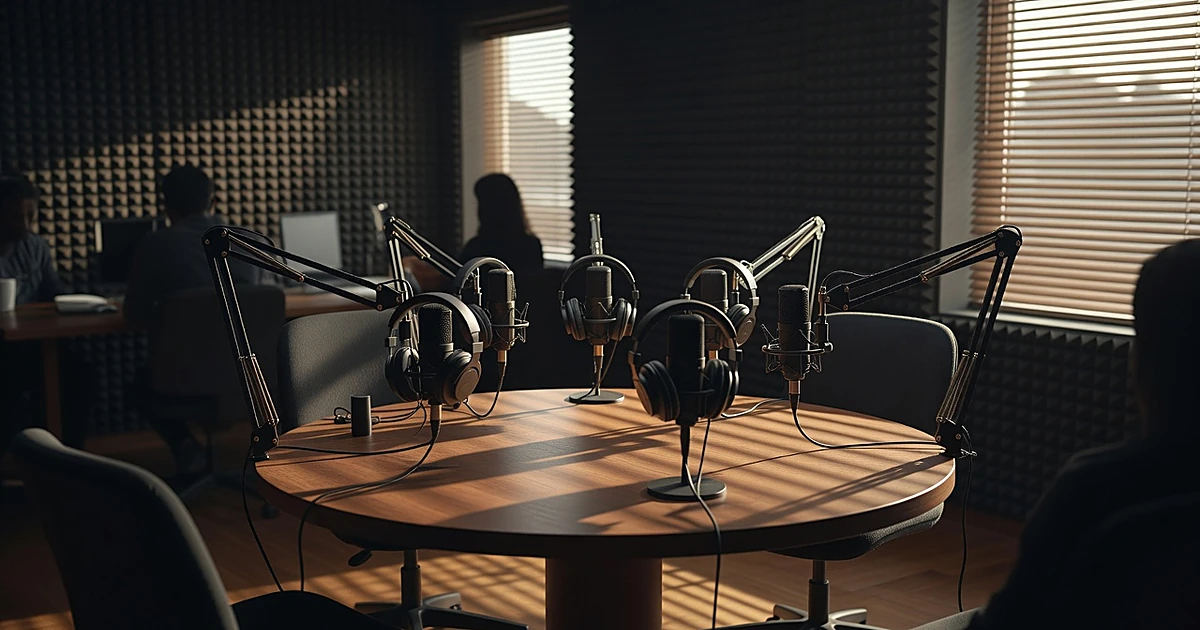
Appearing on Steven Bartlett's Diary of a CEO podcast on June 18, Vance described the marriage as "chaotic" at points and traced the couple's early difficulties to what he called his own "avoidant attachment style." He said he has never attended couples' therapy with Usha, calling the idea "way too uncomfortable to talk to a stranger," though he disclosed he has gone to individual therapy himself, as The Independent reported.
Despite the rough patches, Vance called Usha his "best friend", a characterization that, taken alongside the rest of his remarks, paints a picture of a marriage that survived real friction rather than one that floated along on autopilot.
Public figures rarely volunteer this kind of material. Politicians in particular tend to present their marriages as seamless partnerships, useful props at fundraisers and town halls. Vance went the other direction. He named his own flaw, avoidant attachment, and owned the instability it created. That is not a confession of weakness. It is the kind of accountability conservative voters say they want from their leaders: honest about failure, clear about what went wrong, and willing to say so without a publicist standing behind the camera feeding lines.
The vice president has shown a pattern of public self-examination that sets him apart from the standard political playbook. He previously called his own "childless cat ladies" remark "boneheaded" in a memoir about faith, a moment of candor that drew both praise and criticism.
What Bartlett's interview reveals is a man who came up hard, Vance's background in Appalachian poverty is well documented, and carried that hardness into the closest relationship in his life. The "avoidant attachment style" he described is clinical language for a common pattern: pulling away when closeness gets uncomfortable, shutting down instead of engaging. Vance did not blame Usha. He did not blame circumstances. He pointed at himself.
When Bartlett asked whether the Vances had ever tried couples' counseling, the vice president said no. His reason was plain: it felt too uncomfortable to discuss their marriage with a stranger. That answer will land differently depending on the listener. Some will hear avoidance. Others will hear a man who believes certain things belong between a husband and wife, not in a therapist's office.
Vance did acknowledge seeking individual therapy at some unspecified point, though the interview did not detail when or for how long. The distinction matters. He was willing to work on himself privately. He simply drew a line at bringing the marriage into a clinical setting.
The Vances' relationship has drawn public interest from multiple angles. Vance has previously spoken openly about Usha's Hindu faith and his own path to Christianity, offering a window into how the couple navigates differences that would strain many partnerships.
Twelve years of marriage, with children, a political career that catapulted from a Senate seat to the vice presidency, and the relentless scrutiny that comes with both, is not a small thing. Vance's willingness to say he feared it would fail, and to explain why, suggests a man who knows the ledge he walked and does not pretend otherwise.
Washington rewards polish. It rewards the rehearsed answer, the pivot, the dodge. What it rarely rewards is a sitting vice president telling millions of podcast listeners that his marriage nearly collapsed, and that the fault was his.
Vance's critics will try to weaponize the admission. They always do. But the facts he laid out are straightforward: he struggled with emotional closeness, it damaged his marriage, and the marriage survived anyway. That is not scandal. That is life.
His concern for Usha has surfaced publicly before. He once described worrying about his pregnant wife at home during a chaotic White House Correspondents' Dinner evacuation, a small moment, but one that tracked with the picture he painted on Bartlett's show of a man who cares deeply about his wife even when he has not always shown it well.
The podcast appearance did not include any comment from Usha Vance, and it remains unclear whether she was aware of or had any input into what her husband would share. That gap is worth noting. Vance told his side. Hers remains private.
There is a reason Vance's name already appears in early 2028 presidential polling. Voters are sizing him up not just on policy but on character. And character, for the kind of voters who carried the Trump-Vance ticket, is not about perfection. It is about whether a man can look at his own failures and say so plainly, without a focus group telling him which words test well.
Vance did that on Thursday. He described a marriage that was hard, admitted he was the reason it was hard, and said his wife is still his best friend. No spin. No deflection.
As both parties begin to size up their benches for the next presidential cycle, moments like this one will shape how voters evaluate the vice president beyond his voting record and policy positions. Authenticity is easy to fake in a 30-second ad. It is much harder to fake across a long-form podcast interview where the host asks whether your marriage almost ended and you answer honestly.
Plenty of politicians talk about family values. Fewer talk about what happens when those values get tested inside their own homes. Vance did not offer a polished narrative of marital bliss. He offered something harder to spin and harder to dismiss: the truth that marriage is difficult, that he made it more difficult, and that he and Usha chose to stay.
In a political culture that rewards performance over honesty, that counts for something. Whether it counts for enough will depend on what Vance does next, not what he says on a podcast, but how he governs, how he leads, and whether the man who described his own avoidance has actually learned to stop running from hard conversations.
A leader who can admit he almost lost the most important relationship in his life, and explain why it was his fault, is at least starting from a place most politicians never reach: the truth.