The Secret Service missed 102 radio warnings from local police, operated a broken counter-drone system staffed by a single under-trained operator, and never told Donald Trump's protective detail that a gunman had climbed onto a nearby rooftop with a rifle, all before Thomas Crooks fired eight shots at the former president on July 13, 2024. Those are the findings of a 64-page Department of Homeland Security Inspector General report that amounts to one of the most damning indictments of a federal protective agency in modern memory.
The report, designated OIG-26-13, concluded that "the Secret Service missed multiple opportunities to detect, prevent, and disrupt" the assassination attempt at a Trump campaign rally in Butler, Pennsylvania. One rally attendee was killed. Two others were wounded. A bullet grazed Trump's right ear. Crooks was killed moments later by law enforcement.
None of it had to happen. That is the plain takeaway from a report that traces failure after failure, not in hindsight, but in real time, as officers on the ground radioed warnings that never reached the people responsible for keeping the candidate alive.
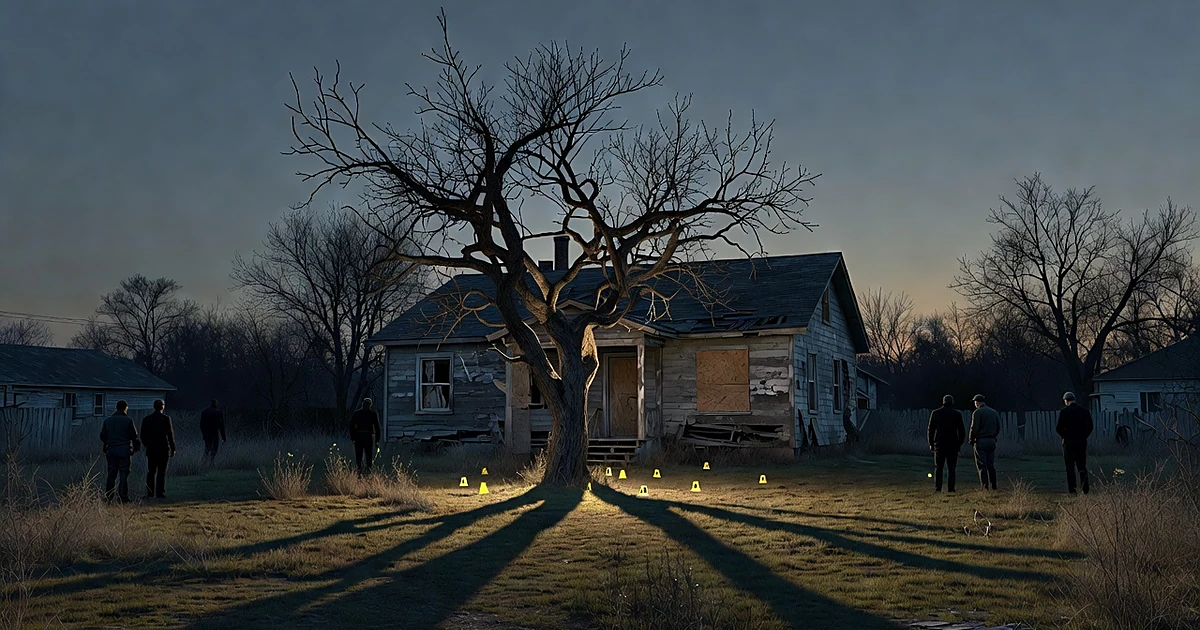
The central failure was communications. Local law enforcement officers near the American Glass Research complex began reporting a suspicious man carrying a rangefinder before the shooting. Later transmissions warned that the suspect had climbed onto a rooftop and was armed with a rifle. The rooftop sat roughly 155 yards from the stage, an easy shot.
The Secret Service never received those transmissions. All 102 of them. The reason: the agency never established a joint communications room with the local officers securing the event. Secret Service personnel received only five phone calls and three text messages about Crooks before he opened fire.
Trump's protective detail was never informed of the growing threat.
That detail deserves to sit by itself. The men and women whose sole job was to shield a presidential candidate from harm were kept in the dark while local cops screamed into radios that a rifleman was on a roof 155 yards away.
AP News reported that local law enforcement were unaware of two communications centers on the grounds, meaning critical radio transmissions about the suspicious individual on the roof never reached Secret Service personnel. Acting Director Ronald Rowe Jr. later acknowledged the scope of the breakdown:
"This was a failure on the part of the United States Secret Service. It's important that we hold ourselves to account for the failures of July 13th and that we use the lessons learned to make sure that we do not have another failure like this again."
Hours before the rally, Crooks flew a drone over the event site for nearly nine minutes. The Secret Service's counter-drone system, the one piece of technology designed to catch exactly this kind of reconnaissance, was inoperable. It had been assigned to a single operator the IG report described as under-trained.
When that operator later learned an armed suspect was on the roof, the response was not to radio for help or contact local officers who knew the terrain. The operator searched the internet for the building's location. The New York Post first reported that detail. The operator was still searching online when Crooks opened fire.
The failures were not limited to technology. The Secret Service received plans from Pennsylvania State Police showing the vulnerable location outside the event perimeter. The agency failed to secure those areas. It also failed to use available vehicles or other resources to block Crooks' line of sight to the stage.
Fox News reported that a proposal to block the line of sight with trucks was rejected by campaign staff over press photography concerns. Former Secret Service agent Paul Eckloff offered a blunt assessment of the site itself:
"The biggest failure that is probably not addressed in the OIG report is that they never should have accepted the risk of doing it at this site. It never should have been done. That roof had an egregious line of site."
The IG report's own language was only slightly more diplomatic. It found that "the Secret Service's overall lack of policy and processes coupled with limited intelligence sharing and poor collaboration and communication with protectee staff and state and local law enforcement set the conditions that led to missing opportunities to prevent and detect the attempted assassination."
Perhaps the most troubling dimension of the report is that none of this was unforeseeable. Just The News reported that the Inspector General had warned the Secret Service about serious deficiencies in communications with local police and inadequate training for security sweeps months before the Butler rally. That earlier report was completed in April 2024, three months before Crooks pulled the trigger.
Those same systemic failures had been identified after January 6, 2021. Secret Service management resisted implementing the recommended changes, claiming their own 2022 policy memo was sufficient. It was not.
Sen. Roger Marshall, R-Kansas, captured the frustration plainly: "I feel like our Secret Service is using technology and protocols from last century." Rep. Barry Loudermilk, R-Georgia, pressed for the release of the IG findings: "We need to get this... report. We need to see it. And it needs to happen soon."
Congressional Republicans applied significant pressure on then-Secret Service Director Kimberly Cheatle to resign. The Washington Examiner reported that Cheatle refused to step down in her first interview after the incident, telling ABC News, "The buck stops with me", while simultaneously declining to leave the job. Republicans on multiple House committees demanded information from the Secret Service and FBI, and some threatened to defund Cheatle's salary.
The pattern of institutional resistance to accountability has only deepened concerns among lawmakers. Sen. Blackburn has demanded a full audit of every Secret Service employee following a string of security failures that extend well beyond Butler.
The IG report issued seven recommendations aimed at strengthening communications, intelligence sharing, and event security. The Secret Service said it agreed with all of them and stated that many reforms have already been implemented following the Butler attack. The agency did not specify which reforms.
Agreement with recommendations is easy. The question is whether an agency that ignored its own inspector general's warnings in April 2024, resisted changes flagged after January 6, and allowed a gunman to surveil a rally site by drone for nine minutes undetected has the institutional will to follow through.
Local law enforcement spotted Crooks nearly 100 minutes before he opened fire, Just The News reported. One hundred minutes. In that window, officers identified a suspicious individual, tracked his movement, watched him climb onto a roof, and confirmed he was armed. The Secret Service, the agency with primary responsibility for the candidate's life, received almost none of it.
The consequences of that failure were measured in blood. One American went to a political rally and did not come home. Two others were wounded. The man seeking the presidency survived by inches.
The threats to Trump and his family have not abated since Butler. Disturbing incidents have continued to surface, including an AI-generated image depicting Trump in a grave that prompted the White House to call on Barack Obama to condemn it.
Nor has the broader climate of hostility toward the president cooled. An Ohio teacher was terminated after a TikTok video appeared to lament Trump surviving a separate shooting incident.
The AP's reporting used a word that deserves emphasis: complacency. The Secret Service's own internal review identified it as a factor. Not a single rogue agent. Not a freak technological glitch. Complacency, the institutional kind, where warnings pile up, reports gather dust, and the people in charge assume the system will hold because it always has.
Until it doesn't.
The Butler rally was not an intelligence failure in the traditional sense. The intelligence was there. Local officers gathered it, processed it, and broadcast it. The failure was that the Secret Service built no mechanism to hear it. No joint radio channel. No shared command post. No functioning drone detection. No secured perimeter around a rooftop with a clear shot at the stage.
The composure shown by the Trump family during subsequent security incidents only underscores how much the people closest to these events have had to absorb while the institutions responsible for their safety scramble to explain what went wrong.
Seven recommendations now sit on the Secret Service's desk. The agency says it accepts them all. History suggests acceptance and implementation are very different things, especially inside an agency that was warned about these exact deficiencies months before a gunman climbed onto a roof in Butler, Pennsylvania, and opened fire.
When the people paid to protect a presidential candidate cannot hear 102 radio warnings from the officers standing a few hundred yards away, the problem is not resources or bad luck. It is a broken institution. And broken institutions do not fix themselves by agreeing with reports.