

Texas Gov. Greg Abbott is making a direct pitch to the billionaires and businesses fleeing New York, positioning his state as the obvious landing spot for anyone tired of being treated like a target by City Hall. The move comes as New York City Mayor Zohran Mamdani doubles down on tax proposals aimed at the wealthy, and as at least one of the world's most powerful hedge funds signals it may pull billions in investment out of Manhattan.
Abbott's press secretary, Andrew Mahaleris, told Fox News Digital that the governor sees an open lane.
"Governor Abbott is proud to welcome businesses and job creators from across the country to Texas, where we have no state income tax, reasonable regulations, and a pro-growth environment that encourages free enterprise to flourish."
Mahaleris added that "punitive policies that target successful job-creating entrepreneurs only accelerate the trend of companies choosing Texas." The statement was not abstract. It was aimed squarely at Mamdani's New York.
The immediate catalyst: a viral video Mamdani released on April 15 promoting higher taxes on non-primary residences worth more than $5 million in New York City. The video singled out billionaire Ken Griffin, who leads Citadel, one of the world's most powerful hedge funds. Mamdani filmed outside Griffin's 24,000-square-foot, $238 million penthouse on Central Park South.
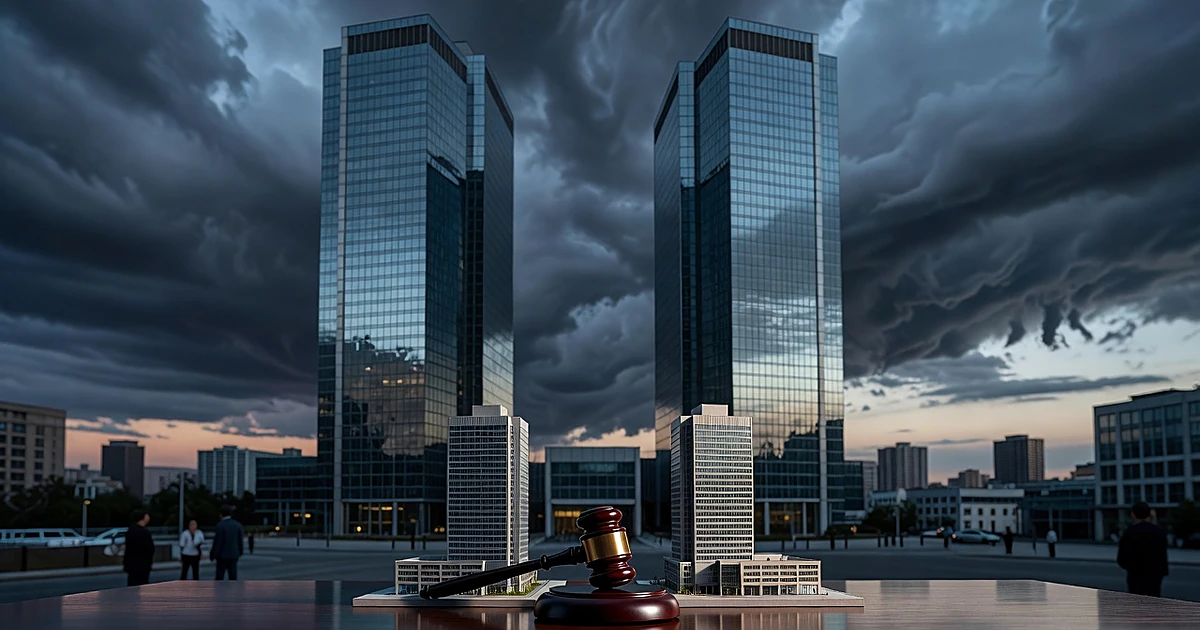
Griffin fired back on May 6 at the Milken Institute Global Conference. He called the video "creepy and weird" and said he had watched it multiple times. Then he delivered the line that should keep New York's budget planners up at night: Citadel is reassessing its planned $6 billion Manhattan office tower.
That is not a rhetorical threat. Griffin already moved Citadel's global headquarters from Chicago to Miami in 2022. He said Florida was "unquestionably" the right choice. Now Mamdani's provocations may cost New York a signature commercial development and the tax revenue, jobs, and economic activity that come with it.
Mamdani has also backed expanded tenant protections and measures aimed at curbing what he calls wealth inequality in a city of nearly 9 million. But the practical effect of his agenda is becoming hard to ignore: the people who generate the tax base he needs are making plans to leave.
Abbott has made attracting out-of-state businesses a cornerstone of his economic strategy, and the numbers support the approach. Texas' economic output per person jumped more than 10% from 2021 to 2024, according to federal data. The state charges no income tax. And the pipeline of relocations keeps growing.
Just last week, Dell Technologies announced a unanimous board decision to change the company's legal home from Delaware to Texas. Abbott celebrated the move in a post on X: "Welcome home, @Dell." He added: "This is what happens when job creators and innovators are welcomed, not punished." And he predicted "more businesses are sure to follow."
That confidence is not unfounded. Texas continues to draw firms and executives from higher-tax states, and Abbott's office is making an aggressive case that the trend will only accelerate as progressive cities push harder on wealth-targeting tax policy.
The contrast between Austin and New York could hardly be sharper. One state rolls out the welcome mat. The other plans massive hiring sprees at City Hall while demanding tax hikes to close budget gaps.
The mayor's tax-the-rich posture does not exist in a vacuum. Mamdani himself has warned that New York City faces a $5.4 billion two-year budget gap. His own words, reported by National Review, laid out the stakes plainly:
"Faced with no other choice, the city would have to exercise the only revenue lever fully within our own control. We would have to raise property taxes. We would also be forced to raid our reserves."
That gap did not appear out of nowhere. New York City spent close to $8 billion over three years to shelter nearly 250,000 illegal immigrants, according to the same reporting. A November 2025 Center for Migration Studies report estimated that nearly 600,000 illegal immigrants live in New York City. The fiscal pressure from that population, and the city's decision to extend services to it, sits directly alongside Mamdani's push to extract more revenue from the wealthy.
In February 2026, Mamdani and Rep. Alexandria Ocasio-Cortez posted a video in Spanish encouraging New York City parents to enroll children in free 3-K or Pre-K regardless of immigration status. Ocasio-Cortez said: "Any New York City parent, regardless of your occupation, income, or immigration status, is eligible to sign their child up."
The math writes itself. A city hemorrhaging billions on migrant services, advertising taxpayer-funded benefits to illegal immigrants, and simultaneously antagonizing the billionaires who fund the tax base is not a city with a revenue problem. It is a city with a priorities problem.
Mamdani's first 100 days in office have already drawn scrutiny for broken promises on housing, policing, and libraries. The wealth-flight risk adds a new dimension: it threatens the revenue that funds everything else.
Griffin's public reassessment of a $6 billion project is the most visible example, but the pattern is broader. Citadel's 2022 move from Chicago to Miami previewed exactly this dynamic, a major employer choosing a lower-tax, friendlier jurisdiction over a progressive city that treated business as a problem to be managed rather than a partner to be cultivated.
Now Abbott is leaning into that opening. His office frames the competition in simple terms: Texas welcomes job creators; states like New York punish them. The message is designed to reach not just Griffin but every executive, fund manager, and entrepreneur watching Mamdani's approach and running their own calculations.
The political fallout for Mamdani may already be materializing. His handpicked candidate was recently crushed in a Greenwich Village council race, suggesting that even in deep-blue New York, voters may be tiring of his brand of governance.
And Mamdani's habit of ducking tough questions about national political alliances does not inspire confidence that he has a serious plan to stop the bleeding. When your city faces a multibillion-dollar deficit and your signature economic policy is filming videos outside billionaires' apartments, the strategy has a shelf life.
Several questions remain unanswered. No specific bill or ordinance text has been identified for Mamdani's tax proposal on non-primary residences worth more than $5 million. Whether Citadel ultimately cancels its Manhattan tower or simply scales it back is unclear. And the federal data source behind the claim that Texas' per-person output jumped more than 10% has not been specified.
What is clear is the direction of the trend. Capital moves toward opportunity and away from hostility. Abbott understands this. Mamdani, so far, does not, or does not care.
New York did not become the financial capital of the world by treating wealth as a sin. If Mamdani keeps governing as though it is, Abbott will keep holding the door open. And eventually, the people walking through it will take the tax base with them.