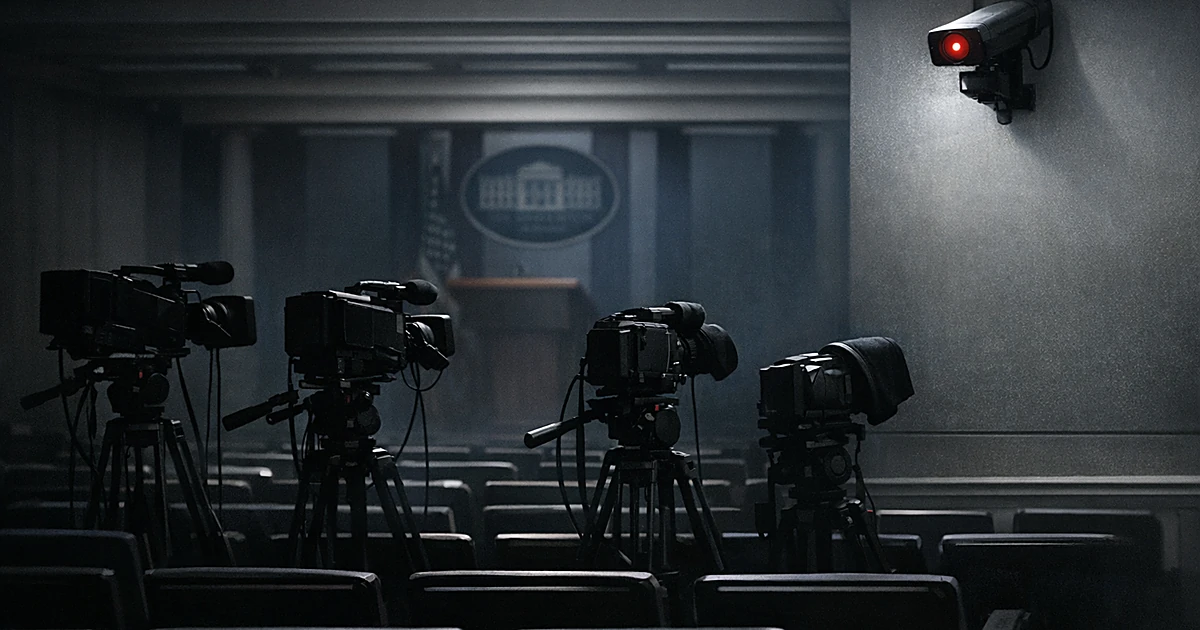
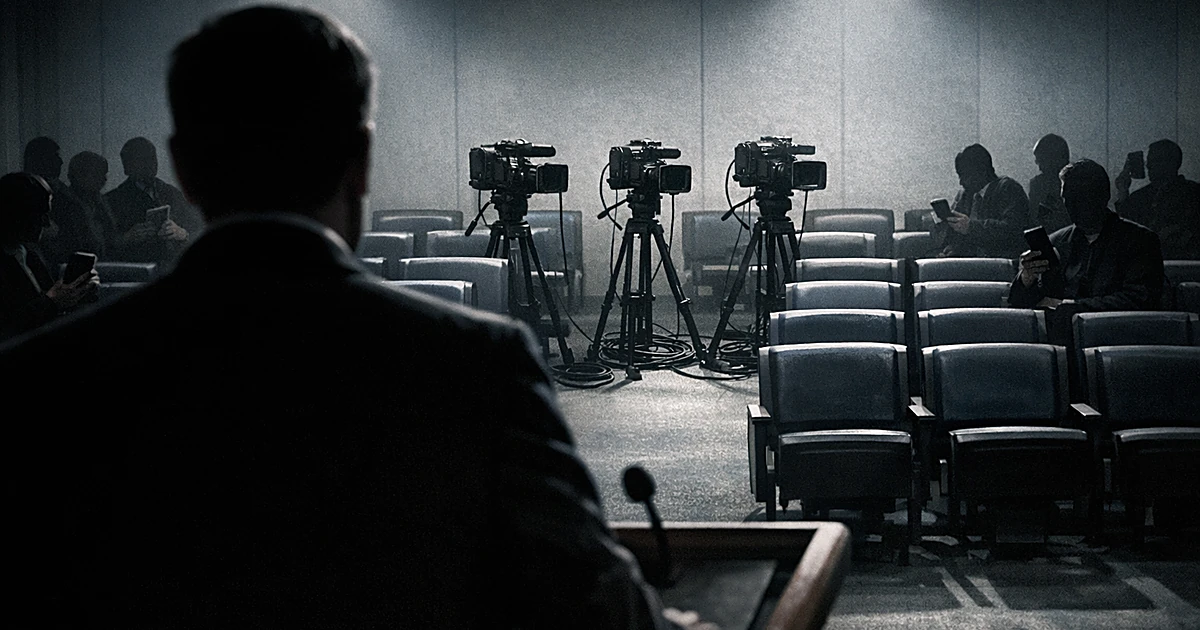
Fox News and every major television network stopped providing independent video coverage of President Trump's daily schedule after the White House blocked CNN from carrying out its assigned pool duties, a standoff that leaves the public relying on government-produced footage for now.
Bryan Boughton, the Fox News Washington bureau chief who also chairs the White House TV pool, sent an email to colleagues announcing the shutdown. Monday was CNN's scheduled rotation day, and the White House had already revoked press credentials for CNN, MSNBC, and Politico over what Trump called dishonest reporting. Rather than skip CNN's slot and carry on, the entire pool, Fox News, ABC, CBS, and NBC, refused to fill in, Breitbart News reported.
Boughton's message was direct:
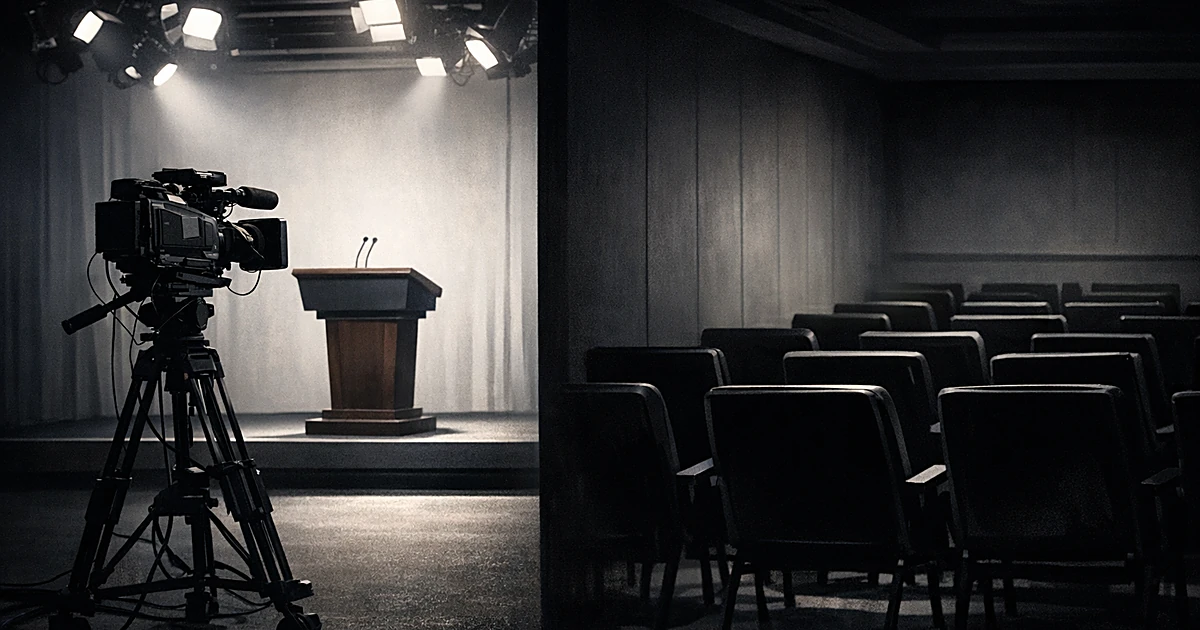
"This is to advise that, effective today, the TV pool will not be covering events designated as pool coverage of the President. This follows the White House's position preventing CNN from fulfilling its assigned pool duties. There will be no replacement pool put in place."
No network offered to step in. No workaround was announced. The White House press office schedule for Monday listed no primary pool camera for a 1:45 p.m. Eastern ribbon cutting on the South Lawn or for Trump's subsequent trip to the United Nations General Assembly in New York City. Meetings Trump had scheduled with New York City Mayor Zohran Mamdani and French President Emmanuel Macron were both listed without press access.
Five networks rotate the primary TV pool slot each day: Fox News, CNN, ABC, CBS, and NBC. On any given day the presidential pool also includes print journalists, a radio reporter, a new-media reporter, and photographers. The arrangement exists so that a small group of credentialed journalists can record events, bill signings, Oval Office remarks, arrivals and departures, and share that footage with every outlet in the White House Correspondents' Association.
When the White House barred CNN from fulfilling its Monday assignment, the remaining four networks could have covered the day's events themselves. They chose not to. Fox News, which has built its brand on independence from the legacy-media pack, joined ABC, CBS, and NBC in walking away from the camera. The decision is striking given recent friction between Fox and its own conservative viewers over programming and personnel decisions.
The practical result: the only video of Trump's Monday events would come from the White House's own production team, broadcast on the official White House YouTube channel and social media pages. That arrangement hands the executive branch a monopoly on the visual record of the presidency, exactly the kind of concentration of narrative control that a free press is supposed to prevent.
Trump addressed the controversy Monday morning on Truth Social. He framed the access revocations not as an attack on journalism broadly but as a targeted response to outlets he considers dishonest:
"The White House is not instituting an assault on the Free Press, something which I cherish. It is instituting an assault on the FAKE NEWS, something that has grown like Cancer in our beloved United States of America. It is corrupt, purposeful, pervasive, fully coordinated, and totally out of control. It is a threat to our National Security, and must be stopped, NOW!"
The president did not specify which stories or segments prompted the ban on CNN, MSNBC, and Politico. The revocations had been announced before Monday, though the exact date and formal mechanism were not detailed in available reporting.
Trump's willingness to confront media outlets he views as hostile is nothing new. He has publicly clashed with individual anchors at networks that nominally share his audience. His criticism of Fox News anchor Shannon Bream over immigration coverage earlier this year underscored that even outlets generally friendly to his agenda are not exempt from pushback when he believes their reporting falls short.
The networks are betting that a coverage blackout pressures the White House to restore CNN's credentials. But the leverage cuts both ways. The White House already has its own cameras, its own livestream, and its own distribution channels. If no independent crew is on the South Lawn, the administration's footage becomes the only footage. Every outlet that refused to shoot Monday's events will end up either ignoring the president's schedule or rebroadcasting government-produced video, neither option serves the public well.
Fox News occupies an especially awkward position. Its bureau chief made the call as pool chairman, and the network went along with a boycott organized around restoring access for CNN, a direct competitor whose editorial posture Fox has spent years contrasting with its own. The move aligns Fox with the same legacy outlets whose coverage it routinely challenges on air.
That alignment comes at a time when Fox's relationship with its core audience is already strained. Internal decisions about talent, including the network's split with longtime anchor Maria Bartiromo, have fueled viewer frustration. Conservative audiences who already question whether Fox still fights for them will notice that the network chose CNN's cause over covering the president.
Behind the Bartiromo departure was a deeper dispute. Reports indicated Fox fired the anchor after she shared internal communications with White House officials, a sequence that raised questions about editorial independence inside the network. The pool boycott adds another chapter to that tension: Fox's leadership siding with industry peers while its audience expected it to side with the administration.
The White House did not cancel or reschedule any of the day's events. The 1:45 p.m. ribbon cutting on the South Lawn proceeded as planned. Trump traveled to New York for the U.N. General Assembly session. His meetings with Mayor Mamdani, a Democrat, and French President Macron were both on the calendar, all without a network pool camera in the room.
Whether the White House's own video team recorded those meetings and released footage was not addressed in available reporting. The White House had previously stated it would continue broadcasting events live through its YouTube and social media channels, but the scope of that commitment, whether it extends to bilateral meetings and behind-closed-doors sessions, remained unclear.
Several questions remain unanswered. Did Boughton's email represent a consensus among all five pool networks, or did he act unilaterally as chairman? Is the boycott indefinite, or tied to a specific condition such as CNN's reinstatement? Has the White House Correspondents' Association issued any formal response? None of those answers appeared in the reporting.
On-air personalities at Fox have already drawn conservative backlash for conduct that seemed out of step with the network's audience. Joining a press boycott built around restoring CNN's credentials is a far bigger bet, one that tells viewers Fox's institutional loyalty to the media guild outweighs its editorial identity.
Press access to the White House matters. Independent cameras in the room matter. But the networks' response to Trump's decision does not strengthen press freedom, it abandons the field. Walking away from coverage to protest a competitor's ban hands the White House exactly what critics claim to fear: sole control of the visual record.
If the networks genuinely believed the public's right to independent presidential coverage was at stake, the answer was to show up with more cameras, not fewer. Instead, Fox News, ABC, CBS, and NBC left the South Lawn empty and gave the White House YouTube channel a monopoly on the day's footage. The press corps chose a labor action over a public service.
When the people paid to hold power accountable decide the best way to do that is to stop watching, the only winner is the institution they claim to check.