Sen. John Fetterman is calling a Wall Street Journal investigation into his Senate work ethic a smear job driven by "disgruntled staffers," but the specific allegations he left unanswered may speak louder than his denials.
The Pennsylvania Democrat fired back at the Journal's reporting in a statement to CNN published September 6, calling the story a collection of "lies, half truths, innuendoes, smears and anonymous" sourced material. He accused the paper of stripping references of "any context and circumstances." The Journal's report, published the previous week, alleged Fetterman had been skipping meetings with constituents, ducking a police officers' funeral, and showing little interest in his duties beyond appearances on conservative media outlets.
Fetterman offered explanations for some of the allegations, and silence on others. That pattern matters. A senator who finds time for a Fox News hit on Israel but not for paralyzed veterans from his own state has a priorities problem that no amount of "hit piece" rhetoric can paper over.
Among the most striking allegations in the Journal's reporting: Fetterman allegedly canceled a meeting on health care with paralyzed veterans from Pennsylvania because he was feeling sick. Less than an hour later, he showed up at the office for a Fox News appearance to discuss Israel and the war in Iran.
Fetterman doubled down on his explanation, telling CNN he was "at home throwing up" when he backed out of the veterans meeting. He said he later "felt well enough to continue the day as scheduled." That timeline, too sick to meet disabled veterans, well enough for cable television within the hour, is one Fetterman apparently expects Pennsylvanians to accept without further question.
The senator also addressed a reported flippant remark about attending a meeting with officials from the Children's Hospital of Philadelphia. He apologized, calling it a "dumb joke," and pointed to a post on his official Senate social media account as evidence that he did eventually meet with the hospital's representatives.
Not every allegation got even a partial response. The Journal reported that Fetterman refused to meet with constituents from a flood-prone area in Philadelphia who had traveled to Washington, D.C., with Pennsylvania state Sen. Anthony Hardy Williams to discuss federal cuts to grant programs affecting their community.
Williams, a fellow Democrat, did not hold back. He told the Wall Street Journal directly:
"He was available. He just chose not to meet with us."
Williams said Fetterman was seen in the halls of the Senate. Available but unwilling. That is not a scheduling conflict. That is a choice, and a revealing one for a senator whose party claims to champion vulnerable communities.
Fetterman's break with his own party's base has been deepening for some time, but refusing face time with constituents who made the trip to the Capitol takes the disconnect to a different level.
The Journal also reported that Fetterman refused to meet with Pennsylvania state Rep. Liz Hanbidge, who wanted to discuss homelessness issues in the state. On the same day he turned Hanbidge away, he reportedly did find time to sit down with Bruce Pearl, the former Auburn University basketball coach and Israel advocate. Fetterman did not immediately respond to either of those allegations.
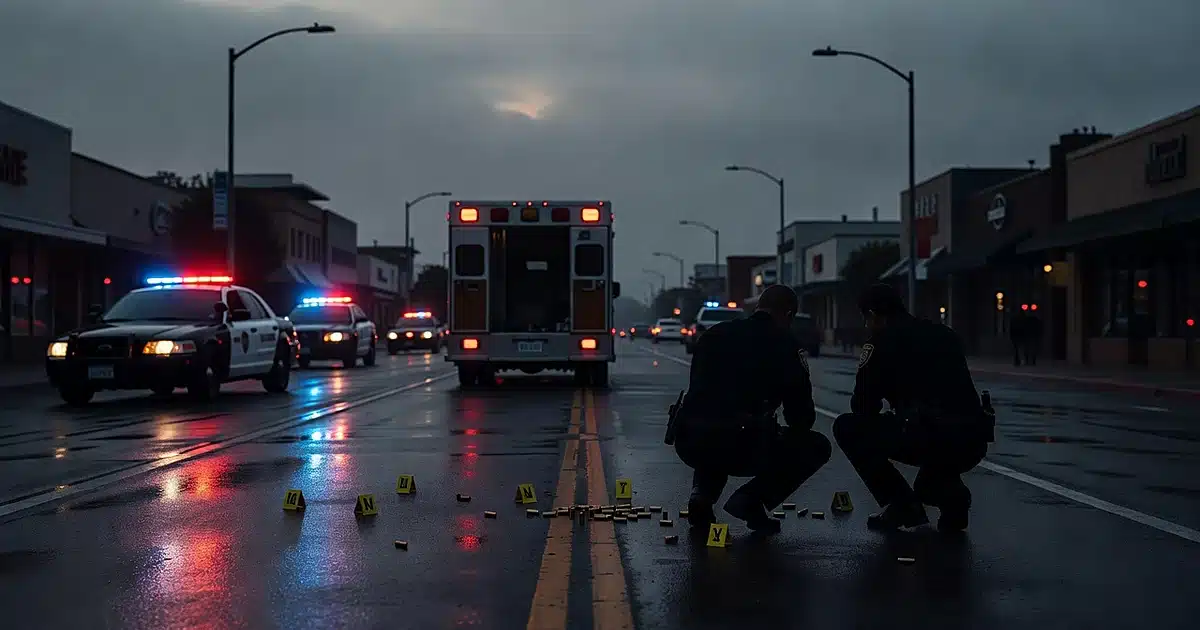
Perhaps the most politically damaging allegation involves a funeral. Three police officers were shot and killed near Fetterman's hometown in York County, Pennsylvania. The Journal reported that Fetterman backed out of attending their funeral after learning it could last more than three hours.
In his CNN statement, Fetterman did not dispute skipping the service. Instead, he said he privately sent flowers to the officers' families and pointed to a social media post on his official Senate account as proof he publicly expressed condolences. He also claimed he met with the officers' families at a fundraiser earlier in 2026.
Sending flowers and posting on social media are not the same as standing with a grieving community in person. For a senator who has insisted he remains committed to representing Pennsylvania, the decision to skip a law enforcement funeral over its length is a hard sell, especially to the blue-collar voters who put him in office.
This is not the first time Fetterman has faced questions about his engagement and fitness for office. He suffered a stroke on the campaign trail in 2022 and was treated for clinical depression at Walter Reed Medical Center in 2023, the same year he took office. In 2024, his former chief of staff, Adam Jentleson, told doctors he was worried about Fetterman's mental health. Jentleson also spoke publicly about Fetterman's outbursts and behavior.
New York Magazine published its own exposé about Fetterman in 2025, which he denied. Now the Wall Street Journal has added a fresh round of sourced reporting. Fetterman's response, dismiss it all as a "hit piece" and move on, is a strategy with a shelf life. Each new round of reporting makes the blanket denial harder to sustain.
Fetterman's political trajectory has made him an unusual figure. He voted against limiting President Trump's ability to wage the war in Iran under the War Powers Act. He has been an outspoken supporter of Israel and Israeli Prime Minister Benjamin Netanyahu, positions that have put him at odds with much of his own party. He has sided with Republicans on issues from AI development to foreign policy.
Those positions have earned him some goodwill on the right. But goodwill on policy does not excuse neglecting the basic duties of the office. Meeting with constituents, attending funerals for fallen officers, sitting down with state legislators who travel to Washington on behalf of their communities, these are not optional extras. They are the job.
Forbes sent its own request for comment to Fetterman's office regarding the allegations. It went unanswered. That silence fits a pattern: respond to the allegations you can explain, ignore the ones you cannot, and hope the news cycle moves on.
Fetterman told CNN he was "proud to continue to deliver for Pennsylvania." But delivering for Pennsylvania requires showing up, not just for Fox News segments and meetings with out-of-state advocates, but for the veterans, the flood victims, the state lawmakers, and the families of dead police officers who are, after all, his actual constituents.
Senate Minority Leader Chuck Schumer has publicly pleaded with Fetterman to stay in the Democratic fold, a sign of how far the senator has drifted from his party's center of gravity. But Fetterman's problem right now is not partisan loyalty. It is whether he is doing the work at all.
Meanwhile, Fetterman has continued to align with Trump on select policy fronts, a dynamic that makes him harder for Democrats to defend and easier for the press to scrutinize. The Wall Street Journal report landed in that gap, and Fetterman's rebuttal did not close it.
Calling a story a "hit piece" is the oldest play in the politician's handbook. But when the hits keep coming from former staffers, fellow Democrats, and now multiple national outlets, and when the senator's own rebuttals leave half the allegations untouched, the word starts to lose its force. Pennsylvania voters deserve a senator who answers the hard questions, not one who picks which ones to ignore.