
Four months after Nancy Guthrie vanished from her Tucson, Arizona, home, the FBI is discussing new technology tools that a forensics expert says could finally identify the person responsible. Sources told Fox News Digital over the weekend that the bureau has been exploring additional tech capabilities for the investigation, though the sources declined to specify what those tools are.
No suspect has been publicly named. No arrest has been made. A combined reward exceeding $1.2 million has drawn no one forward to claim it. And the physical Google Nest doorbell camera that once guarded Guthrie's front door was already missing by the time police arrived to investigate her disappearance on Feb. 1, 2026.
That set of facts, a missing victim, a missing camera, and a trail that went cold at the edge of a driveway, is exactly why the FBI's next technological move matters. Morgan Wright, CEO and founder of the National Center for Open and Unsolved Cases and an expert on forensic technology, told Fox News Digital on Monday that he believes the solution will come from data, not traditional detective work.
Wright, who also edits and hosts the "Crime: Reconstructed" Substack and podcast, laid out three likely areas for whatever new tools the FBI brings to bear: video forensics, signals analysis, and blockchain-related analysis. He framed the choice bluntly:
"If I'm going to put it into three buckets, I'd say it's going to come out of one of those three buckets."
The video forensics angle is not hypothetical. The FBI and Google already teamed up to recover images from the Google Nest doorbell camera, the device itself was physically removed from Guthrie's front door, but stored footage survived in the cloud. Those recovered images showed a masked man on Guthrie's doorstep several weeks before the night she disappeared. On the morning of Feb. 1, 2026, an armed individual appeared on that same camera, apparently tampering with it.
Wright suggested that more advanced analysis of that video, or of cell-site data, ad-tech data, and Bluetooth signals, could narrow the field. Investigators had already deployed state-of-the-art Bluetooth detection from a helicopter over the neighborhood, hoping to pick up a signal from Guthrie's pacemaker device. Whether that effort produced results remains unclear.
The signals-analysis approach would focus on electronic traces left behind by phones, devices, or network activity in the area around Guthrie's home on the night she vanished. Blockchain analysis, meanwhile, could come into play if financial transactions, ransom payments, cryptocurrency movements, or other digital money trails, are part of the investigative picture. Wright did not say he had specific knowledge of any such transactions; he identified it as one of three logical categories.
Wright offered his own reading of the publicly available evidence, and it pointed toward a single suspect acting alone. He noted that only one person appears on the recovered video. The reward, more than $1.2 million, has attracted no informants, which Wright took as a sign that no accomplice exists who might be tempted to turn.
"I don't know that there's anything else to indicate a second person."
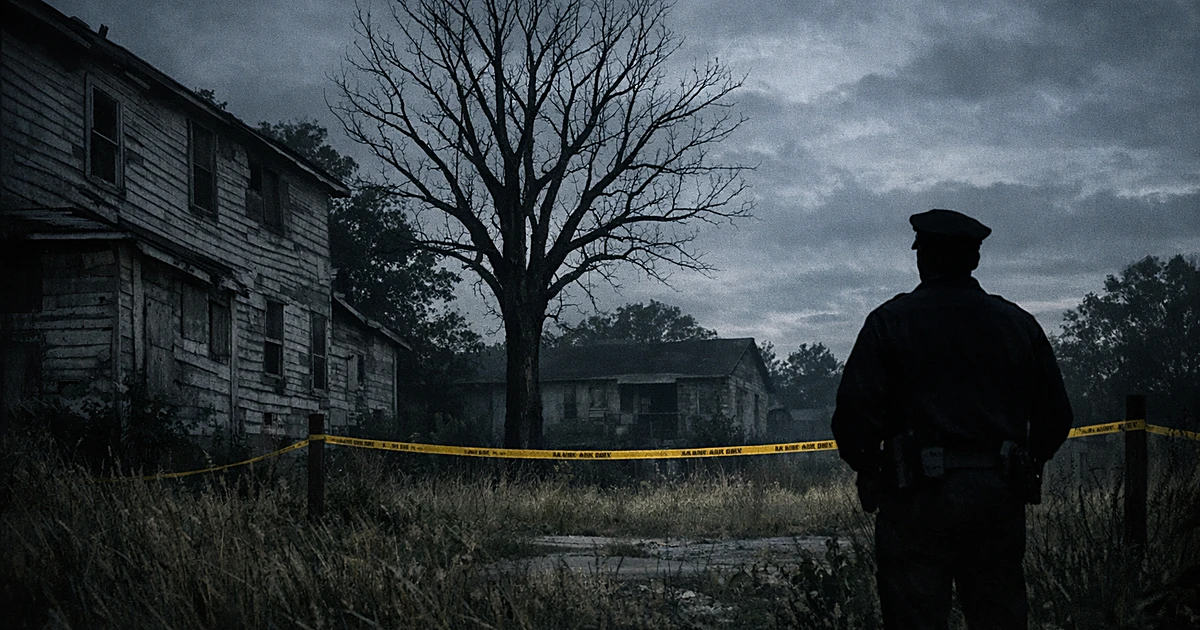
He also pointed to a physical detail that has not received wide attention. A blood trail led from inside the home to the edge of Guthrie's driveway, and stopped there. Wright's conclusion was direct:
"The blood trail stops at the edge of the driveway. So we know there was a car."
That detail, blood ending where pavement meets the street, suggests Guthrie was loaded into a vehicle. It also means the suspect had transportation staged and ready, a sign of planning rather than impulse. Pima County has confirmed that a vehicle connected to the disappearance remains in law enforcement custody, though details about its role in the case have not been made public.
The bureau's visible activity in Tucson has been steady. FBI agents canvassed homes near Nancy Guthrie's residence on Feb. 6, 2026, five days after she disappeared. Four days later, on Feb. 10, investigators returned to canvass the neighborhood around the home of Annie Guthrie, Nancy's daughter, also in Tucson.
Investigators were also photographed searching brush near Guthrie's house. The scope of the canvassing, two rounds in the same city within a week, suggests the FBI cast a wide net early. Whether that effort produced actionable leads has not been disclosed.
The Guthrie family has urged anyone with information to call 1-800-CALL-FBI. Anonymous tips can also be sent to Tucson's Crime Stoppers affiliate, 88-Crime, at 1-520-882-7463. The family's public appeals have been consistent, and Savannah Guthrie spoke publicly for the first time eight weeks after her mother vanished, drawing renewed attention to the case.
The gaps in this case are wide. No official statement from the FBI has described the specific new technology under discussion. No suspect has been identified, arrested, or charged. The exact circumstances of Nancy Guthrie's disappearance, what happened between the armed figure appearing on camera and the blood trail ending at the driveway, remain undisclosed.
Wright's assessment carries weight given his background, but it is expert analysis, not official FBI comment. The bureau's silence on operational details is standard practice in active investigations, though it leaves the public, and the Guthrie family, with little to hold onto beyond a reward that nobody has claimed.
The case has unfolded during a period when the FBI has faced scrutiny over its handling of other high-profile disappearances and investigations. The White House and FBI have been reviewing deaths and disappearances tied to U.S. defense secrets, a reminder that the bureau's caseload includes matters where answers have been slow to arrive.
Meanwhile, life has moved forward for the Guthrie family in ways that underscore the strange cruelty of a missing-person case that grinds on without resolution. Savannah Guthrie confirmed a new television hosting role even as the search for her mother continued, a reminder that the world does not pause while investigators work.
Wright framed the technological angle not as a luxury but as a necessity. Traditional investigative methods, canvassing, witness interviews, physical searches, have run for four months without a public breakthrough. The masked figure on the doorbell camera remains unidentified. The blood trail told investigators a car was involved but not where it went.
Wright put it plainly in his assessment of where the case stands:
"The solution to this case is going to be, I think, something technical, something that they come up with, new ways of analyzing data."
If he is right, the FBI's next move could turn stored data, video frames, cell signals, device pings, financial records, into the evidence that four months of fieldwork has not yet produced. The tools exist. The question is whether the data does.
A woman disappeared from her own home in broad daylight, and the camera that should have caught it all was ripped from the wall. If the FBI's technology can reconstruct what someone worked very hard to erase, it will be worth every dollar and every day it took to get there.