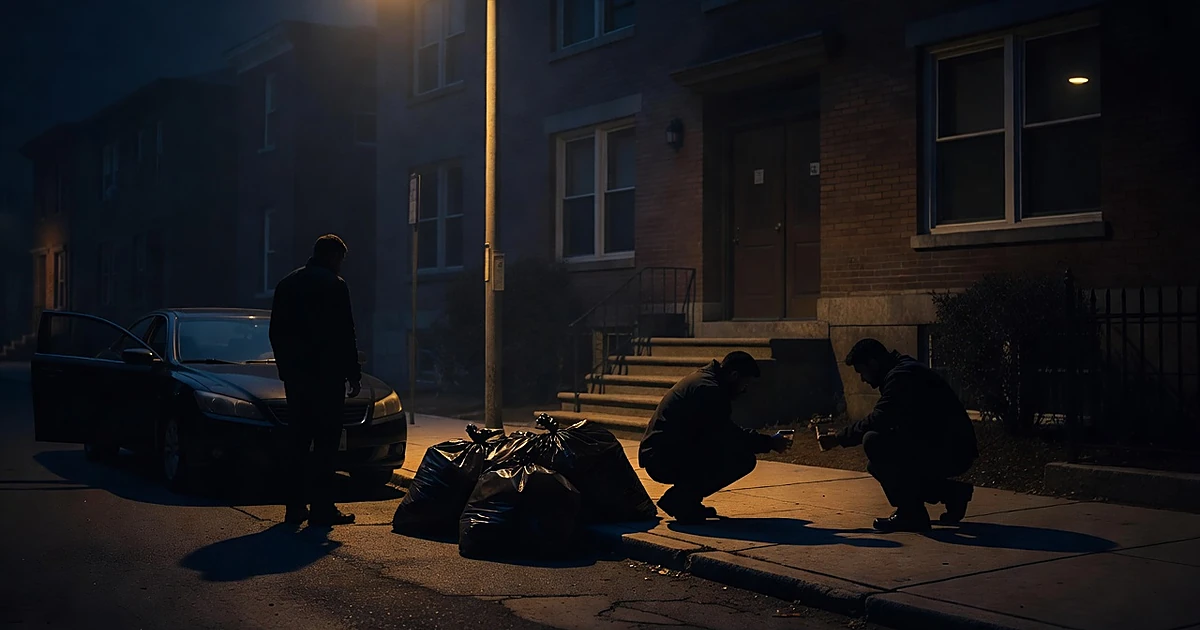




Five months after 84-year-old Nancy Guthrie vanished from her Tucson, Arizona, home, the FBI says it is still treating her disappearance as a kidnapping for ransom, even as a criminologist and a veteran trial attorney say the bureau appears to be hedging rather than leveling with the public about what it actually knows.
The FBI disclosed on Wednesday that it has received "several" ransom notes since Guthrie went missing late January 31 or early February 1. Some have been discounted as extortion attempts. Others, the bureau said, are still being evaluated as "potentially legitimate." But the agency offered no specifics on how many notes it has in hand, what distinguishes the fakes from the ones still under review, or whether any note has produced actionable intelligence.
That vagueness drew pointed criticism from criminologist Casey Jordan, who told NewsNation that her "gut feeling" is that none of the ransom communications are genuine, and that the FBI knows it.
Jordan laid out her reasoning in blunt terms. The single biggest red flag, she said, is that not one note has offered any evidence that the sender actually holds Nancy Guthrie, or knows what happened to her.
"The No. 1 reason, and this is probably 90% of it, is that nothing, no communication is offered, any proof of life, proof of death, evidence of anything."
She went further, arguing that the details contained in the notes could have been assembled by anyone with an internet connection. Jordan told NewsNation:
"The bottom line is, whatever they're mentioning that we know of is stuff they could have just learned online or picked up from AI and, you know, the satellite images of the scene and everything else. So, without any proof of life or death, there is no reason to believe that they're real. But I agree with Mark, (the FBI) is just kind of hedging their bets."
That assessment, that the bureau is keeping its options open rather than stating what the evidence shows, frames the central frustration for the Guthrie family and the public. The FBI's own statement was a single declarative sentence: "This case continues to be investigated as a kidnapping for ransom case." No elaboration. No timeline for resolution.
As we have previously reported, the bureau's posture has remained essentially unchanged for months, even as the evidence picture around the ransom notes has shifted significantly.
The ransom note saga has been a running source of confusion in this case. Breitbart reported that the FBI confirmed none of three specific ransom notes, two that surfaced early in the investigation and a more recent third, are believed to be genuine. FBI agents tested the notes' authenticity by depositing cryptocurrency into a listed account, which was never claimed. That detail alone suggests the note writers had no operational connection to whoever took Nancy Guthrie.
Reuters, cited in that same reporting, noted that the disclosure "seemed to raise doubts about investigators' fundamental premise that Nancy Guthrie was abducted for ransom to begin with."
At least one person has already faced legal consequences for sending a fraudulent ransom demand. A California man received probation after pleading guilty to sending a fake ransom note to the Guthrie family, an act of cruelty dressed up as a crime tip.
Yet the FBI's latest statement still leaves the door open to at least some notes being legitimate. That posture has drawn scrutiny. The bureau previously contradicted Reuters reporting that dismissed all the notes, insisting some remained under evaluation.
Trial attorney Mark Geragos, appearing on NewsNation's "CUOMO" program, offered a different read of the investigation's trajectory. He suggested the FBI believes the case will only break if someone on the inside talks.
"The FBI now, I think, has pretty firm control over the investigation, and they believe at this point that if it's going to be solved, it's going to be solved by somebody who I always call a confederate, or somebody who's going to give some information."
That framing, waiting for an insider to come forward, is a far cry from an agency closing in on a suspect. It suggests the physical evidence trail has gone cold, or at least that the FBI has not found a way to convert it into an arrest.
The physical evidence that does exist has been tangled in jurisdictional disputes. The Washington Examiner reported that investigators found a black glove near Guthrie's home that appeared to match gloves worn by the suspect visible in doorbell camera footage. The glove contained DNA evidence, and authorities planned to run it through the FBI's CODIS database, which holds more than 19 million offender profiles. Investigators were also tracing Walmart purchase records for an Ozark Trail Hiker backpack and other items the suspect appeared to be wearing.
But even that promising lead was clouded by infighting. Newsmax reported that Pima County Sheriff Chris Nanos allegedly blocked FBI access to key physical evidence, including gloves recovered near the scene, and sent materials to a private Florida lab instead of the FBI's crime lab at Quantico. The FBI doubled its reward to $100,000 for information leading to Guthrie's recovery or an arrest, but the jurisdictional standoff hampered the early weeks of the investigation.
Sgt. Aaron Cross, president of the Pima County Deputies Organization, put it plainly: "It is a common belief in this agency that this case has become an ego case for Sheriff Nanos." An anonymous federal source told Newsmax: "Over two whole weeks into this, the police have made no leads, no progress."
One of the more disturbing details to emerge involved a ransom note that claimed Guthrie had died and was "buried with nature", a chilling message that, like the others, produced no verifiable evidence.
The New York Post reported that FBI agents zeroed in on two specific dates, January 11 and January 24, weeks before Guthrie's February 1 disappearance. Agents canvassed neighbors and watched over their shoulders as they scanned security archives for footage from those dates. The focus on pre-abduction surveillance suggests this was not a crime of opportunity but a planned operation, carried out by someone who scouted the 84-year-old woman's home in advance.
DNA testing also confirmed that blood found on Nancy Guthrie's front porch matched the missing woman, who has been described as frail and having limited mobility. That detail makes the absence of any arrest five months later all the more difficult to explain.
Savannah Guthrie, Nancy's daughter, issued a social media appeal to whoever took her mother: "It is never too late to do the right thing." The family, the article noted, continues to live with the uncertainty of not knowing what happened.
The FBI's own shifting public posture on the ransom notes, first pushing back on reports that dismissed them all, then conceding many were dead ends, has not inspired confidence. The bureau's one-sentence statement this week did nothing to change that.
The Guthrie case arrived in the national spotlight partly because of Savannah Guthrie's public profile. But strip that away, and the facts describe a failure that should trouble anyone. An 84-year-old woman was taken from her home. Blood was found on her porch. A suspect was caught on camera. DNA was recovered. And five months later, the FBI is still parsing ransom notes it largely believes are fake, while telling the public it continues to investigate.
Casey Jordan called it hedging. Mark Geragos suggested the case now depends on a lucky break, someone with knowledge deciding to talk. Neither assessment reflects an investigation with momentum.
When a federal agency with vast resources spends five months on a kidnapping and its best public update is a single vague sentence, the family deserves better. So does the public that funds the bureau.