




The Trump administration is committing up to $42 million to revive a stalled Northeast gas pipeline, aiming to cut regional energy costs after years of blockage.
Energy Secretary Chris Wright told FOX Business on Monday that the Department of Energy will back permitting and pre-construction work on the long-delayed Constitution Pipeline under Title III of the Defense Production Act, a statute that allows the government to prioritize domestic industrial capacity.
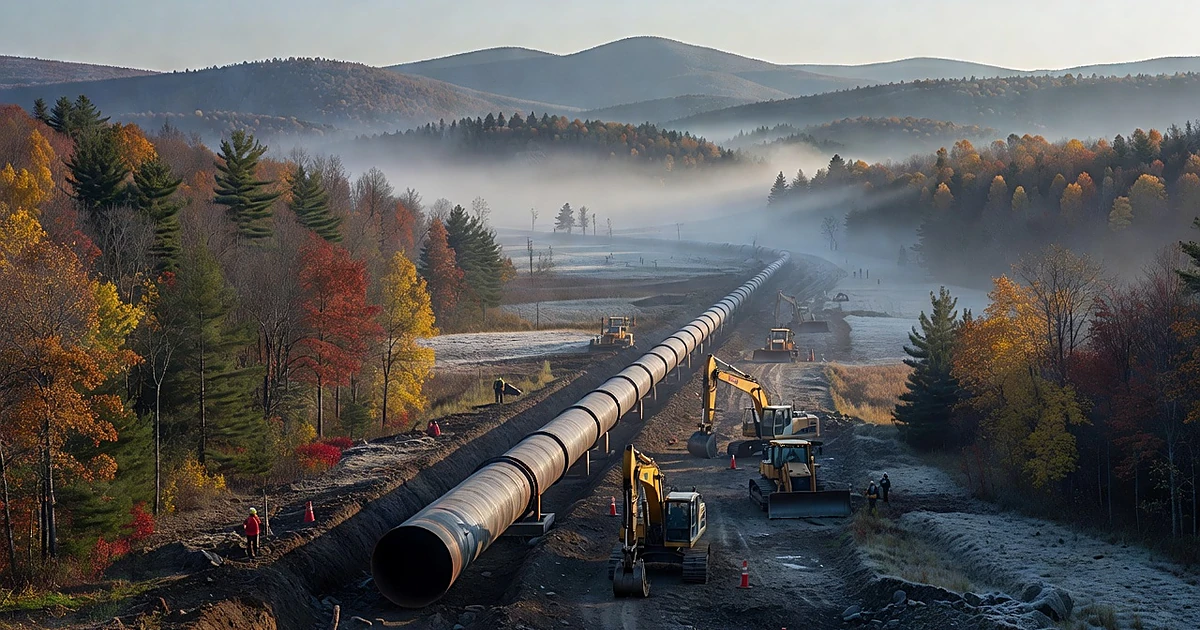
The proposed 125-mile line would move natural gas from Pennsylvania’s Marcellus Shale into New York and on to Northeast markets, carrying up to 650,000 dekatherms a day. Wright framed the money as a direct answer to high prices and tight winter supply.
Wright put the problem in plain terms.
"The answer to high prices is more supply to push prices down,"
he said. He added that more generation and heating fuel are the response when the grid sits near blackout risk.
"The answer to get to the ragged edge of blackouts is more electric generation, more energy for home heating as well."
The project has spent more than a decade in regulatory limbo. Developers first proposed the Constitution Pipeline in 2012. It won federal approval in 2014. New York regulators then denied a key water-quality certification in 2016. Years of fights followed. Developers walked away in 2020 over economic viability concerns.
Constitution Pipeline Co. asked the Federal Energy Regulatory Commission in December 2025 to reissue the federal certificate. The Trump administration’s April determination under the Defense Production Act already flagged domestic natural gas infrastructure as a priority amid permitting delays, financing limits, and pipeline bottlenecks. Monday’s funding announcement puts federal dollars behind the next steps.
U.S. Energy Information Administration figures cited in the coverage show why the region feels the pinch. Heating oil prices are forecast to average 34 percent higher this winter than last. Households that rely mainly on heating oil, most of them in the Northeast, are expected to spend about 21 percent more even with milder weather forecasts.
During Winter Storm Fern in January, petroleum briefly overtook natural gas as New England’s top source of electricity generation. Power plants turned to oil when gas supplies ran tight. Capacity constraints have left the region exposed every time demand spikes.
Those same energy realities show up in other administration priorities, from pressure that has left Iran posting zero oil revenue to broader efforts to expand American supply. More pipeline capacity into the Northeast is the domestic half of that ledger.
Wright’s timeline is aggressive but clear. He wants construction to start next spring.
"We hope construction begins next spring,"
Wright said. He wants the line running before the winter of 2028.
"We'll want to see this pipeline in service two years from now, as we go into the winter of 2028."
Williams Companies, the infrastructure firm tied to the effort, is targeting the fourth quarter of 2028 for commercial service, pending the remaining approvals. The new federal money is meant to clear environmental and permitting work that still stands between paper and steel in the ground.
Even with the Defense Production Act backing and the fresh FERC request, the pipeline faces federal and state regulatory gates before construction can begin. New York’s 2016 water-quality denial remains the historical flashpoint. That single state action helped sink a federally approved project and left Northeast ratepayers dependent on tighter supply and higher-cost fuels.
The pattern is familiar to anyone watching energy costs under prior policy choices. Restrict supply, then watch prices climb and winter reliability fray. The Trump administration is treating the bottleneck as a solvable infrastructure problem rather than a permanent feature of Northeast energy markets. Similar focus on measurable results has marked other fronts, including the sharp drop in overdose deaths after the Biden-era peak.
Federal dollars for permitting do not guarantee state cooperation. They do change the incentive structure. When the Department of Energy puts Title III funds on the table and the White House has already invoked the Defense Production Act for gas infrastructure, remaining blockers have to justify continued delay against documented price and reliability costs.
Wright’s core claim is straightforward: more molecules in the pipe mean lower prices and fewer desperate switches to oil when gas runs short. The EIA heating-oil forecast and the Winter Storm Fern generation mix give that claim concrete numbers. Northeast families and businesses have been living with the opposite policy for years, constrained pipelines, higher delivered costs, and winter stress on the grid.
Economic stewardship questions run through the same debate. Rate decisions and energy costs sit alongside fights over monetary policy, including moments when Trump has backed Fed leadership while calling out political resistance on the board. Affordable heat and power are kitchen-table tests of whether infrastructure policy works.
The Constitution Pipeline was never a mystery route. It was a 125-mile connection from a prolific shale field to markets that need the gas. Federal regulators signed off more than a decade ago. State-level denial and the later abandonment left the capacity unbuilt. Reviving it now requires the permitting work the new $42 million is intended to fund, plus a reissued federal certificate and whatever state processes remain.
Law-and-order and institutional accountability themes appear elsewhere in the administration’s record, from election integrity fights to protection of public landmarks such as the restored Reflecting Pool. Energy infrastructure is the same principle applied to pipes and permits: build what was already approved, stop treating lawful supply as optional, and measure success by prices and reliability rather than by how long a project can be delayed.
Monday’s announcement does not finish the job. Construction still needs to clear the remaining gates, break ground, and reach the 2028 in-service target Wright and Williams have set. What it does is put federal funding and Defense Production Act authority behind a project that state obstruction and financial doubt previously killed. Northeast consumers have already paid the premium for that earlier failure in higher heating bills and tighter winter margins.
More supply is the blunt instrument against high prices. After years of blockage, the administration is finally funding the work to deliver it.
Families in the Northeast do not need another lecture on green aspirations while their heating oil bills climb. They need gas in the pipe and power that stays on when the temperature drops.