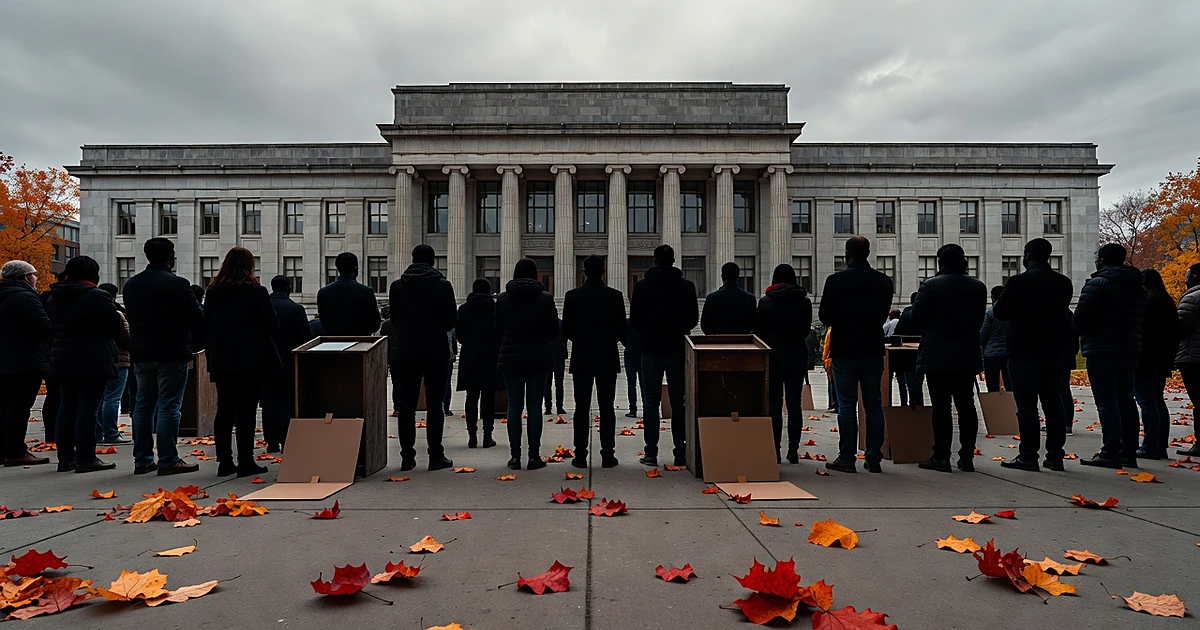


Student protesters at Cornell University flooded campus Monday demanding President Michael Kotlikoff resign over a disputed 2024 sexual assault case now under state special prosecutor review.
Demonstrators packed Ho Plaza in Ithaca, N.Y., in support of the accuser known as Jane Doe and pressed the administration over its response to allegations against seven former Chi Phi fraternity brothers. Faculty senators are also moving toward a no-confidence effort aimed at school leaders.
Fox News reported that the Monday action followed a civil lawsuit claiming the men drugged and raped a female Cornell student during a night of drinking, drugs, and group sex at the fraternity house in October 2024. No criminal charges have been filed against the seven men. They have denied wrongdoing, with some saying the activity was consensual and others saying they did not take part.
The protests landed as New York’s top elected Democrats seized control of the criminal file and as Cornell’s own faculty counted votes against the administration. Students want Kotlikoff out. He has refused to step aside.
Professor Paul Ortiz, a faculty senator sponsoring the no-confidence resolution, said colleagues and students pushed senators to act. He wrote that 40 of the faculty senate’s 75 voting members have already backed the measure.
Ortiz tied the drive to campus safety fears and anger over how Cornell has handled sexual assault claims.
Ortiz said:
"As you may suspect, we were approached in our capacity as faculty senators by numerous Cornell colleagues demanding action. Many of these faculty, including myself, were approached by students at Cornell who are upset, fearful for their personal safety, and wanting our university to address the perennial problem of sexual assault on the campus,"
At a campus assembly the same day, Kotlikoff took questions from students and dismissed calls for his resignation. He insisted the school is not concealing facts and promised future steps on campus culture.
The Cornell Daily Sun recorded his pushback. Kotlikoff said:
"We’re not hiding anything at Cornell,"
He added that the university would offer proposals “to try and improve this culture and address this problem.” Cornell has also agreed to retain outside counsel for an independent review of how it handled the allegations.
The criminal path looked very different before Albany intervened. Tompkins County District Attorney Matthew Van Houten initially declined to pursue charges against the seven former fraternity brothers.
Van Houten later described Jane Doe’s November 2024 sworn statement in stark terms. He said it did not allege she was drugged against her will or gang raped. He said it instead described her participation in drug use and sexual conduct as “voluntary, conscious, and consensual.”
That official reading sits at the center of the fight. The civil lawsuit, filed nearly two years after the October 2024 night, alleges the opposite: that Doe arrived intoxicated and was pressured into taking ketamine and other substances before a sexual assault. Those claims remain unproven in court. The men remain uncharged.
Prosecutors still have to prove crimes beyond a reasonable doubt. A campus protest and a faculty resolution do not change that burden.
Gov. Kathy Hochul then pulled the case away from the local district attorney. She appointed New York Attorney General Letitia James as special prosecutor to take over the investigation of the alleged 2024 assault at Cornell.
Hochul said newly surfaced information raised serious questions about how Cornell police and the Tompkins County DA handled the matter. She said she had lost confidence in Van Houten’s ability to oversee the case fairly and argued the young woman at the center “deserves to know that every fact will be examined and justice pursued.”
Just the News noted that the appointment formalized James’s role after the civil lawsuit against the seven Chi Phi members and after backlash over the earlier decision not to bring charges. Cornell’s Chi Phi chapter had already been barred from campus, yet no individuals faced criminal charges at the start.
The New York Post reported that Hochul used an executive order so James’s office could investigate and potentially prosecute, superseding Van Houten. James accepted the assignment and framed it as a duty every New Yorker should expect when a crime is reported.
James said:
"Every New Yorker deserves to know that when they report a crime, it will be investigated fully and fairly. The Governor has entrusted my office with this investigation, and we do not take that responsibility lightly."
Breitbart reported the same handoff and carried James’s pledge to run a full and fair probe after the governor’s order. In a separate statement she said she stood ready “to lead a process New Yorkers can trust, guided by the facts and the law.”
The Washington Examiner likewise placed the appointment on Thursday night and recorded Hochul’s claim that she had “lost faith in the Tompkins County DA’s ability to fairly oversee” the case.
James now holds both the special-prosecutor brief and the broader powers of the attorney general’s office. Voters already see her name on other high-profile fights, from demands that she examine the OMNY fare system to the partisan contests that define Albany politics.
By Monday, three tracks were running at once. Students occupied Ho Plaza and called for Kotlikoff’s resignation. Faculty sponsors counted 40 votes toward no confidence. James’s office described an “active criminal investigation” after Hochul’s appointment.
Kotlikoff still rejected the resignation demand and pointed to the outside review and future policy proposals. The university has not announced a finished set of reforms. The lawsuit’s core claims have not been proven at trial. The seven accused men have not been convicted of anything.
That gap matters. Serious sexual assault allegations deserve a complete, honest investigation. They also deserve a process that does not treat a civil complaint, a protest crowd, or a politically chosen prosecutor as a substitute for proof.
New York’s record on charged legal fights is already familiar to residents watching state rules tested in court and city systems strain under basic governance failures. A campus case with disputed accounts, a declined local prosecution, and a sudden special-prosecutor appointment fits the same pattern of power first and clarity later.
Ortiz and student protesters say they fear for safety and want Cornell to confront sexual assault. Those concerns are real on any large campus. So is the right of the accused to confront specific evidence rather than a rolling political verdict.
Van Houten’s description of the November 2024 sworn statement remains part of the public record. Hochul says newer information changed her confidence in him. James says her office will follow facts and law. None of those statements, by themselves, resolve what happened inside the Chi Phi house in October 2024.
For now, Cornell’s president is staying put, faculty are still whipping votes, and the attorney general owns the criminal file. New York Democrats have shown they can condemn, appoint, and pressure in public while the underlying proof is still being sorted in private.
Jane Doe’s lawsuit will rise or fall on evidence. The seven former fraternity brothers will keep their denials until a court says otherwise. Campus chants and a no-confidence drive cannot swear the witnesses or cross-examine the timeline.
Due process is not a public-relations problem for administrators to manage away, and it is not a prop for statewide officials hunting a headline. It is the only fair way to separate a crime from a dispute, and a university owes both the accuser and the accused that much.