

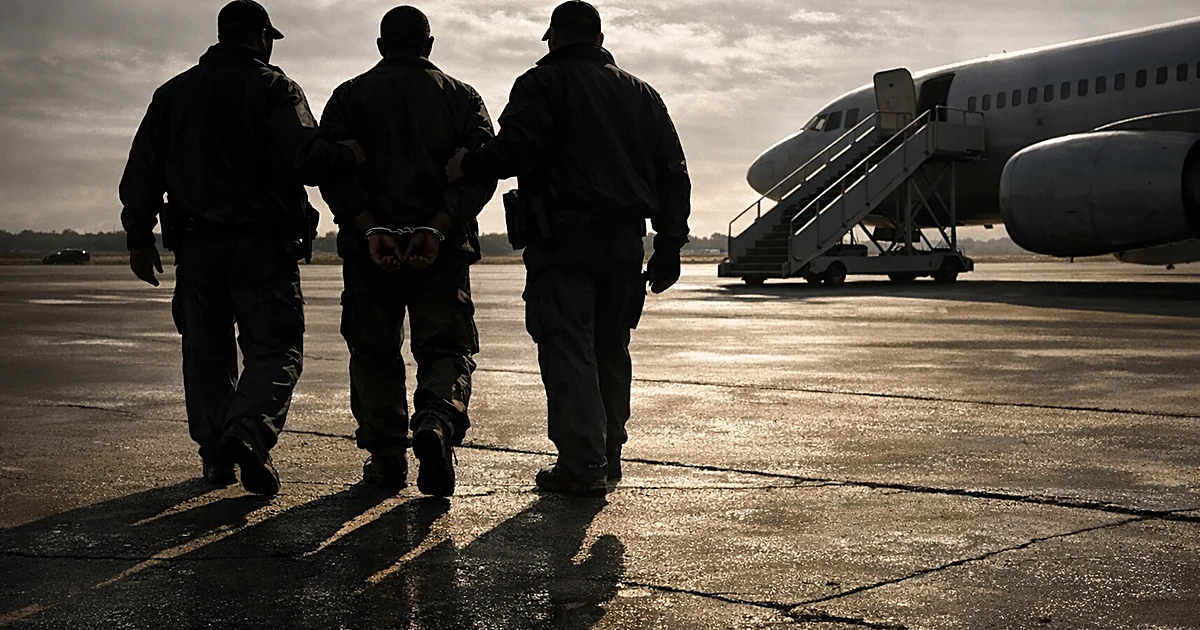
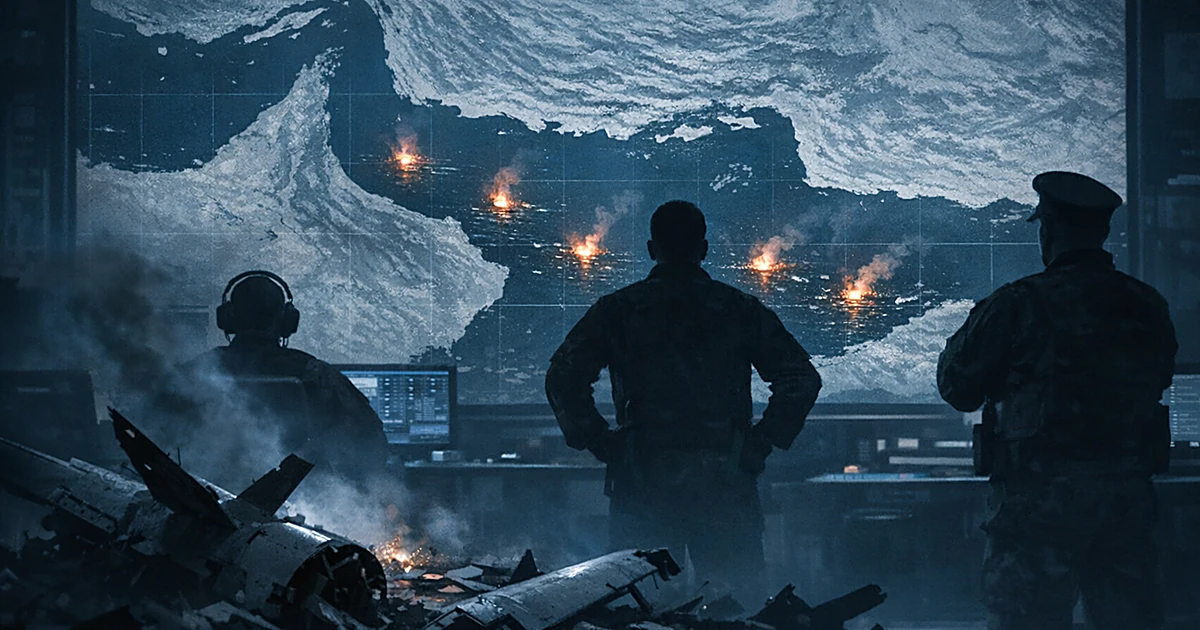



House Republicans released a 505-page draft defense authorization bill on Tuesday that draws sharp lines around two of President Trump's most visible military priorities, pulling U.S. forces out of Europe and South Korea, and building a new class of nuclear-powered battleships bearing his name.
The draft National Defense Authorization Act for fiscal year 2027 extends troop-floor requirements carried over from last year's law, mandating that at least 76,000 American troops remain stationed in Europe and 28,500 on the Korean Peninsula. Before dipping below either number, the Pentagon would have to certify to Congress that doing so serves America's security interests.
It is the clearest signal yet that the president's own party in the House is unwilling to give the administration a free hand to redraw the U.S. military footprint abroad, or to fast-track a marquee shipbuilding program that has raised cost and feasibility concerns on Capitol Hill. The Hill first reported the bill's key provisions Tuesday evening, ahead of a House Armed Services Committee markup set for June 4.
The legislation arrives after a string of administration moves that rattled allies and frustrated lawmakers in both parties. Trump ordered the withdrawal of 5,000 troops from Germany. The Pentagon paused a planned rotation of 4,000 service members to Poland, without notifying Congress in advance. And the military quietly reduced its footprint in Romania, again with no prior heads-up to Capitol Hill.
House lawmakers noted "with great concern" the delayed Poland rotation, and the bill would now require 60 days' advance notice before any comparable troop movement. The draft also prohibits the administration from removing more than $500,000 in military technology from Europe and bars the president from eliminating the role of Supreme Allied Commander Europe, one of NATO's two strategic commanders.
Should officials seek to draw down European troop levels, the Pentagon would have to explain to Congress why it is not feasible to reposition those forces on NATO's eastern flank, a provision aimed squarely at keeping American boots near the alliance's most exposed border with Russia.
The restrictions carry added weight given recent friction within House Republican ranks over how far to defer to the White House on military and foreign-policy questions. Just last week, administration officials told allied governments that the United States plans to reduce the number of bombers, fighter jets, drones, submarines, and warships dedicated to NATO, though no timeline has been set for that effort.
The other headline provision targets the Trump-class battleship program. The Navy first unveiled the concept in December, and the president promoted it with characteristic confidence:
"They'll be the fastest, the biggest and by far, 100 times more powerful than any battleship ever built."
Earlier this month the Navy disclosed that the new warship would be nuclear-powered. Documents sent to Congress project spending of more than $43 billion on the first three vessels alone.
The NDAA would bar construction of the first hull until the Navy certifies it has reached a "sufficiently mature technology readiness level." That language reflects persistent questions about the program's complexity and potential costs, questions that contributed to the dismissal in April of Navy Secretary John Phelan, who was replaced on an interim basis by Hung Cao amid reported frustrations over the pace of shipbuilding.
Requiring a formal technology-readiness certification before steel is cut is standard congressional practice on major weapons programs. But applying it here sends a pointed message: the legislature wants proof, not promises, before committing tens of billions in taxpayer dollars to a vessel class that exists, for now, only on paper.
On the spending side, the draft preserves the Pentagon's requested base budget of nearly $1.15 trillion for 2027. That figure alone underscores the scale of the defense enterprise Congress is being asked to fund, and the seriousness with which lawmakers treat their oversight role.
One thing the bill conspicuously omits: any reference to the "Department of War." Trump attempted to rebrand the Pentagon through an executive order last September. Defense Secretary Pete Hegseth and most Republican lawmakers have since adopted the preferred name in public remarks, and the department swapped its website and social media accounts to match.
But a permanent name change requires an act of Congress. The Pentagon formally asked lawmakers in April to codify the rebranding, estimating the full cost at nearly $52 million while insisting it would not have a "significant impact" on the 2027 defense budget request. The NDAA's silence on the matter is itself a statement, Congress is not ready to write that check.
The dynamic mirrors a broader pattern in which the White House and House leadership cooperate on domestic priorities while diverging on specific executive-branch prerogatives. On defense, the gap between what the administration wants and what its own caucus will authorize is growing harder to paper over.
Defenders of the NDAA provisions will argue that Congress is exercising its constitutional authority over military spending and force structure. The Constitution vests the power to raise and support armies in the legislature, not the executive. When the Pentagon moves troops, pauses rotations, and reduces allied commitments without telling Congress first, lawmakers have every reason to reassert that authority in statute.
The troop-floor requirements do not prevent the president from adjusting force posture. They impose a certification step, a speed bump, not a roadblock. The battleship bar does not cancel the program. It demands the Navy prove the technology works before construction begins. These are the kinds of fiscal and strategic guardrails that conservatives have traditionally championed when the executive branch of either party tries to spend first and explain later.
At the same time, the bill preserves the president's budget request in full. It does not slash defense spending or redirect funds to unrelated domestic programs. That distinguishes it from the kind of obstructionism the left has practiced in past authorization cycles.
Trump's frustrations with allied burden-sharing are well-documented. He has lambasted South Korea, Japan, and Australia for what he described as "not helping" with the conflict in Iran, and he has complained about NATO allies' reluctance to assist Washington in reopening the Strait of Hormuz. Those complaints resonate with voters who are tired of paying for the defense of wealthy nations that spend too little on their own militaries.
But Republican senators have pressed for tougher terms on Iran without endorsing unilateral troop pullbacks that could weaken America's hand. The House NDAA reflects a similar instinct: hold allies accountable, but do not hand adversaries a gift by vacating the field.
The Armed Services Committee markup on June 4 will be the first real test of how far members are willing to push the restrictions, and how hard the administration pushes back. Amendments could soften or strengthen the troop floors, adjust the battleship certification threshold, or even revive the "Department of War" language.
The bill still has to survive a full House vote, a Senate companion process, and a conference negotiation before it reaches the president's desk. Past NDAAs have passed with broad bipartisan support for decades running, but the specific friction points in this draft, troop levels, allied commitments, a flagship weapons program, guarantee a louder fight than usual.
What is already clear is that House Republican leadership is willing to back the president on broad strategic goals while insisting on the procedural and fiscal discipline that separates serious governance from executive freelancing.
Oversight is not opposition. Asking the Pentagon to certify its plans before spending $43 billion or pulling troops off a contested frontier is not weakness, it is the bare minimum Congress owes the taxpayers footing the bill.