
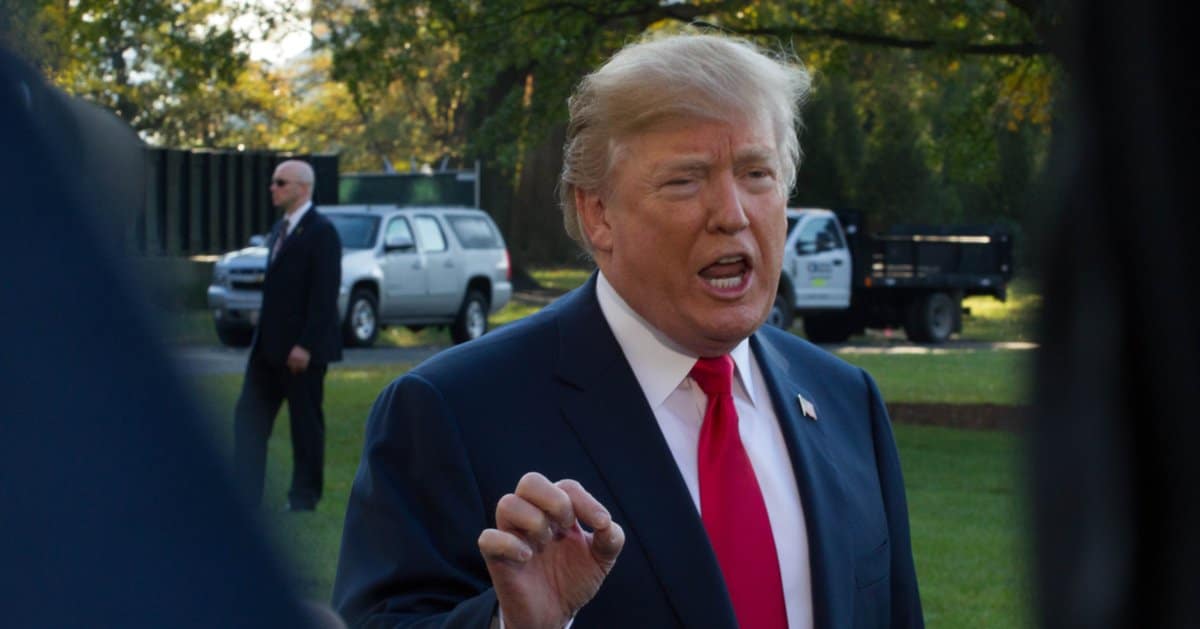


President Trump delivered a blunt message to whoever abducted 84-year-old Nancy Guthrie from her suburban home outside Tucson: bring her back alive, or the federal government will seek the harshest punishment it has.
In a brief phone interview with The Post on Monday, Trump said the consequences for those responsible would be "very, very severe — the most severe" if Guthrie is found dead. When asked directly whether that meant the Justice Department would request the death penalty, Trump didn't flinch.
"The most, yeah — that's true."
Guthrie — the elderly mother of three and mother of NBC "Today" host Savannah Guthrie — was reported abducted from her home on Feb. 1. She has now been missing for over three weeks. She has a pacemaker. Authorities believe she may still be alive.
Trump called Savannah Guthrie on Feb. 4, just three days after the abduction, to offer federal assistance. He hasn't said much publicly about the case since, but the phone call to The Post made his position unmistakable. This isn't a president issuing vague thoughts and prayers from a press podium. It's a direct warning, delivered through a major publication, aimed squarely at the people who took an 84-year-old woman from her home.
The FBI has recovered images and video of a masked man at Nancy Guthrie's front door. Over the weekend, authorities launched flights above the desert carrying a high-tech Bluetooth device in an attempt to locate a signal from her pacemaker. The investigation is active, the tools are sophisticated, and the federal government is clearly engaged.
That engagement matters. Federal charges are common in high-profile cases, and when the president of the United States publicly signals that the death penalty is on the table, it reshapes the calculus for everyone involved — the suspects, their associates, anyone who might be harboring information.
Trump's warning carries added weight because of what his predecessor did on his way out the door. Former President Biden commuted the sentences of 37 of the 40 men on federal death row. The three he excluded — Boston Marathon bomber Dzhokhar Tsarnaev, Pittsburgh synagogue shooter Robert Bowers, and mass murderer Dylann Roof — were apparently too monstrous even for Biden's blanket clemency impulse.
That decision gutted the federal death penalty as a functioning deterrent. Biden didn't abolish it — he lacked the political will for that fight — but he hollowed it out, turning capital sentences into life sentences with a stroke of a pen. Thirty-seven men convicted of the worst crimes the federal system prosecutes, quietly shuffled off death row while the country wasn't looking.
Trump officials now plan to move the remaining federal death row inmates to a federal supermax prison, where they will serve out their penalties in harsh conditions. The message is clear: the current administration intends to restore the credibility of federal punishment, not erode it.
The state where Nancy Guthrie was taken has its own complicated history with capital punishment. Arizona has 109 inmates on its state death row, but has carried out only two executions since 2022. A nearly two-year pause on executions — imposed by the Democrat-led state government — was lifted only in late 2024.
That pause tells its own story. For nearly two years, Arizona maintained a death row it refused to use. The state kept the infrastructure of justice while dismantling the will to carry it out. It's the kind of half-measure that satisfies no one — not the families of victims waiting for closure, and not the abolitionists who want the whole system torn down.
The investigation continues. The FBI has images of a masked figure. Flights are scanning the desert for a pacemaker signal. Nancy Guthrie's family was ruled out as suspects in the first days of the case. Somewhere in the space between those facts is an 84-year-old woman whose family is waiting.
Something is clarifying about a president who states, plainly and on the record, what the consequences will be. No euphemism, no legal hedge, no carefully workshopped statement designed to survive cable news parsing. Release her or face the worst the federal government can deliver.
Nancy Guthrie's family has endured over three weeks without answers. The people who took her now have one from the president.