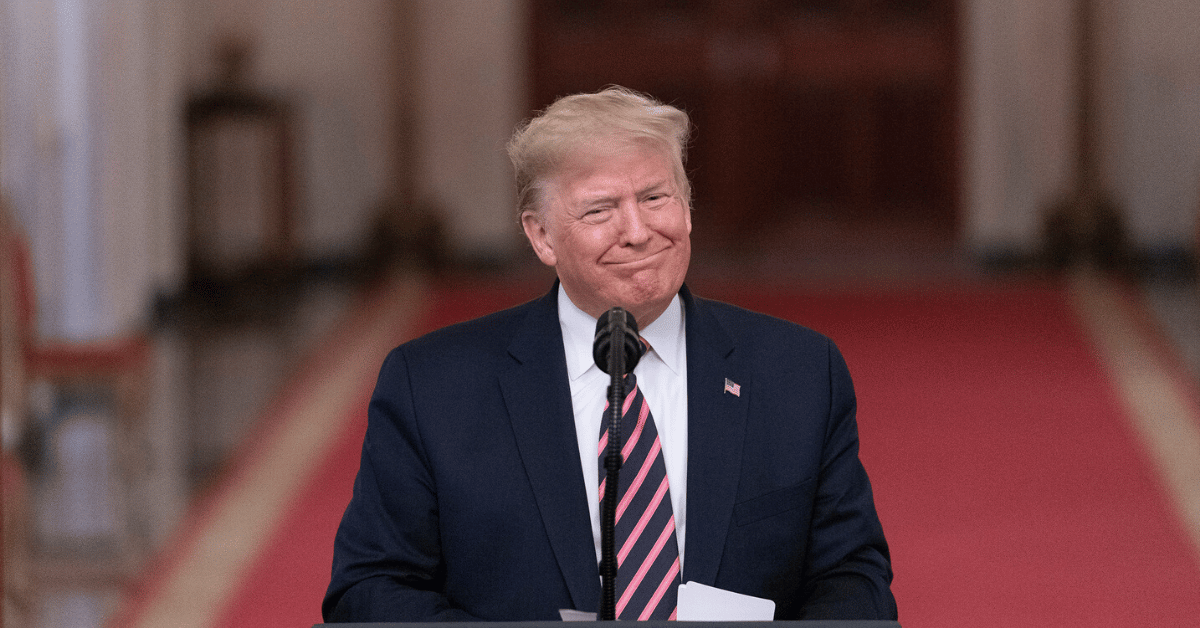
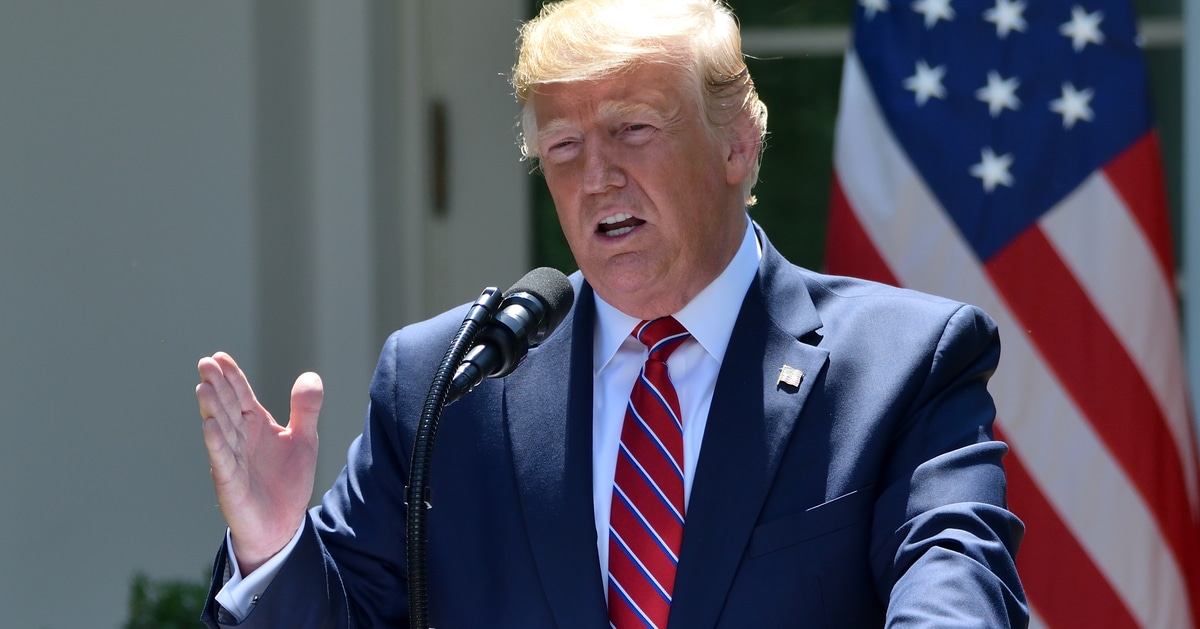
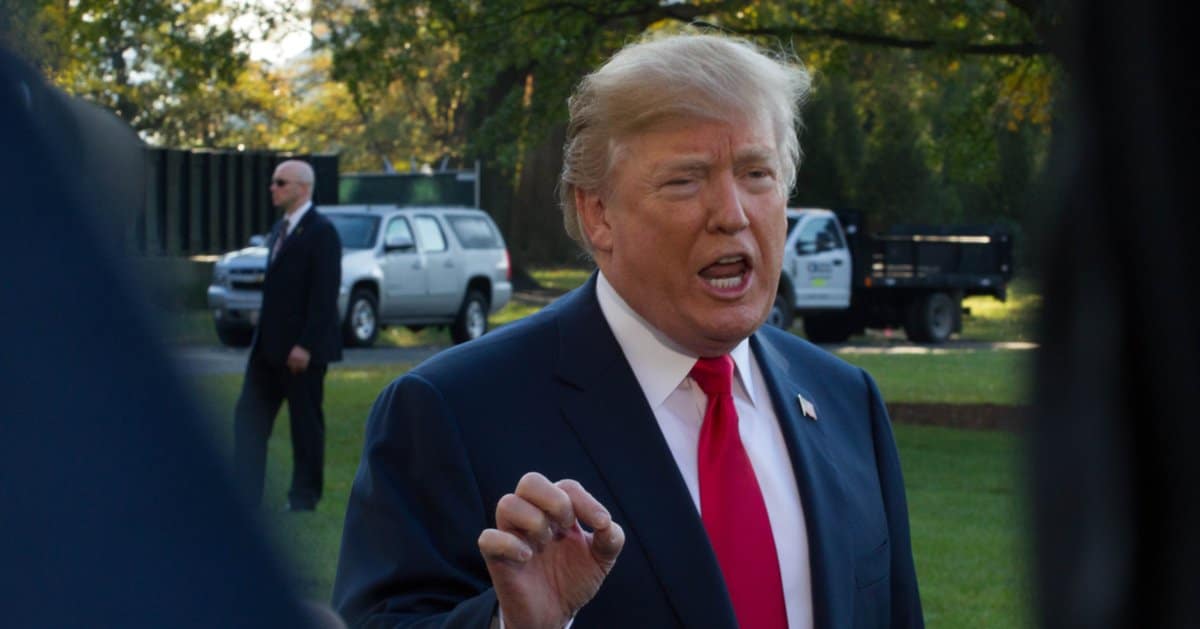
President Trump posted a stark warning on Truth Social Tuesday: "A whole civilization will die tonight, never to be brought back again." The message landed less than 12 hours before a self-imposed 8 p.m. ET deadline for Iran to reach a deal over its continued disruption of shipping through the Strait of Hormuz, a chokepoint that handles about a fifth of the world's oil and natural gas.
Trump followed the warning with a note of conditional optimism:
"However, now that we have Complete and Total Regime Change, where different, smarter, and less radicalized minds prevail, maybe something revolutionarily wonderful can happen, WHO KNOWS?"
The president has extended the deadline multiple times for Iran to reopen the strait. In a post on Sunday, he threatened Iran's power plants and bridges if Tehran did not comply by Tuesday. He repeated those threats during a Monday news conference. By Tuesday morning, in a phone call relayed on air by Fox News' Bret Baier, Trump signaled the deadline was firm.
"He said 8 p.m. is happening. That's what he said. He said it is — if we get to that point, there is going to be an attack like they have not seen. ... Now, he said if negotiations move forward today and there is something concrete, that could change, but at this hour — he didn't want to put odds on it — but he said it is moving forward with the plans that we have."
White House spokesperson Anna Kelly, asked what the president meant, offered two words: "refer to the TRUTH."
What matters here is not the rhetoric. It's the strategic reality underneath it, NBC News reported.
Iran has spent nearly five decades leveraging its geographic position, its proxy networks, and the West's aversion to confrontation. The Strait of Hormuz has been Tehran's trump card for a generation: threaten to choke global energy markets and watch Washington flinch. Every prior administration, Republican and Democrat alike, treated the Strait as a reason for caution. Trump is treating it as a reason for resolution.
The killing of Supreme Leader Ayatollah Ali Khamenei and other Iranian leaders has already fractured the regime's command structure, though the full impact remains unclear. Trump's framing suggests he sees this as a window, not a crisis. New leadership in Tehran, he argues, might actually be capable of making a deal that the old guard never would.
"We will find out tonight, one of the most important moments in the long and complex history of the World. 47 years of extortion, corruption, and death, will finally end. God Bless the Great People of Iran!"
That final line is worth noting. Trump is drawing a sharp distinction between the Iranian regime and the Iranian people. That distinction has been the bedrock of serious Iran policy for decades. It's the same distinction his critics are now accusing him of ignoring.
The reaction from congressional Democrats was immediate and, predictably, calibrated for maximum alarm. House Minority Leader Hakeem Jeffries issued a joint statement with his leadership team:
"Donald Trump is completely unhinged. His statement threatening to eradicate an entire civilization shocks the conscience and requires a decisive congressional response."
Jeffries demanded the House return to session immediately to "vote to end this reckless war of choice in the Middle East before Donald Trump plunges our country into World War III."
Senate Minority Leader Chuck Schumer joined Democratic ranking members of key Senate committees in warning that Trump "must not follow through on this threat." Their joint statement went further:
"Intentionally destroying the power, water, or basic infrastructure upon which tens of millions of civilians depend to punish the very civilians who suffer at the hands of the Iranian regime would constitute a war crime, a betrayal of the values this nation was founded on, and a moral failure."
Sen. Elissa Slotkin of Michigan, a former CIA analyst, warned that mass targeting of civilians "would be a clear violation of the law of armed conflict as laid out in the Geneva Conventions, as well as the Pentagon's Law of War Manual." She went further, openly encouraging military officers to refuse orders they deem illegal.
Others went further still. Sen. Ed Markey of Massachusetts and Rep. Rashida Tlaib of Michigan called for impeachment or removal from office.
A few things are worth noting about this chorus.
First, these are the same lawmakers who spent years insisting that diplomacy with Iran was working, that the nuclear deal was sound, and that Tehran could be managed through engagement. That framework produced 47 years of the "extortion, corruption, and death" Trump referenced. The urgency Democrats are now displaying was nowhere to be found when Iran was building its proxy empire, targeting American servicemembers, or strangling global shipping lanes.
Second, Slotkin's call for military officers to refuse presidential orders is extraordinary. Whatever one thinks of the policy, a sitting senator publicly urging insubordination within the chain of command is not a routine critique. It is a challenge to civilian control of the military, a principle Democrats claim to hold sacred when it suits them.
Third, the "war crime" framing depends on interpreting Trump's rhetoric as a literal operational order to target civilians. Destroying bridges and power plants in a hostile nation that has disrupted global commerce and whose leadership has been decapitated is, by any conventional military standard, a strike on strategic infrastructure. That's not collective punishment. That's how wars are fought.
On the Republican side, the response was thinner. House Speaker Mike Johnson and Senate Majority Leader John Thune did not return messages seeking comment. The official Senate Republican X account, run by staff of Sen. Tom Cotton, posted a straightforward message: "Iran would be wise to take President Trump at his word. They can choose the easy way or the hard way."
The notable outlier was former Rep. Marjorie Taylor Greene, described in the source material as "a Trump ally-turned-critic," who posted on X calling for Trump's removal through the 25th Amendment:
"Not a single bomb has dropped on America. We cannot kill an entire civilization. This is evil and madness."
Greene's invocation of the 25th Amendment, a constitutional mechanism for removing a president deemed unable to discharge his duties, places her squarely alongside the Democratic caucus on this question. It's a striking position from someone who built her political brand on unwavering loyalty to the president.
The fundamental question is not whether Trump's language is provocative. Of course it is. The question is whether the provocation serves the strategy.
Trump has spent decades operating on a simple premise: credible threats produce results that polite requests never do. The pattern with North Korea, with NATO spending commitments, with trade negotiations, has been consistent. Escalate the rhetoric, make the cost of inaction unbearable, and force the other side to calculate whether they want to find out if he means it.
Iran's new leadership, whoever they are, now faces a binary choice before 8 p.m. ET. Reopen the Strait and come to the table, or discover whether the president who described "every bridge in Iran" as "decimated by 12 o'clock tomorrow night" was speaking literally.
Democrats want Congress to intervene. Republicans are largely deferring to the commander in chief. The international community is watching. And somewhere in Tehran, people who inherited a collapsing regime are running out of time to decide.
Forty-seven years is a long time to bet on American restraint. Tonight, that bet comes due.