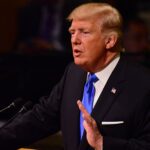
President Donald Trump has once again sparked headlines with a candid dismissal of traditional fitness routines, calling them a waste of precious energy.
During a recent interview with the Wall Street Journal, Trump, now 80, made it clear that he finds little value in exercise beyond his beloved game of golf, while also discussing his unique approach to personal health amid growing public scrutiny, as the New York Post reports.
For hardworking retirees who’ve spent decades paying into a system that often seems to prioritize political theater over their well-being, Trump’s stance might resonate as a refreshing rejection of overblown health fads. Yet, there’s a tangible concern here. With medical noncompliance like refusing recommended treatments, there’s a potential health risk that could impact his ability to lead, possibly burdening taxpayers with unforeseen costs if a crisis emerges. From a conservative lens, we must ask tough questions about whether such personal choices could affect national stability.
Trump’s dislike for sweating it out in a gym isn’t new; he’s long held the belief that humans have a limited reserve of energy, akin to a battery running dry.
This philosophy, noted in a 2017 piece by the New Yorker, shapes his routine, where the only physical exertion he embraces is hitting the fairways at his own courses in Florida, New Jersey, and Virginia.
“I just don’t like it. It’s boring,” Trump told the Wall Street Journal, summing up his view with a bluntness that cuts through the sanctimonious fitness culture pushed by progressive elites. Let’s be honest—while some may scoff, plenty of folks would rather skip the treadmill sermon than endure hours of pointless slogging.
Unlike his predecessor, who was often seen pedaling around on a bike, Trump sticks to golf as his go-to activity, mostly on weekends and holidays.
It’s a sport he’s passionate about, owning multiple courses where he plays regularly, though he’s quick to clarify it’s not a daily grind.
“My ‘exercise’ is playing, rarely during the week, a quick round of golf,” he tweeted back in 2020, a statement that still holds as a window into his no-nonsense take on staying active. While the left might mock this as insufficient, many everyday Americans juggling jobs and family would argue that a round of golf beats the guilt-tripping fitness mandates any day.
Turning to health, Trump’s interview revealed his confidence in what he calls “very good genetics” to shield him from typical age-related woes.
Yet, he’s openly defied medical guidance on several fronts, raising eyebrows among those who value adherence to expert advice.
For instance, Trump ditched compression socks meant to address a blood-flow condition causing leg and ankle swelling, a decision that flouts standard care for chronic venous insufficiency.
Instead, he’s opted for more walking and less time seated at the Resolute Desk to improve circulation—a method backed by experts, surprisingly aligning with some common-sense health practices.
Elsewhere, Trump’s refusal to adjust his high-dose aspirin intake, sticking to 325 milligrams over the recommended 81 to lessen bruising on his hands, shows a stubborn streak, as does his mislabeling of a recent CT scan for heart health as an MRI.
While his defiance might irk the medical establishment, it’s hard not to admire a man who questions the one-size-fits-all dogma often peddled by bureaucrats—though conservatives must still demand transparency on whether such choices could pose risks to his leadership capacity.