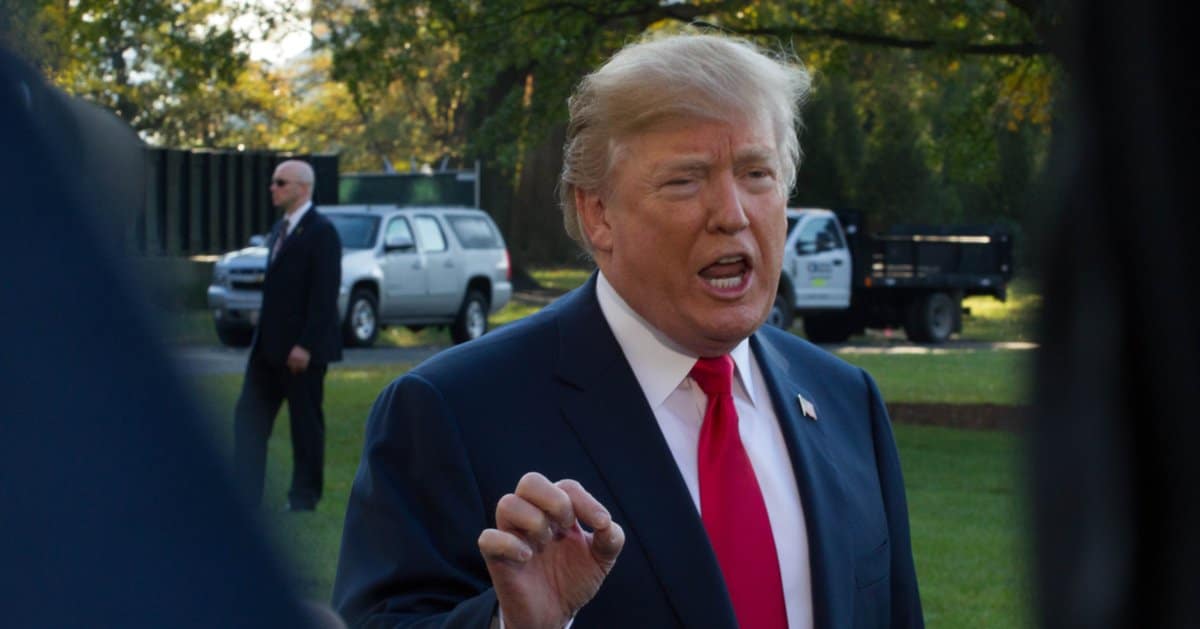
President Donald Trump has taken a bold step against Cuba, declaring it a national emergency with a new executive order signed on Thursday.
Trump's order targets Cuba as a state sponsor of terrorism, aiming to counter its alleged support for hostile actors and regional instability. It establishes a mechanism to impose tariffs on nations supplying oil to Cuba, which the administration claims is vital for the island's struggling infrastructure. The White House emphasized that this move is part of a broader strategy to address threats to U.S. security and foreign policy posed by the Cuban regime and its alliances with anti-American states like Russia, Iran, and Venezuela.
Supporters of the policy see this as a long-overdue reckoning for a regime that has dodged accountability for decades. The Castro government’s track record, including its designation as a state sponsor of terrorism since 1982, justifies a firm hand. This isn’t just posturing—it’s a calculated push against a persistent thorn in America’s side.
Cuba’s history with the U.S. is a saga of hostility, from its support for groups like Hamas and Hezbollah to Marxist guerrillas in Colombia like FARC and ELN. The regime’s alliances with adversarial nations only deepen the concern. Trump’s order revives a focus on these issues, especially after reinstating Cuba to the terrorism list in January 2021 during his first term.
Attempts to soften relations, like the 2015 removal from the list under President Barack Obama’s “Cuban Thaw,” are seen by many as misguided concessions. Trump’s reversal of similar efforts by President Joe Biden in January 2025, within hours of starting his second term, sends a clear signal: no more olive branches without real change, as Breitbart reports.
The executive order’s tariff provision targets Cuba’s oil lifeline, previously sustained by Venezuela’s socialist regime under Nicolás Maduro. With Venezuela’s oil flow cut off after U.S. actions to remove Maduro and control exports, Cuba turned to Mexico’s Pemex since 2023. This week, Mexico canceled a scheduled oil shipment, though President Claudia Sheinbaum remains vague on future supplies.
Trump’s strategy is blunt—cut the fuel, cripple the regime. His Truth Social post on January 11 laid it out: “THERE WILL BE NO MORE OIL OR MONEY GOING TO CUBA — ZERO!” That’s not diplomacy; it’s a demand for capitulation, and a smart play to squeeze an already faltering economy.
Cuba’s figurehead president, Miguel Díaz-Canel, fired back on Friday, accusing Trump of trying to “stifle the Cuban economy” with “false pretext and empty arguments.” His social media tirade paints the U.S. as fascist and criminal, but where’s the evidence of reform on his end? It’s the same old deflection from a regime allergic to accountability.
The U.S. Embassy in Havana, quoting Secretary of State Marco Rubio, responded with equal clarity on Friday morning. Cuba’s role as a hub for anti-U.S. forces won’t be tolerated in America’s backyard. This isn’t just rhetoric; it’s a reminder of geographic reality and strategic necessity.
Beyond oil, Trump’s order tackles Cuba’s broader threat—its cozy ties with Iran, Syria, and North Korea, all on the state sponsors of terrorism list. Add in alleged persecution of dissidents, suppression of free speech, and efforts to export communism, and the case strengthens. This isn’t about ideology alone; it’s about tangible risks to U.S. interests.
The White House has framed Trump as a leader who confronts adversaries head-on, citing recent strikes on Iran’s nuclear facilities and operations against Maduro. This executive order fits that pattern—unapologetic pressure on regimes that challenge American security. It’s a refreshing contrast to years of half-measures.
Yet, the tariff mechanism offers a sliver of flexibility. If Cuba or any oil-supplying nation takes meaningful steps to address U.S. concerns, modifications are possible. It’s a carrot amid the stick, though skepticism about Havana’s willingness to reform runs deep.
Trump’s focus on Cuba isn’t sudden—he signaled this move days before the order, hinting at a tougher stance. The Western Hemisphere, as Rubio’s statement underscores, isn’t a playground for America’s rivals. This policy aims to redraw that line with unmistakable clarity.
Critics might argue this risks alienating allies like Mexico, caught in the tariff crosshairs. But isn’t it time to prioritize security over temporary diplomatic friction? The stakes—regional stability and national safety—outweigh the discomfort of a canceled oil shipment.
Ultimately, Trump’s executive order is a gamble on pressure yielding results. Cuba’s regime has survived sanctions before, but with oil supplies dwindling and allies under strain, the vise is tightening. Whether this sparks real change or just more defiance from Havana remains the question to watch.