President Donald Trump announced Sunday that the United States will take the reins in Venezuela after a daring military operation captured the country's embattled leader, Nicolás Maduro, and his wife, Cilia Flores.
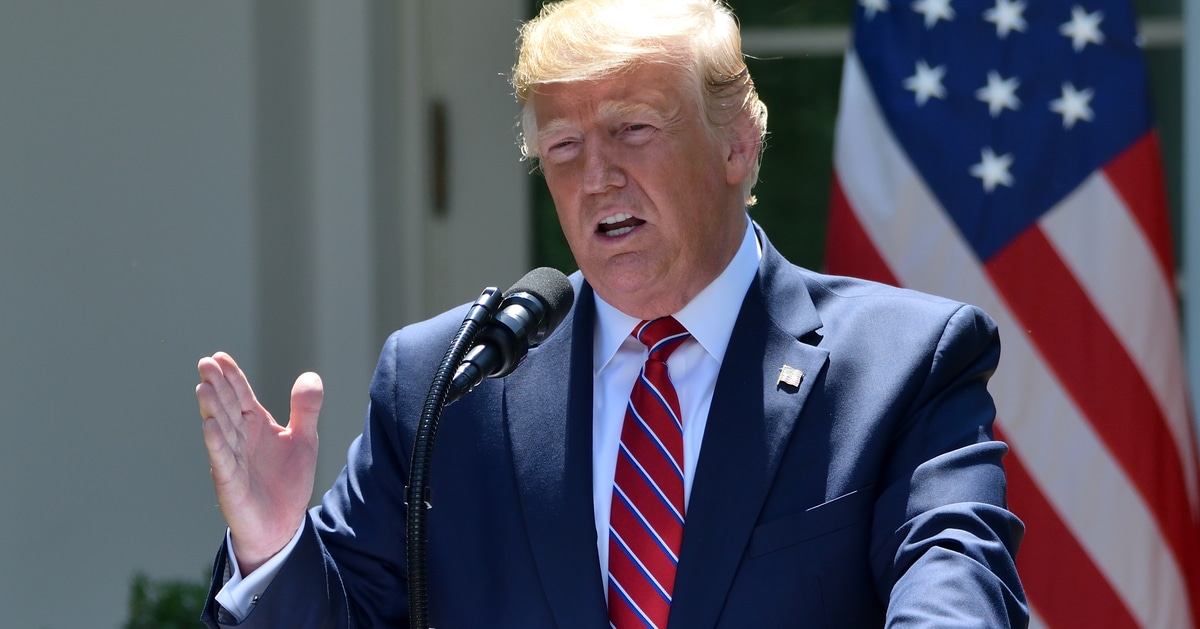
In a stunning move, Trump revealed at a press conference from his Mar-a-Lago resort in Palm Beach, Florida, that the U.S. will administer Venezuela until a stable and fair transition of power can be secured, following a night of intense military action in Caracas.
In the dead of night on January 3, 2026, U.S. forces launched a series of strikes on Venezuelan military targets, with satellite images revealing significant damage to Fuerte Tiuna, the largest military complex in Caracas.
Explosions rocked the capital, with at least seven blasts targeting bases and airports, while smoke billowed over the city and a fire raged at Fuerte Tiuna, showcasing American military dominance in a darkened Caracas.
Trump, flanked by heavy hitters like Secretary of State Marco Rubio, Defense Secretary Pete Hegseth, and CIA Director John Ratcliffe, called it “one of the most stunning effective and powerful displays of American military might and competence in American history.”
By the end of the operation, Maduro and Flores were in custody, depicted in a striking image shared by Trump on Truth Social, showing the former leader blindfolded and wearing headphones aboard the USS Iwo Jima.
They’re now en route to New York City to face serious charges, including a 2020 indictment in the Southern District of New York for drug conspiracy and other crimes, as confirmed by Attorney General Pam Bondi.
Bondi didn’t mince words, stating, “They will soon face the full wrath of American justice on American soil in American courts,” signaling that no one escapes accountability under this administration’s watch.
Trump made it clear the U.S. isn’t just stepping in for a quick fix, hinting at a sustained presence tied to Venezuela’s vast oil resources and a push to bring back American companies whose assets were seized by the regime.
He also mentioned using recovered funds to compensate Venezuelans who fled to the U.S., though skeptics might wonder if this is a feel-good promise or a concrete plan to offset the economic strain on American communities hosting refugees.
As for who will lead Venezuela next, Trump dismissed opposition figure María Corina Machado as lacking the necessary domestic support, while his team continues to designate potential interim leaders.
Trump didn’t shy away from the possibility of a longer military commitment, saying, “We’re not afraid of boots on the ground if we have to,” a stance that might make conservative voters wary of another endless foreign entanglement.
With Venezuela’s political future murky—decades after Hugo Chávez took power in 1999 and handed the baton to Maduro—the U.S. now faces the daunting task of rebuilding a nation while balancing national interests and hemispheric stability under what Trump dubbed the “Don-roe Doctrine.”