President Trump has stepped into the spotlight with a surprising take on the upcoming depositions of Bill and Hillary Clinton in a House investigation tied to Jeffrey Epstein.
On Tuesday, Trump reacted to the news that former President Bill Clinton and former Secretary of State Hillary Clinton will testify before the House Committee on Oversight and Government Reform as part of a probe into convicted sex offender Jeffrey Epstein. The Clintons agreed to terms for their depositions, with Hillary scheduled for February 26 and Bill for February 27, both to be filmed and transcribed.
The agreement came just as the House was preparing to vote on holding the Clintons in contempt of Congress for not responding to a subpoena. House Oversight Chair James Comer (R-Ky.) confirmed the deposition dates, while the Clintons’ lawyers noted that Comer added a last-minute requirement for video recording. This development marks a significant step in the ongoing Epstein investigation.
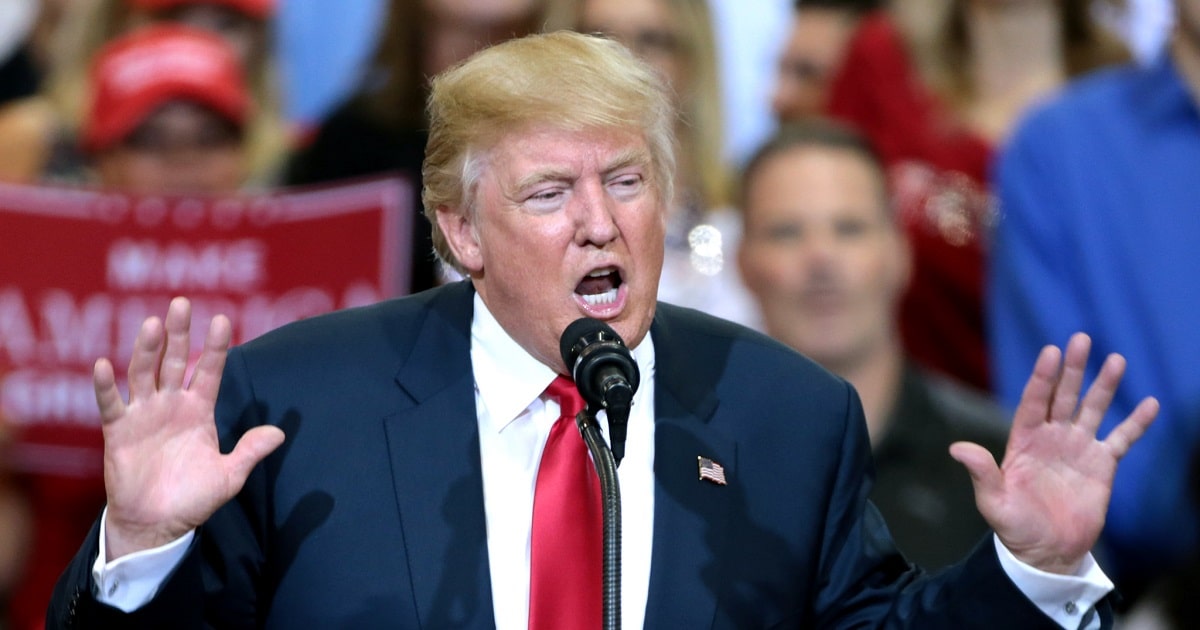
Trump, speaking to The Hill during a press gathering after a bill signing in the Oval Office, called the situation “a shame.”
Given Trump’s history of clashing with the Clintons, his sympathy for the Clintons was surprising. Yet, his comments this week reflect a rare moment of empathy from a leader who has often been at odds with the political left. It’s a curious pivot that’s got folks talking.
“I think it’s a shame to be honest,” Trump told The Hill, reflecting on the depositions. “I always liked him. Her? Yeah. She’s a very capable woman who’s better at debating than some of the other people, I’ll tell you that.”
Trump didn’t stop there, drawing parallels to his own legal battles. He suggested the relentless pursuit he faced—where adversaries pushed for lifelong imprisonment only to find him cleared—gives him a unique perspective on what the Clintons are enduring. It’s a nod to the idea that political witch hunts, in his view, spare no one.
The Epstein probe has long been a lightning rod, and dragging the Clintons into the mix only amps up the stakes. For those fed up with endless scandals tied to the elite, this feels like a moment of accountability, even if it’s just a deposition. The question is whether it’ll uncover anything new or just rehash old headlines.
The Clintons’ legal team pushed back on the process, hinting at concerns over fairness in how this is being handled. Their letter to Comer argued for transparency in the questioning. It’s a valid point—why hide behind closed doors if the truth is the goal?
“Their answers, and your questions, can be seen by all to be judged accordingly,” the Clintons’ lawyers wrote to Comer. This push for an open format suggests they’re not shying away from scrutiny, or at least want to control the narrative. It’s a smart move in a game where optics matter as much as facts.
House Oversight’s insistence on video recording raises eyebrows among those skeptical of government overreach. Is this about transparency, or is it a setup for political theater? Many on the right see this as Comer doing his job, ensuring nothing gets swept under the rug.
Still, the last-minute addition of “new stipulations,” as the Clintons’ lawyers called it, fuels suspicion that the process might be more about scoring points than seeking justice. For a public weary of partisan games, this could backfire if it looks like a circus rather than a serious inquiry.
Trump’s sympathy, meanwhile, adds a layer of intrigue to an already messy situation. His willingness to express regret over the Clintons’ predicament—“I shouldn’t feel this way, but I feel bad that they have to go through that”—shows a side of him that doesn’t always make the headlines. It’s a reminder that even in politics, personal respect can cut through the noise.
As February 26 and 27 approach, all eyes will be on what the Clintons reveal under oath. For those who believe the Epstein saga exposes a rotten core in elite circles, these depositions are a long-overdue reckoning. The hope is for clarity, not more obfuscation.
Yet, there’s a nagging doubt about whether this will change anything in a system that often protects its own. The right has long argued that justice moves too slowly—or not at all—when it comes to the powerful. This moment could either prove that wrong or cement the cynicism.
Trump’s comments, while unexpected, might resonate with a base tired of seeing political figures dragged through the mud for show. If the depositions yield nothing substantial, it’ll only deepen the frustration with a government that seems more interested in spectacle than results. Let’s hope Comer and the committee prove that skepticism wrong.