

Scott Bessent walked into a House Financial Services Committee hearing on Wednesday and walked out having handed Democrats a masterclass in composure under fire. The Treasury Secretary fielded questions on tariffs, cryptocurrency, and monetary policy—and what he got in return was shouting, personal attacks, and a request from the committee's ranking member to have him silenced.
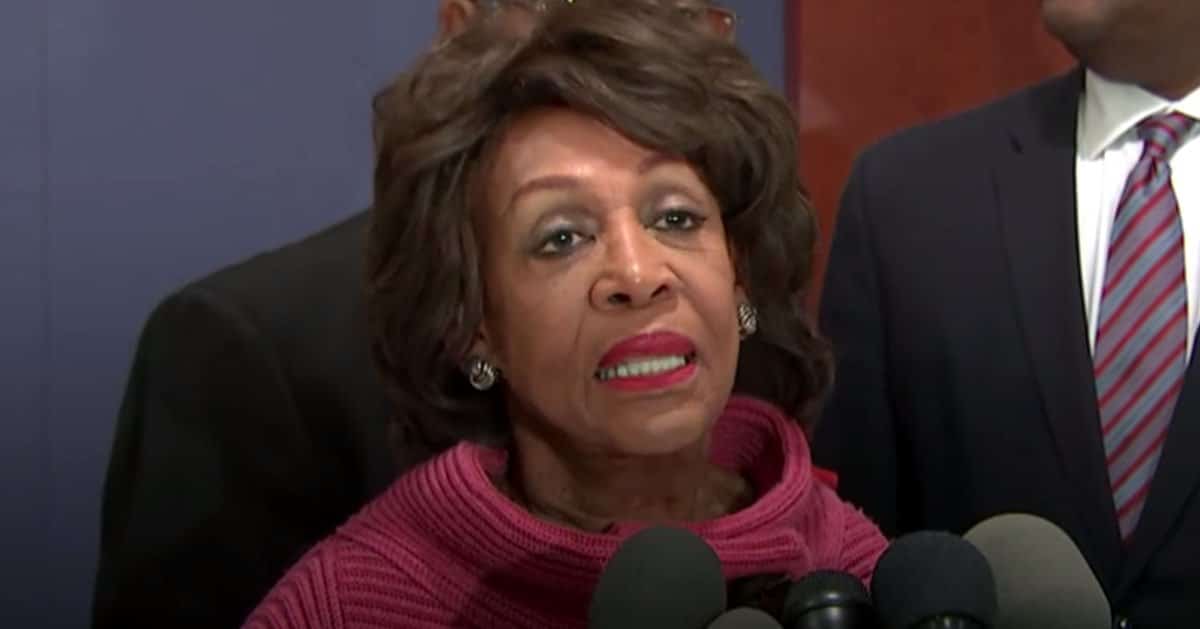
Representative Maxine Waters of California delivered the line of the day when she turned to the committee chair and demanded:
"Can you shut him up?"
Bessent's response landed clean:
"Can you maintain some level of dignity?"
That exchange set the tone. But it was hardly the only one. What unfolded over the course of the hearing was a parade of Democratic members losing their composure while Bessent stayed firmly planted—answering questions on his terms and refusing to absorb the theatrics.
Congressman Greg Meeks of New York pressed Bessent on a $500 million stake in Trump's cryptocurrency firm, reportedly sold to a member of the Emirati royal family. The line of questioning escalated quickly. Meeks abandoned any pretense of policy inquiry and shifted to open hostility:
"Stop covering for the President."
Then he went further:
"Don't be a flunky. Work for the American people. Work for the American people. Don't be a cover-up for a mob."
Bessent pushed back by asking Meeks about his own trips to Venezuela—a pivot that went unanswered. That silence told its own story.
Representative Stephen Lynch of Massachusetts tried a different approach, pressing Bessent on shuttered investigations into cryptocurrency firms. When Bessent interrupted, Lynch appealed to the chairman:
"Mister Chairman, the answers have to be responsive if we are going to have a serious hearing."
Bessent didn't miss:
"Well, the questions have to be serious."
Texas Democrat Sylvia Garcia questioned how illegal immigrants could affect housing affordability. When Bessent called her "confused," she snapped back:
"Don't be demeaning to me, alright?"
One after another, Democrats walked into exchanges expecting deference and received precision instead.
Strip away the theatrics, and what happened Wednesday was straightforward: Democratic members of the House Financial Services Committee used their time not to extract information but to perform. They weren't legislating. They were producing clips for social media—the kind of confrontational moments designed to generate outrage rather than oversight.
The tell is in the language. Meeks didn't ask pointed questions about cryptocurrency regulation or financial disclosure requirements. He called the Treasury Secretary a "flunky" and accused him of covering for "a mob." Waters didn't challenge Bessent's policy positions on tariffs with data or counterarguments. She asked the chair to muzzle him.
This is what passes for congressional oversight in 2026. Not rigorous questioning. Not dueling interpretations of economic data. Just volume—deployed as a substitute for substance.
Bessent, to his credit, treated the hearing like what it was supposed to be: a policy forum. He answered questions, pushed back when the questions weren't serious, and never raised his voice to match theirs. The contrast did all the work.
Graham Steele, a former assistant secretary for financial institutions under Biden-era Treasury Secretary Janet Yellen, described Bessent's Wednesday performance as:
"Not a role you typically see a treasury secretary play."
Steele noted that the Treasury Department has traditionally:
"Been removed from some of the day-to-day, hand-to-hand political combat."
He added that Treasury secretaries have to strike a "delicate balance" of working with the White House while safeguarding the "economic stature" of the country internationally. Steele recalled his former boss having tense but non-personal exchanges with Republican lawmakers—a distinction worth noting. Republicans under the previous administration asked tough questions. They didn't call Yellen a flunky.
David Lublin, chair of the Department of Government at American University's School of Public Affairs, offered a more direct read to The Associated Press:
"President Trump has shown he likes belligerence and he likes nominees and others who defend him vociferously."
But Lublin also acknowledged the broader deterioration:
"It's hard to say that this is unusual for this political environment. What used to be the normal modicum of respect for Congress has frayed to the point of vanishing."
Frayed to the point of vanishing. And who did most of the fraying on Wednesday?
The Wednesday clash wasn't an isolated event. Bessent appeared on Thursday before the Senate Banking, Housing, and Urban Affairs Committee to discuss the annual report of the Financial Stability Oversight Council, which he leads. He also used that forum to reveal his thoughts on monetary policy and insisted that the President has the right to weigh in on the decision-making of the central bank.
In recent months, Bessent has sharpened his rhetorical profile considerably. He called California Governor Gavin Newsom "economically illiterate" and:
"A brontosaurus with a brain the size of a walnut."
He has also called Senator Elizabeth Warren an "American Peronist" on several occasions—a comparison that draws a direct line between Warren's economic instincts and the protectionist, populist economic model that gutted Argentina's middle class over decades. Warren, for her part, has told American financial institutions not to finance the administration's support package for Argentina, apparently preferring that the country remain trapped in the very economic dysfunction her own policies would replicate here.
The irony is thick enough to measure.
Congressional hearings are supposed to serve a purpose. They exist so that the legislative branch can exercise oversight over the executive—ask hard questions, demand accountability, and produce a public record. None of that requires yelling. None of it requires calling a cabinet secretary a flunky. And none of it requires asking the chairman to silence a witness who is, in fact, answering questions.
What Democrats revealed Wednesday wasn't Bessent's weakness. It was their own frustration at facing a Treasury Secretary who refuses to play the role they've scripted for him. They expected contrition. They have competence. They wanted a punching bag. They got a counterpuncher.
There's a reason the "Can you shut him up?" moment traveled so far so fast. It crystallized something voters already sense: that the opposition party's strategy has collapsed into procedural tantrums dressed up as governance. When you can't win the argument, you try to end it.
Bessent didn't let them.