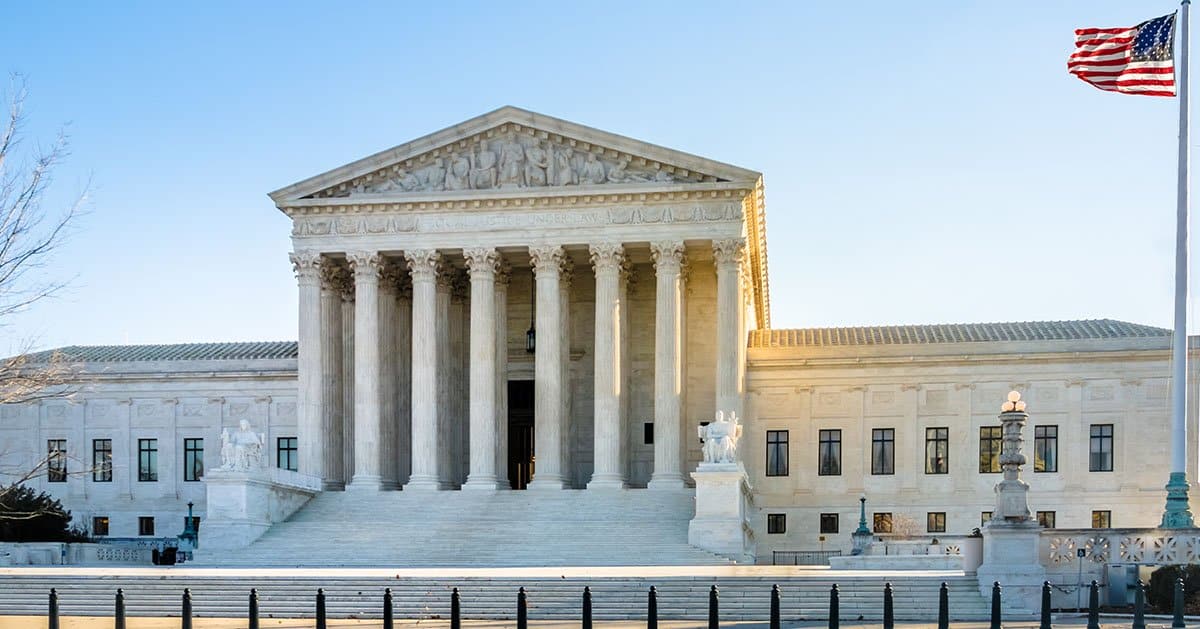


The Supreme Court on Monday threw out an appellate ruling that had upheld Steve Bannon's conviction for defying a subpoena from the House committee that investigated the Jan. 6, 2021, Capitol breach. The order clears a path that will almost certainly lead to the full dismissal of the case.
The move came after the Trump administration asked the justices to toss the case "in the interests of justice." No dissents were noted.
The case now returns to a federal appeals court in Washington, where the Justice Department is expected to move to drop the charges entirely. What was once the centerpiece of a congressional accountability campaign is now headed for the dustbin.
The Justice Department brought the case against Bannon during Democrat Joe Biden's presidency. It changed course after Trump took office again last year. That reversal is the key fact that explains everything about the trajectory of this case.
According to the Associated Press, Bannon had initially argued that his testimony was protected by Trump's claim of executive privilege. The House panel and the Justice Department under Biden contended such a claim was dubious. A trial judge convicted Bannon, and a federal appeals court upheld that conviction. Now the Supreme Court has vacated the appellate ruling, and the executive branch that originally brought the prosecution no longer wishes to pursue it.
This is how the system is supposed to work. Prosecutorial discretion belongs to the executive branch. When a new administration determines that a case no longer serves the interests of justice, it has every right to say so. The Supreme Court simply honored that determination.
By one measure, the dismissal would be largely symbolic. Bannon already served his four-month prison sentence. He reported to a federal facility in October 2024 and was released before the Supreme Court acted. The conviction's practical consequences have already been absorbed.
But calling it symbolic undersells what just happened. A conviction on the books carries weight. It shapes legal precedent, colors public perception, and hangs over a person's record indefinitely. Vacating the appellate ruling doesn't just free Bannon from future consequences. It dismantles the legal scaffolding that the Jan. 6 committee built to enforce its subpoena power through criminal prosecution.
The committee no longer exists. The presidency that empowered it has ended. And now the courts have cleared the wreckage from the docket.
The Bannon case was not the only one affected on Monday. The Supreme Court also threw out the conviction of former Cincinnati Councilman P.G. Sittenfeld at the Trump administration's request. Two cases, two vacated convictions, both driven by the executive branch's reassessment of whether the prosecutions served justice.
Critics will frame this as political favoritism. They framed the original prosecutions as righteous accountability. What they will not do is grapple with the obvious: the Biden Justice Department weaponized its prosecutorial authority against political opponents, and the current administration is unwinding those choices through legitimate legal channels. Not pardons. Not executive orders shouted from a podium. Motions filed in court, reviewed by the Supreme Court, and granted without dissent.
That is not lawlessness. That is the orderly exercise of constitutional authority.
The underlying legal question was always more complicated than Bannon's opponents wanted to admit. He refused to comply with a congressional subpoena, yes. But he did so on the basis of a privilege claim asserted by the sitting president at the time, Donald Trump. Whether that claim had merit was a legitimate legal dispute, not an open-and-shut case of obstruction.
The Jan. 6 committee treated every assertion of privilege as evidence of guilt. That posture made for good television. It made for shaky law. Congressional subpoenas are powerful instruments, but they are not immune from constitutional limits, and individuals who challenge them on legal grounds are exercising rights, not committing crimes.
The Biden DOJ chose to criminalize that challenge. The Trump DOJ chose to end it. Both decisions reflect prosecutorial judgment. Only one side pretends their judgment was neutral.
The federal appeals court will now process the expected dismissal. Barring something extraordinary, the contempt of Congress case against Steve Bannon will cease to exist as a legal matter. The conviction will be vacated. The sentence has been served. The committee that issued the subpoena dissolved two years ago.
What remains is the precedent this entire episode set: that congressional investigations, when sufficiently politicized, can generate criminal referrals that land political operatives in federal prison. And that the only corrective mechanism is a change in administration willing to exercise the same discretion in reverse.
Bannon already did the time. Monday's order makes sure the conviction doesn't outlast the politics that produced it.