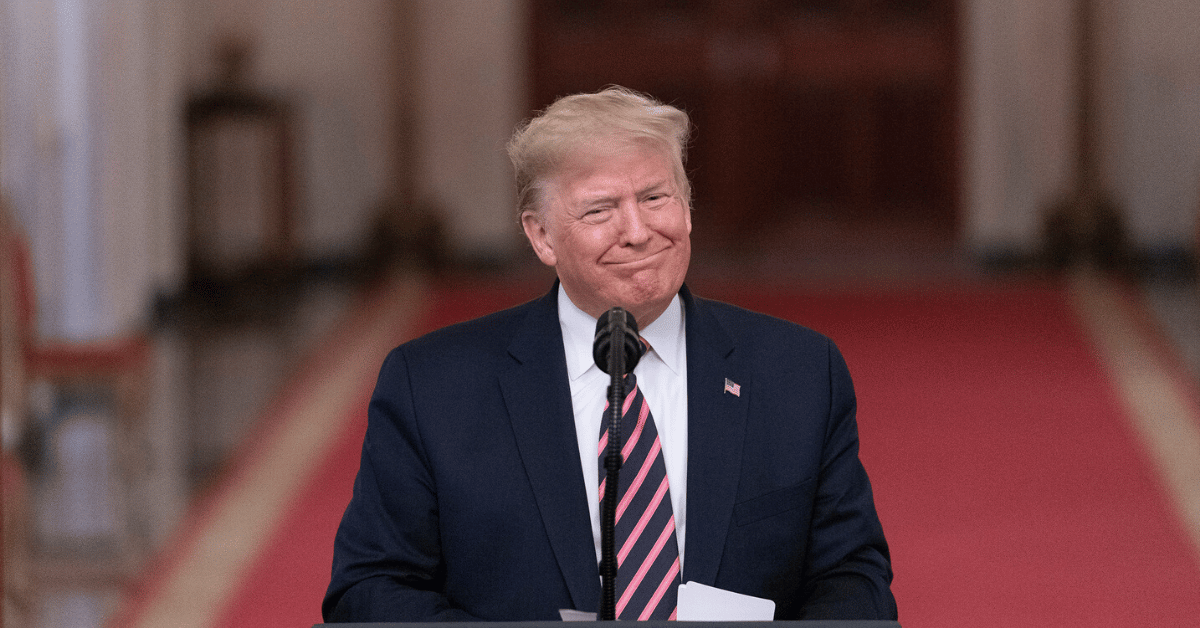

The Supreme Court is poised to tackle one of the most defining issues of our time with a case challenging President Donald Trump’s executive order on birthright citizenship.
The court will soon hear arguments in Trump v. Barbara, a class action lawsuit contesting Trump’s order from Jan. 20, 2025, which limits birthright citizenship under the 14th Amendment to exclude children born in the U.S. to parents who are here illegally or on temporary visas. Citizenship is still granted if at least one parent is a U.S. citizen or permanent resident. A decision is expected by the end of June, following oral arguments likely in March or April, after the Department of Justice and supportive groups filed briefs this month and week.
Supporters of the administration’s stance are rallying hard, arguing this executive action aligns with the original intent of the Constitution while addressing modern challenges like unauthorized migration and birth tourism.
The order, issued just over a year ago, faced immediate pushback through multiple lawsuits, leading to the Supreme Court’s decision in December to take up Trump v. Barbara. The Department of Justice contends it’s a necessary step to protect national interests.
“The Order advances broader efforts to combat the ‘significant threats to national security and public safety’ posed by illegal entry and birth tourism,” the DOJ stated in its brief. That’s a bold claim, and it’s hard to ignore the reality of porous borders straining resources, as Washington Examiner reports.
Backing the administration, a coalition of Republican-led states, including Tennessee and Iowa, filed a brief this week asserting that unchecked migration has overwhelmed their communities. Their argument that citizenship requires a deeper tie to the nation than mere birthplace feels like common sense to many.
Similarly, the Coolidge Reagan Foundation, a group with right-leaning views, submitted a brief warning against letting outdated interpretations dictate today’s policies. They’re not wrong to question why a 19th-century framework should blindly apply to 21st-century problems.
“This Court should not construe this provision to inadvertently resolve the fundamentally different challenge of systemic illegal immigration in the face of the modern welfare state more than a century later without any public debate or deliberation,” the Foundation argued. It’s a sharp point—shouldn’t major shifts in national identity be debated openly, not assumed?
These filings come as briefs from those potentially affected by the order, including families of children born here, and are expected in the coming weeks. The clash of perspectives promises intense scrutiny when arguments unfold.
At its core, this case isn’t just about legal jargon; it’s about who gets to call themselves American. The administration’s supporters argue the 14th Amendment was never meant to reward those who bypass our laws.
Opponents, however, will likely frame this as a heartless restriction, stripping away a long-held right. Yet, isn’t it fair to ask why citizenship should be automatic for those with no lasting connection to our nation?
The DOJ and state coalition lean on historical context, claiming the amendment’s framers intended a stronger bond for citizenship eligibility. Their briefs cite debates and precedents that challenge the assumption of universal birthright access.
As oral arguments approach, Trump v. Barbara is set to be one of the most-watched cases of the Supreme Court term. The outcome could reshape immigration policy for generations.
While progressive voices may decry this as exclusionary, there’s a practical side—uncontrolled migration burdens public systems, from schools to hospitals. Balancing compassion with sustainability isn’t cruelty; it’s responsibility.
With a ruling due by June, the nation waits to see if the justices will uphold a policy that prioritizes legal presence over mere geography. Until then, the debate over what makes an American will only grow louder.