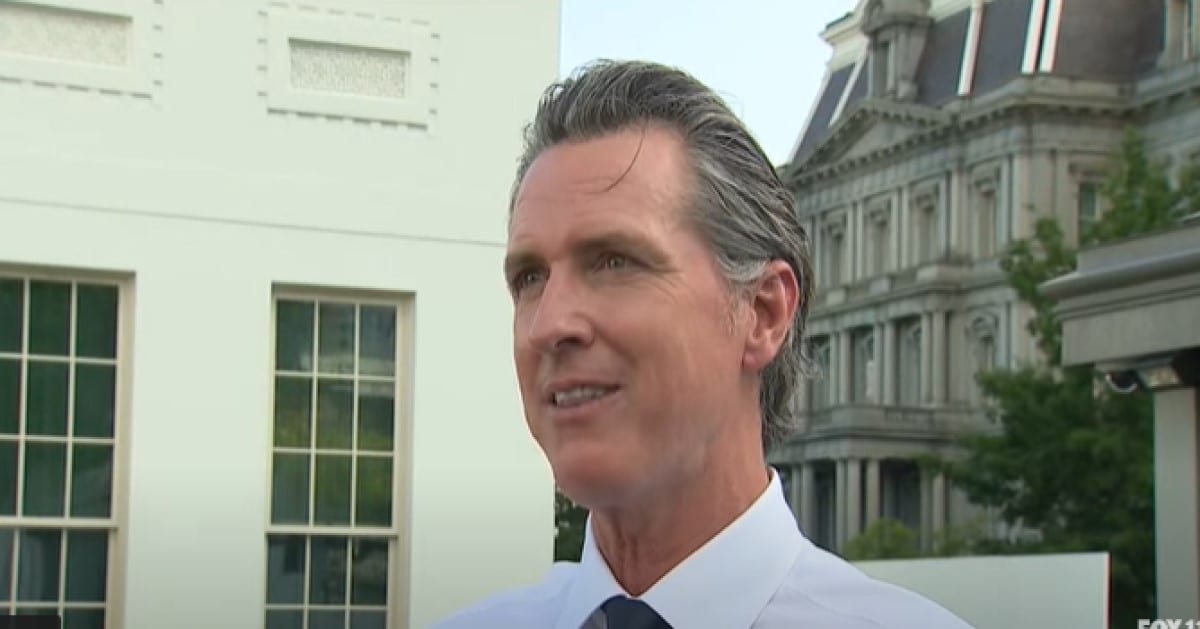
California Gov. Gavin Newsom found himself in hot water this week after airing grievances about President Donald Trump at an international event.
On Jan. 20, Newsom spoke to reporters at the World Economic Forum in Davos, Switzerland, where he criticized foreign leaders for their response to Trump.
The next day, Trump delivered remarks at the same forum. Commentator Stephen A. Smith, on Wednesday’s episode of his “Straight Shooter” podcast, sharply rebuked Newsom for making negative comments about the U.S. president on foreign soil.
“I have no problem with Gavin Newsom being candid and open about his feelings about our president on United States soil,” Smith declared on his podcast. “To go over to another country, Switzerland, to be in the presence of other European leaders, speaking against the President of the United States — I'm not down with that.”
Smith’s frustration isn’t just about protocol; it’s about priorities. Why, he questioned, was Newsom focusing on Trump in Switzerland when California faces pressing issues like affordability and policy debates over sanctuary status?
California’s cost of living, Smith noted, has soared during Newsom’s tenure, making it a top concern for residents. For many hardworking folks, just keeping a roof over their heads feels like a battle. This isn’t abstract—it’s a daily struggle that deserves a governor’s full attention.
Smith didn’t shy away from pointing out Newsom’s apparent political ambitions, suggesting the governor might be eyeing a presidential run in 2028. Ambition isn’t a crime, but using an international platform to score domestic points feels like a misstep to those who value discretion in global settings.
Even as he criticized, Smith offered a nod of respect, describing Newsom as someone who genuinely cares about people. Yet, that compassion doesn’t excuse what Smith sees as a breach of decorum. Balancing personal admiration with policy critique is a tightrope, but it’s one worth walking.
Newsom’s own words at Davos didn’t help his case, as he took a jab at foreign leaders’ reactions to Trump. “People are rolling over,” he said, adding that he should have brought “kneepads” for world dignitaries, Fox News reported. It’s a quip that might play well with some crowds, but it lands flat when America’s image is on the line.
That kind of rhetoric, delivered abroad, fuels Smith’s argument that there’s a time and place for political sparring—and Switzerland isn’t it. For many who prioritize national pride, airing dirty laundry in front of global elites feels like a betrayal of trust.
Smith also highlighted a personal grievance: Newsom has repeatedly declined invitations to appear on his show. It’s not just a snub; it’s a missed chance for the governor to defend his record directly to the public. Transparency matters, especially for a leader with national aspirations.
The broader issue here isn’t just one man’s comments; it’s about how America presents itself to the world. When leaders criticize their own country’s president abroad, it can signal weakness to allies and adversaries alike. That’s a risk many feel isn’t worth taking.
California’s challenges—sky-high costs and contentious policies—aren’t going away while Newsom plays critic on the international circuit. For those who believe in tackling local issues first, this episode is a reminder of misplaced focus.
Smith’s critique, though sharp, isn’t without nuance; he acknowledges Newsom’s good intentions. Still, good intentions don’t justify actions that could undermine national cohesion in the eyes of foreign observers.
At the end of the day, this controversy boils down to a simple principle for many: keep internal disputes at home. America’s strength lies in projecting unity, not division, when stepping onto the global stage.
As this debate unfolds, Newsom’s team has yet to respond to requests for comment from media outlets like Fox News Digital. Until then, the discussion over loyalty, priorities, and protocol will likely continue to simmer. It’s a conversation worth having in a nation that values both free speech and shared purpose.