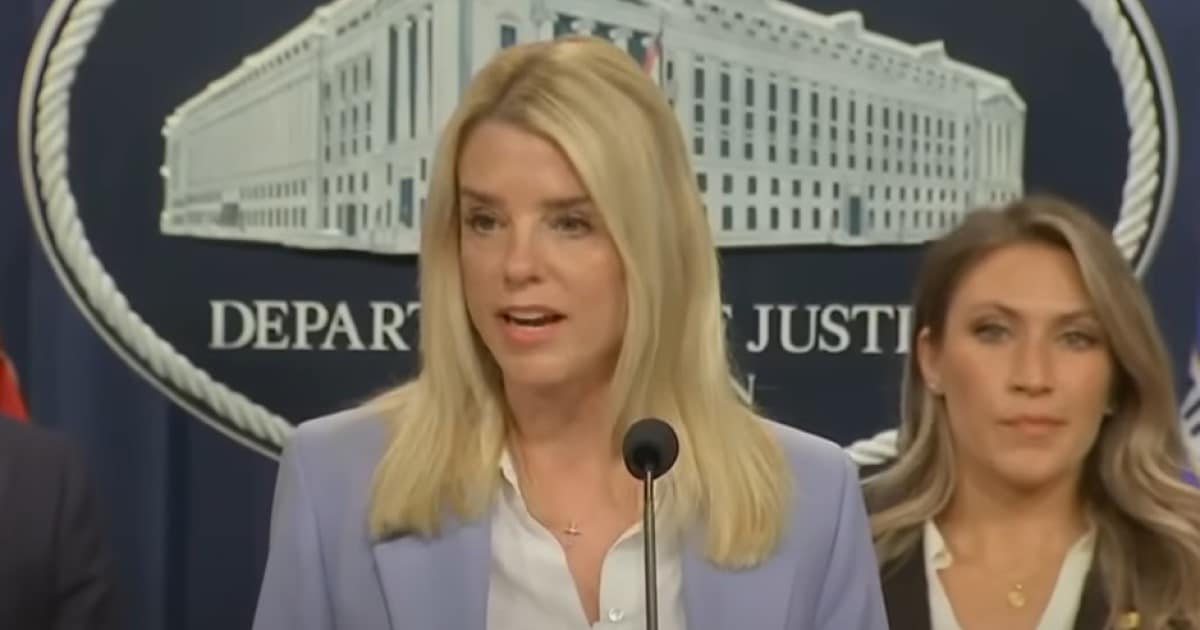

Rep. Nicole Malliotakis (R-N.Y.) filed an emergency application with the U.S. Supreme Court this week to block a state court order that would redraw her congressional district — a move her legal team says has thrown New York's 2026 elections into disarray just days before candidates can begin collecting signatures.
A New York judge struck down the boundaries of the 11th Congressional District, which covers Staten Island and parts of southern Brooklyn, ruling the lines diluted Black and Latino voting strength in violation of the state constitution. The ruling orders New York's Independent Redistricting Commission to draw a new map and freezes the midterm contest until that process is complete.
Nominating petitions can begin circulating on February 24. The clock isn't ticking — it's nearly out.
The timing here is worth understanding. A judge invalidates a Republican-held district in a state where Democrats are desperate for House pickups, and the remedy just happens to require redrawing the map in a way that could group Staten Island with voters in Lower Manhattan — fundamentally reshaping the district's political character.
According to The Hill, Malliotakis's application argues the court-ordered redraw amounts to racial gerrymandering that violates the federal Constitution's equal protection guarantee. Her filing put it bluntly:
"The trial court's order has thrown New York's elections into chaos on the eve of the 2026 Congressional Election."
This isn't an abstract legal debate. This is a sitting congresswoman whose district — one President Trump handily won — is being surgically dismantled by a state judiciary with no apparent concern for the electoral calendar. The application also acknowledged that state-level options haven't been fully exhausted:
"While Applicants had hoped—and still hope—that the New York appellate courts put an end to this unconstitutional mischief, they come to this Court now."
New York's top court already ruled it had no jurisdiction to immediately intervene. That left Malliotakis with nowhere to go but the Supreme Court.
On the other side of the case sits the Elias Law Group, the Democratic law firm that has become a fixture in redistricting litigation nationwide. Partner Aria Branch dismissed the Supreme Court filing as a "desperate appeal," calling it "premature and improper."
"The defendants have already filed multiple appeals for interim state court relief, one of which remains pending. New York's legal machinery is capable of sorting this out without undue federal interference."
There's something rich about a law firm that exists to weaponize the courts, calling someone else's legal appeal "desperate." And the suggestion that New York's legal machinery can sort this out on its own would be more persuasive if New York's highest court hadn't already said it lacked jurisdiction to act. The state system punted. Now the people who benefited from the punt want to keep the ball where it landed.
The framing of "undue federal interference" is particularly telling. When progressive litigators use federal courts to reshape election law in their favor, it's called protecting democracy. When a Republican asks the Supreme Court to enforce the Equal Protection Clause, it's interference.
This isn't happening in a vacuum. The Supreme Court has already ruled on two emergency appeals involving redistricting ahead of the 2026 midterms — one in Texas, one in California — allowing new maps to go into effect in both cases. A mid-decade redistricting arms race is underway, and New York just became its latest battleground.
The application now sits with Justice Sonia Sotomayor, who handles emergency matters arising from New York. She can act alone or refer the matter to the full Court for a vote. The case has not yet been docketed.
For conservatives watching the House majority hang by a thread, this case encapsulates a familiar frustration: progressive legal infrastructure targeting Republican-held seats through judicial action rather than winning at the ballot box. The Voting Rights Act and state constitutional provisions designed to ensure fair representation are being turned into tools for partisan map manipulation — all under the banner of equity.
The 11th District isn't some swing seat that Democrats lost by a hair. It's a district Trump won decisively. Its voters chose their representative. Now, a state judge has decided those boundaries are unconstitutional and ordered a do-over — with no new map in sight and a filing deadline days away.
If the redistricting commission redraws the district to lump Staten Island in with Lower Manhattan, you don't need a political science degree to see what happens next. A district that reflects the preferences of its current residents gets diluted into something designed to produce a different outcome. The voters don't change their minds. They just get new neighbors — chosen for them by a commission, at the direction of a court, at the urging of Democratic litigators.
That's not protecting voting rights. That's the engineering election results.
Malliotakis now waits for a Supreme Court that has shown willingness to engage on redistricting emergencies this cycle. Whether Sotomayor acts alone or sends it to the full Court, the question is straightforward: Can a state judge blow up a congressional district weeks before the election cycle begins and call it justice?
February 24 is ten days away. The voters of Staten Island deserve an answer before then.