In a tragic turn of events, two anti-ICE protesters lost their lives in Minneapolis, sparking a heated debate over local police coordination with federal immigration authorities.
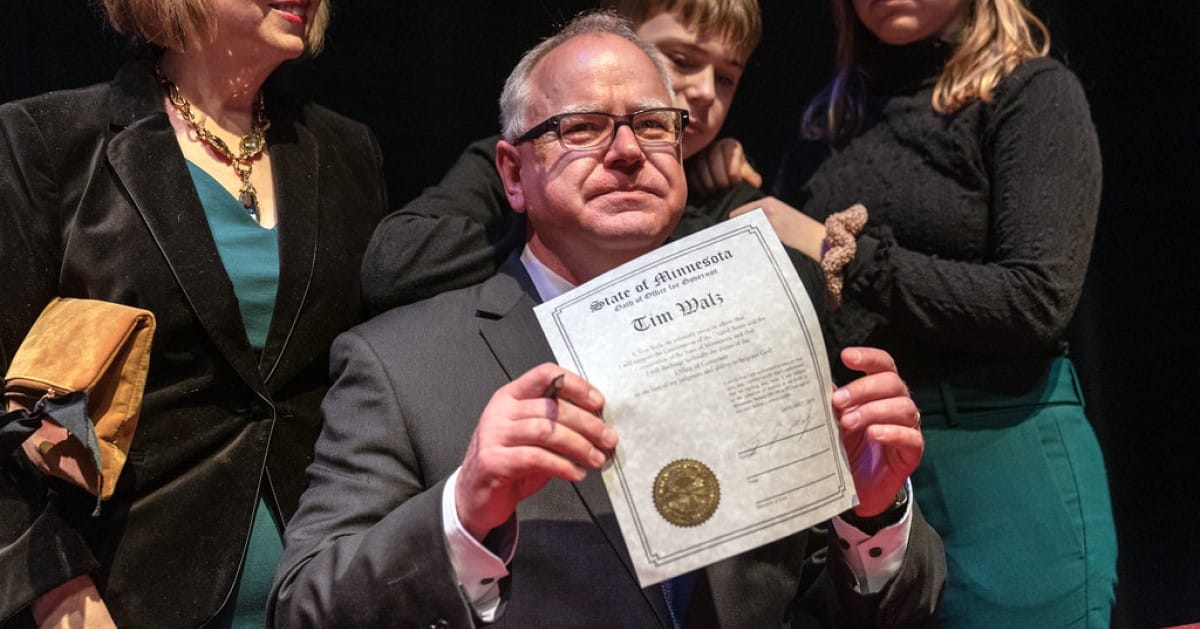
The head of the St. Paul Police Federation, Mark Ross, has criticized state and local officials for preventing local law enforcement from working with ICE and Border Patrol, claiming such cooperation could have averted the deaths of Renee Good and Alex Pretti. Meanwhile, Gov. Tim Walz and Minneapolis Mayor Jacob Frey met with President Trump’s border czar, Tom Homan, on Tuesday to address escalating tensions over federal deployment in the state.
The issue has ignited a firestorm of debate over public safety and federal overreach. Critics of current policies argue that the lack of coordination between local and federal forces has created dangerous gaps in managing volatile protest situations.
The fatalities of Renee Good, a mother of three and anti-ICE activist shot by an ICE agent after driving toward him, and Alex Pretti, an armed ICU nurse killed during a confrontation with Border Patrol agents, have intensified scrutiny on federal tactics. A federal investigation is underway to determine if Pretti’s gun discharged accidentally during the altercation, the New York Post reported.
Mark Ross, head of the St. Paul Police Federation, didn’t mince words on the fallout. “There would be no loss of life,” he insisted, pointing to the missed opportunity for local police to manage crowds during federal operations. His frustration is palpable, and it’s hard to ignore the logic—if local cops were on the scene, trained for urban crowd dynamics, could this have been avoided?
Ross also highlighted the disparity in training, noting that Minnesota law enforcement has honed skills in crowd management since hosting the Republican National Convention in St. Paul in 2008. “Border Patrol agents don’t usually work in an environment like this, in large urban communities with crowds like that,” he added. It’s a fair point: agents accustomed to border skirmishes may not grasp the nuances of Minneapolis street protests.
Ross argues that local police are stuck between political mandates and public safety needs, unable to coordinate even basic support for federal actions like serving warrants. He clarified this wouldn’t mean enforcing immigration laws or abandoning Minnesota’s sanctuary policies—just helping manage crowds when tensions flare. Yet, city leaders have kept that door firmly shut.
This lack of communication, Ross contends, leaves federal agents—often untrained for urban protest scenarios—fending for themselves against angry locals. An unnamed source echoed this, lamenting that agents are overworked and ill-prepared for such dual roles of enforcement and crowd control. When you’ve got exhausted agents facing hostile crowds without backup, disaster feels inevitable.
Look at the contrast: local police, Ross says, are trained to de-escalate, to draw lines and issue warnings before acting. Border Patrol, conditioned by high-stakes border encounters, often reacts swiftly to perceived threats. This philosophical mismatch, redeploying border agents to Minnesota’s urban landscape, seems a recipe for misunderstanding and tragedy.
On Monday, after the shootings drew national attention, Tom Homan arrived in Minneapolis to meet with Gov. Walz, who prioritized impartial investigations and a reduction of federal forces. Walz’s office stressed the need for “ongoing dialogue” while pushing back against what they see as punitive federal actions in the state. But will talk translate to meaningful change?
Mayor Frey, meeting with Homan alongside Police Chief Brian O’Hara on Tuesday, demanded a swift end to Operation Metro Surge, emphasizing community trust over divisive tactics. His stance is clear: Minneapolis won’t touch federal immigration enforcement. Yet, one wonders if this rigid line sacrifices practical solutions for political posturing.
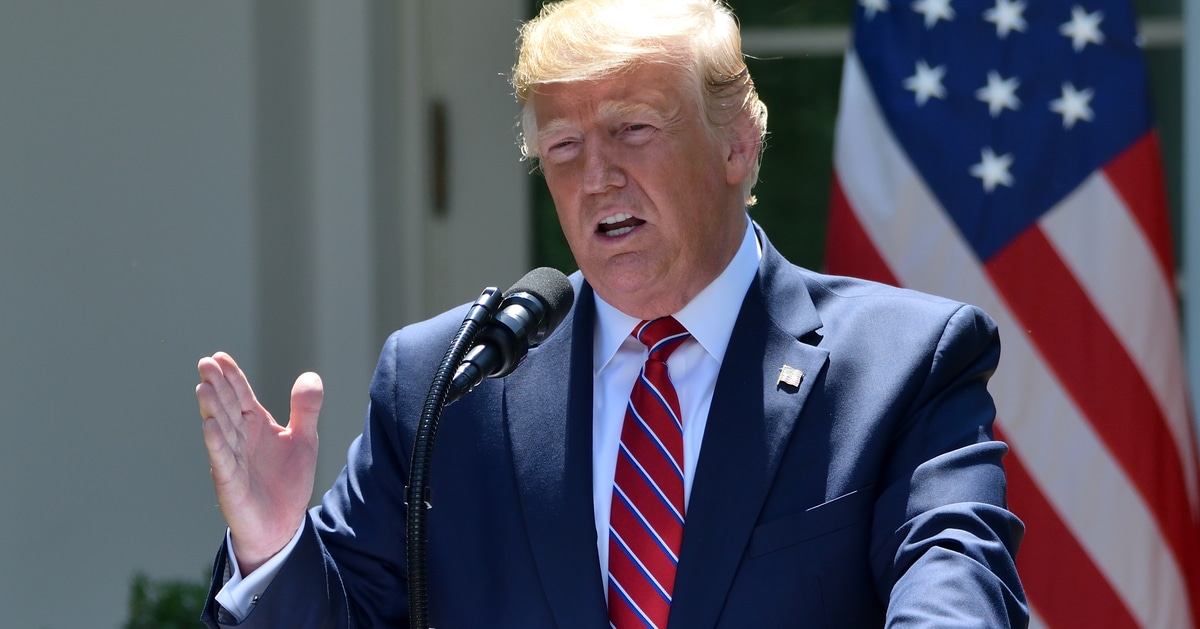
President Trump, speaking on Tuesday from the South Lawn, backed Homan’s efforts, while also defending DHS Secretary Kristi Noem amid criticism of her handling of Minnesota operations. On Monday, Trump ordered Border Patrol commander Gregory Bovino and many agents back home, responding to Republican unease over heavy-handed tactics. It’s a small retreat, but does it address the core issue?
The memorial for Alex Pretti, seen near the site of his death on Jan. 27, 2026, stands as a somber reminder of the human cost here. These aren’t just policy debates—they’re life-and-death outcomes for families like those of Pretti and Good. The question looms: how many more tragedies before compromise kicks in?
Ross and local law enforcement plead to be unshackled from political constraints, to simply do their job of keeping streets safe. Their argument isn’t about picking sides in the immigration debate—it’s about preventing chaos when federal actions draw crowds. If that’s not a reasonable ask, what is?
The standoff between Minnesota’s sanctuary stance and federal enforcement isn’t going away soon, but ignoring local police expertise feels like a gamble with public safety. As tensions simmer in the Twin Cities, the hope is for leaders—Walz, Frey, Homan, and beyond—to prioritize practical coordination over ideological battles. Lives, not just talking points, hang in the balance.