

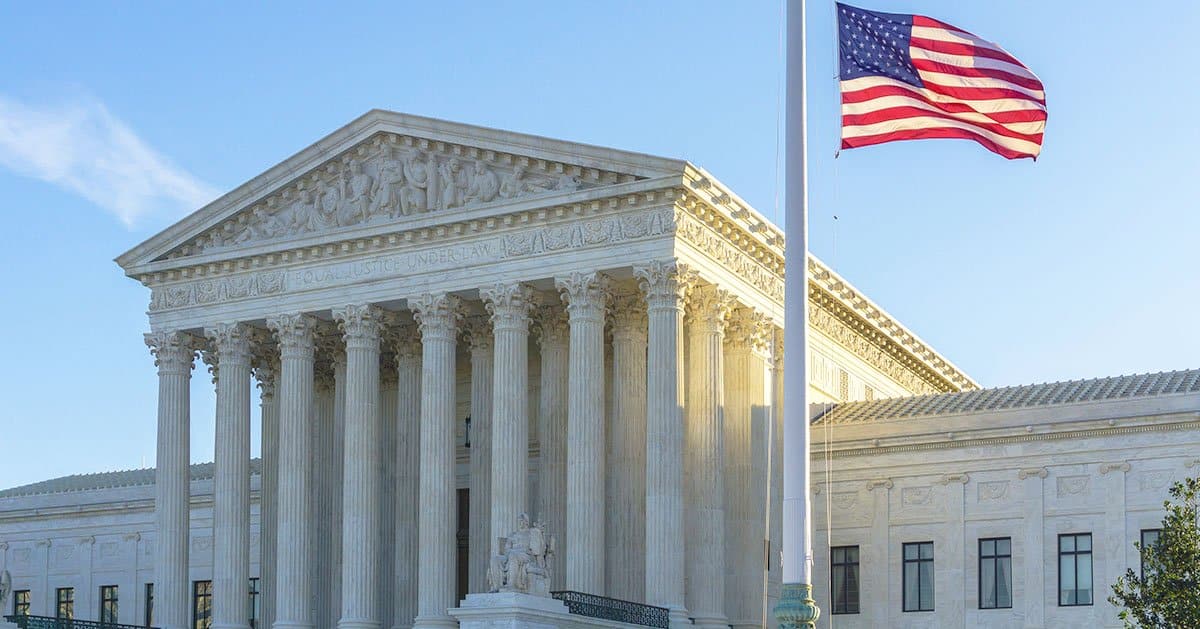

Massachusetts State Auditor Diana DiZoglio hauled her own party's legislative leaders into the state's highest court last week, filing a complaint with the Massachusetts Supreme Judicial Court to force the audit that 72% of voters demanded in 2024.
The targets: House Speaker Ron Mariano and Senate President Karen Spilka — both Democrats — who have flatly refused to cooperate with an audit of the state legislature. The mandate came from a ballot measure that passed with overwhelming bipartisan support. The response from the political class was to ignore it.
DiZoglio announced the filing on February 11:
"This is the People's House, not the politicians' House. Yesterday my office filed a lawsuit seeking to audit the MA Legislature. We hope the SJC stands with the People of the Commonwealth #mapoli"
In 2024, Massachusetts voters passed a ballot measure granting the state auditor's office authority to audit the legislature. Not a narrow squeaker. Not a partisan split. Seventy-two percent of voters said yes. In a state where Democrats dominate every lever of government, that number is staggering — it means vast numbers of Democratic voters backed it.
And according to the Daily Caller, the legislature's answer was, effectively: no.
No cooperation. No open doors. No acknowledgment that the people who elected them had spoken clearly. Mariano and Spilka simply declined to participate, as though a binding vote were a suggestion.
This is the dynamic that corrodes public trust faster than any scandal. It's not that politicians break the rules — it's that they decide the rules don't apply to them. Voters didn't ask for a revolution. They asked for a look at the books. The refusal tells you more than any audit ever could.
DiZoglio might have expected backup from Attorney General Andrea Joy Campbell. She did not get it. Campbell refused to represent the auditor in the suit and went further — she publicly characterized DiZoglio's filing as a "ploy" to sidestep the attorney general's approval, according to GBH News.
Campbell argued that DiZoglio lacks the authority to bring the case and that the audit would violate the legislature's constitutional privileges.
Constitutional privileges. That's the shield. The voters granted explicit authority through a ballot measure, and the attorney general's office responded by lawyering up — not for the people, but for the political establishment.
DiZoglio did not mince words in response:
"The Constitution is there to protect the people, not the politicians."
She's right. The entire point of constitutional government is to constrain power, not to give legislators a veto over accountability. When the attorney general frames voter-approved oversight as an infringement on legislative privilege, the privilege has swallowed the principle.
Here's what makes the legislature's stonewalling even harder to defend. DiZoglio's office has already demonstrated exactly why audits matter. In fiscal year 2025 alone, her office found nearly $12 million in fraud plaguing public assistance programs.
That discovery came from auditing agencies that actually cooperated. The legislative audit DiZoglio is seeking is separate from those fraud investigations — but the juxtaposition is damning. If $12 million in fraud surfaced where the auditor was allowed to look, what sits in the places she's been barred from entering?
Appearing on Fox News's "Saturday in America," DiZoglio framed the stakes plainly:
"We need to root out that waste, fraud and abuse so that these systems are working as they should and people truly in need get these services."
"What are they hiding? If there's nothing to hide, open up the doors, let the sun shine in."
It's a question that answers itself. Politicians who have nothing to hide don't file legal objections to transparency.
DiZoglio has noted that Massachusetts stands alone as the only state in the country that exempts its legislature, governor's office, and court system from public records law. Every other state — red, blue, and purple — manages to function with some degree of legislative transparency. Massachusetts treats its entire government like a classified operation.
This isn't a partisan quirk. It's a structural feature of one-party rule. When there's no competitive opposition, there's no external pressure to open the books. The majority party becomes the referee, the player, and the scorekeeper. Accountability becomes optional — until someone like DiZoglio forces the question.
One detail from the original reporting deserves attention: Senate Minority Leader Bruce Tarr and House Minority Leader Bradley Jones Jr. were both asked whether they plan to cooperate with the audit. Neither responded to the request for comment.
Silence from the majority party is expected. Silence from the minority party — the one that theoretically exists to provide oversight and opposition — is inexcusable. If Republican legislators in Massachusetts won't even vocally support a voter-approved transparency measure against a Democratic supermajority, what exactly are they there for?
The most uncomfortable part of this story for the Massachusetts Democratic establishment isn't the lawsuit. It's the source. DiZoglio is one of their own — a former state representative and senator who won the auditor's office as a Democrat. She's not an outside agitator or a partisan operative. She's a Democratic officeholder doing the job voters asked her to do, and the Democratic machine is treating her like an enemy combatant for it.
That tells you everything about the incentive structure. The party apparatus in Massachusetts doesn't exist to serve voters. It exists to protect incumbents. When a member breaks ranks to side with the electorate over the institution, the institution closes ranks against her.
Campbell calls it a ploy. Mariano and Spilka refuse to engage. The message to every other ambitious Democrat in the state is unmistakable: don't.
Seventy-two percent of voters asked for accountability. The political class responded with lawyers, procedural objections, and silence. Now the Supreme Judicial Court will decide whether voters actually govern Massachusetts — or whether they just get to feel like they do.