


Iranian ballistic missiles and drones slammed into Prince Sultan Air Base in Saudi Arabia on Friday, injuring at least 12 U.S. service members and significantly damaging at least two Air Force KC-135 refueling aircraft. Two of the injured were described as seriously wounded.
The base sits roughly 40 miles from the Saudi capital of Riyadh and hosts a significant share of the approximately 2,700 U.S. service members stationed in Saudi territory. The attack marks the latest in a string of Iranian strikes against American positions since President Trump announced Operation Epic Fury on Feb. 28.
Thirteen U.S. service members have now been killed in the conflict with Iran since that date. The cost is real and climbing.
Friday's strike did not occur in a vacuum. On March 1, Iran launched an attack against the same installation, Prince Sultan Air Base. That assault killed one American soldier: U.S. Army Sgt. Benjamin N. Pennington, 26 years old, died of his wounds one week later.
Iran also claimed to have damaged three other refueling aircraft and destroyed one in a separate action. Beyond Saudi Arabia, Tehran fired a pair of missiles at Diego Garcia, the remote U.S.-UK base in the Indian Ocean, a strike first reported by the Wall Street Journal on March 20. Iran's foreign minister claimed the previous month that those missiles were deliberately limited to about half the distance between Iran and Diego Garcia, as The Daily Caller reports.
That claim raised more questions than it answered. If Iran is advertising restraint, the obvious implication is that it possesses the capability for something far worse. Demonstrating range while insisting you pulled your punch is not a peace signal. It is a threat dressed in diplomatic language.
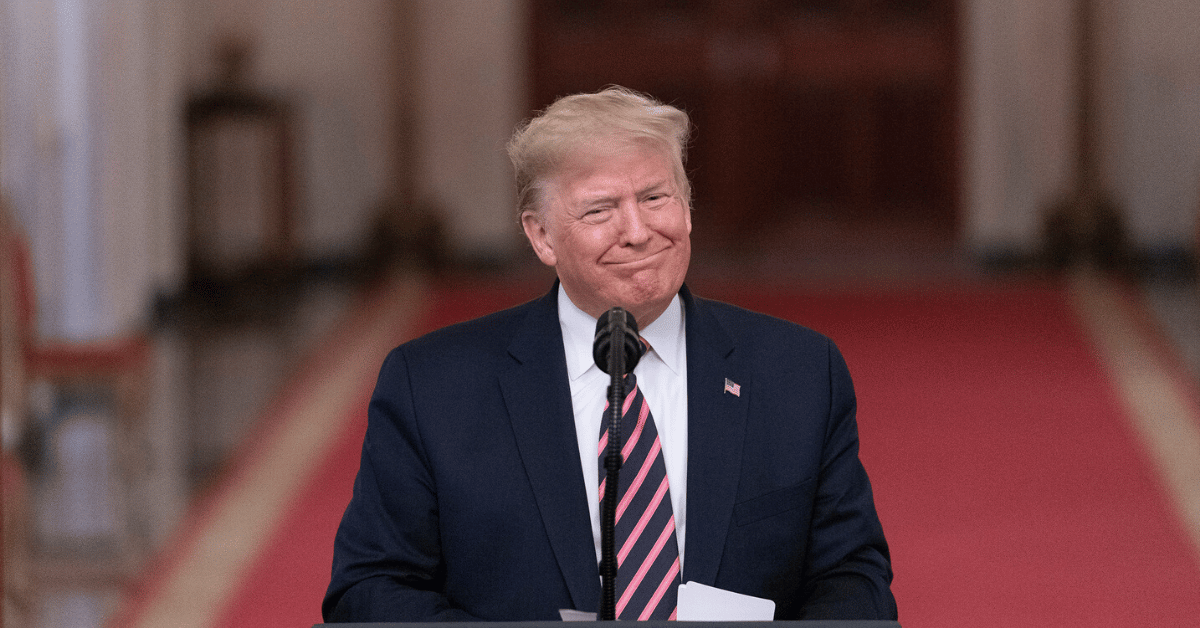
President Trump told a reporter Thursday:
"We have very substantial talks going on with respect to Iran."
The statement reflects what has been the administration's dual-track approach since Operation Epic Fury began: maintain military pressure while leaving the door open for negotiation. The two are not contradictions. They are leveraging working in tandem. Iran's willingness to engage diplomatically tends to correlate directly with how much pain it is absorbing on the battlefield.
What matters now is whether Tehran interprets Friday's consequences as a reason to accelerate those talks or to keep testing American resolve with incremental escalation. Iran has a long history of choosing the latter until the cost becomes unbearable.
Prince Sultan Air Base is not a minor outpost. It is a critical node in American force projection across the Middle East. KC-135 tankers are the unglamorous backbone of air operations; they keep fighter jets, bombers, and surveillance aircraft in the sky. Damaging them is not symbolic. It degrades operational capacity.
The 2,700 service members stationed across Saudi Arabia are there because the region's security architecture depends on American presence. Every one of them now operates under the reality that Iran is willing to strike the facilities where they sleep, work, and maintain aircraft. That reality demands a response calibrated not to headlines but to deterrence.
Sgt. Benjamin Pennington was 26. He survived the initial March 1 attack only to succumb to his injuries a week later. His name should not be a footnote in a casualty count. He is the human cost of Iranian aggression, and his sacrifice deserves to shape the seriousness with which Washington prosecutes this conflict.
Iran's strategy appears built on a familiar playbook:
The question is whether that last calculation holds. Tehran fired missiles at a base 40 miles from Riyadh. It fired missiles at Diego Garcia, 2,500 miles from Iranian soil. It has killed 13 American service members in a month. At some point, the increments stop being incremental.
Operation Epic Fury was not named for ambiguity. The Americans injured on Friday, and the families of those already killed, are owed a campaign that matches the name.