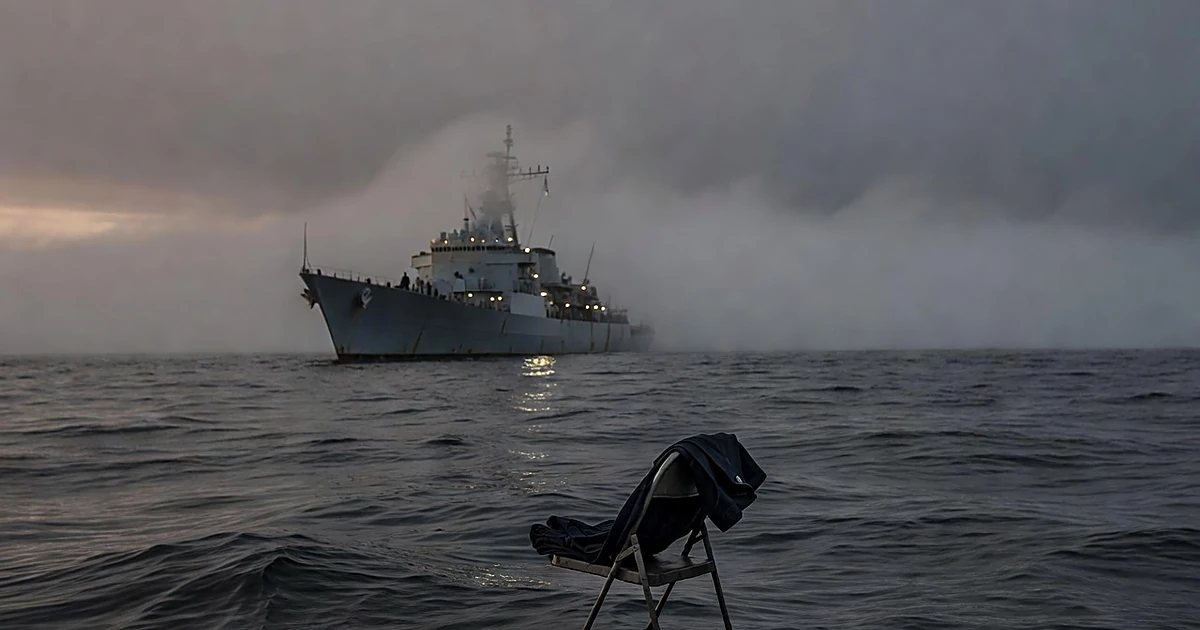

Defense Secretary Pete Hegseth declared the American naval blockade choking off Iran's ports can hold indefinitely, a bold commitment backed by more than 20 warships and tens of thousands of troops already deployed to the Middle East.
Speaking to reporters in Panama on Thursday after addressing the crew of the guided-missile destroyer USS Gridley, Hegseth said the Navy's rotation strategy gives Washington the staying power to keep the pressure on Tehran for as long as the mission demands. The blockade, imposed after U.S.-Israeli strikes on Iran launched a war on February 28, has already redirected more than 55 commercial vessels, disabled three ships, and resulted in the boarding of two others, Newsmax reported.
Hegseth's remarks came one day after President Trump posted on Truth Social claiming total American control of the Strait of Hormuz, the narrow waterway through which roughly a fifth of the world's oil and liquefied natural gas once flowed. Tehran effectively shut the strait after the February 28 strikes, but Washington moved fast to impose its own terms, blocking Iranian shipping while pledging to protect freedom of navigation for vessels headed to and from non-Iranian ports.
The blockade is not a paper exercise. Earlier this week, a U.S. Navy MH-60 helicopter fired two Hellfire missiles into the engine room of a Panama-flagged ship that ignored repeated warnings from American forces. The military has not disclosed the vessel's name or whether the strike caused casualties, but the message to commercial operators willing to run the blockade was unmistakable: the Navy will enforce it.
That incident brought the total enforcement actions to at least 60, 55-plus redirections, three disablements, and two boardings, since the blockade began. The sheer volume of intercepts suggests a steady stream of vessels have tested American resolve, and so far, the Navy has answered every challenge.
Hegseth framed the operation's durability in straightforward terms.
"Indefinitely the United States Navy can maintain a blockade like that because we'll rotate ships in and out, as we have, and we'll continue to."
The rotation model matters. Rather than burning out a single carrier strike group or destroyer squadron, the Pentagon is cycling fresh ships into the theater while pulling others back for maintenance and crew rest. That approach, Hegseth argued, makes the blockade sustainable in a way that a static deployment could not be.
The president struck a characteristically assertive tone on Wednesday when he weighed in on the operation. Fox News confirmed Hegseth's statements and the broader posture, which has defined an escalation in U.S.-Iran tensions under the defense secretary's leadership.
Trump's Truth Social post left little ambiguity about his intentions for the strait.
"The U.S.A. has total control over the Strait of Hormuz. I THINK WE WILL KEEP IT! Our Naval Blockade is being called, by everyone, 'A WALL OF STEEL,' and there is nothing Iran can do about it."
The claim of "total control" is the administration's own characterization, and it has not been independently verified by outside analysts in available reporting. But the operational numbers, 20-plus warships, tens of thousands of troops, and a growing list of enforcement actions, suggest the U.S. footprint in the region is substantial by any measure.
Hegseth's tenure at the Pentagon has been marked by a willingness to act decisively and, at times, controversially. His military personnel decisions have drawn oversight demands from lawmakers in both parties, and his policy moves have generated friction both inside and outside the administration.
The blockade exists for a reason beyond raw military dominance. Washington has framed the operation as economic leverage, a tool to force Tehran to the negotiating table. But those negotiations, described only as "so-far failed," have not produced results. The identity of the parties, the format of the talks, and the specific demands remain unclear from official statements.
That gap between the military commitment and the diplomatic payoff is the central tension in the operation. The U.S. has deployed enormous resources to squeeze Iran's economy, yet the squeeze has not yet yielded the concessions Washington wants. Hegseth's "indefinitely" pledge signals the administration is prepared to wait Tehran out rather than ease pressure prematurely.
The strategic picture is further complicated by Hegseth's broader force-posture debates. His proposed drawdown of U.S. troops in Europe was blocked by Secretary of State Marco Rubio ahead of a NATO summit, raising questions about whether sustaining a major Middle East deployment indefinitely could strain commitments elsewhere.
Before the war, the Strait of Hormuz served as one of the most critical energy chokepoints on the planet. A fifth of global oil shipments and liquefied natural gas cargoes passed through its narrow waters. Tehran's decision to shut the strait after the February 28 strikes disrupted that flow, and Washington's blockade has layered American enforcement on top of Iran's own closure, creating a waterway that now operates entirely on U.S. terms for non-Iranian traffic.
The defense secretary's choice to deliver his blockade message from Panama, while standing alongside the crew of the USS Gridley, was itself a statement about American naval reach. The Gridley, a guided-missile destroyer previously deployed to the Middle East, represents exactly the kind of asset the Pentagon plans to rotate through the theater to keep the blockade running without exhausting any single ship or crew.
Hegseth has shown a hands-on approach to the Navy's culture and readiness during his time in office. He recently cracked down on sailors who ignored grooming standards, a move that signaled his attention to discipline across the force even as he managed high-stakes operations abroad.
Several questions remain unanswered. The legal authority under which the blockade was imposed, whether by executive order, statutory authorization, or some other mechanism, has not been publicly detailed. The status of the crew aboard the Panama-flagged vessel struck by Hellfire missiles is unknown. And the precise date the blockade took effect has not been disclosed.
What is clear is the scale. More than 20 warships. Tens of thousands of troops. Sixty-plus enforcement actions and counting. And a defense secretary who just told the world the operation has no expiration date.
Iran's leaders have dealt with American sanctions before, but a naval blockade backed by live ordnance is a different kind of pressure. Hegseth's reported friction with other administration officials over Iran policy suggests the internal debate is far from settled, even as the external posture hardens.
When a nation can park a steel wall across the world's most important oil chokepoint and rotate fresh ships in faster than the other side can adapt, that is not posturing, it is leverage. Whether Washington uses it wisely will matter more than whether it can hold the line.