


Geraldine de Haas, the singer and organizer who revived Chicago's fading jazz tradition by pulling Black and white musicians onto the same stage, has died at 91.
De Haas earned the title "first lady of Chicago jazz" not through celebrity but through decades of stubborn, ground-level work, founding concert series, festivals, and the nonprofit Jazz Unites in a city whose jazz scene had been declining for years and remained sharply divided along racial lines. The New York Times reported her death on August 9, though the specific date, location, and cause of death were not disclosed.
Howard Reich, the longtime jazz critic at The Chicago Tribune, gave de Haas the "first lady" label, and the facts behind it stretch back more than fifty years.
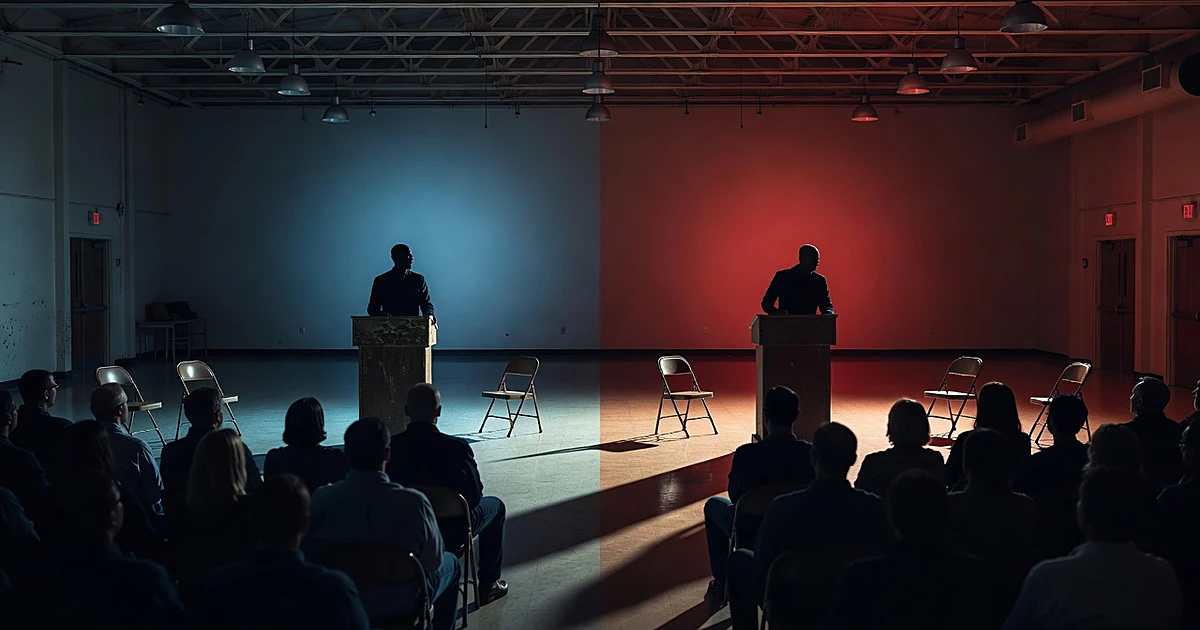
The story that defined de Haas's legacy began in the summer of 1974, when Duke Ellington died. A group of admirers gathered in Chicago to plan a memorial concert for the legendary composer and bandleader. The meeting hit a wall almost immediately.
Black musicians wanted the concert at Washington Park on the city's South Side, near Chicago's largest Black communities. White musicians, most of whom lived on the North Side, pushed for a venue in their part of town. Chicago's jazz tradition, for all its richness, was heavily segregated, and the planning session reflected it.
De Haas, then a semiretired jazz singer, proposed a compromise: Grant Park, the 319-acre stretch of green between downtown Chicago and Lake Michigan. Neutral ground. The idea worked. The concert drew thousands and, by multiple accounts, helped reinvigorate a jazz scene that had been losing energy for decades.
In a 2013 interview with The Chicago Tribune, de Haas explained the divide she had walked into:
"The Black musicians were conditioned to think one way, and the white musicians were conditioned another away. They never thought about getting everyone to participate."
She added, simply: "I was adamant about that." The loss of notable public figures often prompts reflection on their cultural contributions, as seen after the recent death of Oscar-winning actress Brenda Fricker, but de Haas's legacy was built less on personal fame than on the institutions she created.
That 1974 Ellington tribute was not a one-off. By 1977, de Haas was singing at what had become the fourth annual Duke Ellington tribute at Grant Park, proof that the compromise she brokered had turned into a tradition. A photograph from that year, credited to photographer Bob Black and the Sun-Times archive, captured her performing at the event.
Over the decades that followed, de Haas moved from the microphone to the organizational side of the stage. She founded concert series and festivals across Chicago and eventually established Jazz Unites, a nonprofit dedicated to sustaining the city's jazz culture. The specific founding date of Jazz Unites and its current operational status were not detailed in available reporting.
The breadth of her organizational work earned her a reputation as the driving force behind Chicago's jazz resurgence. That framing came not from de Haas herself but from critics and fellow musicians who watched her build infrastructure for a genre that the city's cultural establishment had allowed to wither. Sudden losses in the arts world, such as the recent death of singer-songwriter Glen Hansard, remind audiences how much of a music scene depends on individual dedication.
What stands out about de Haas's contribution is how practical it was. She did not write a manifesto about integration. She did not lobby city hall. She picked a park that sat between two sides of a divided city and told everyone to show up.
Chicago in the 1970s was not short on racial tension, and its music world mirrored the broader divisions. De Haas saw that the obstacle to a memorial concert for one of America's greatest composers was not talent, money, or public interest, it was the fact that two groups of musicians had never been asked to share a stage in a place that belonged to neither camp.
Grant Park worked because it was common ground in the most literal sense: public land, centrally located, open to everyone. The choice was so obvious that it took someone outside the argument to see it. Health crises and losses among prominent women in the public eye have drawn attention in recent months, but de Haas's passing marks the end of a quieter, longer-running story, one measured in festivals organized and musicians brought together rather than headlines generated.
Before her organizational career, de Haas had built a successful singing career of her own. The full scope of that performing life, the venues, the recordings, the years on stage, was not detailed in the Times obituary. What the record does show is that she traded personal spotlight for something harder to sustain: a citywide institution.
Details about her survivors were not immediately available. The specific concerts and festivals she founded beyond the Ellington tributes, and the names of the musicians who joined her in that first 1974 planning session, also remain unreported. Recent health emergencies involving public figures like Simone Biles have underscored how quickly a life's work can be reappraised, and de Haas's work deserves the full accounting.
In a country that spends enormous energy debating how to bring divided communities together, Geraldine de Haas just did it, with a park, a piano, and the good sense to get out of the way and let the music play.