



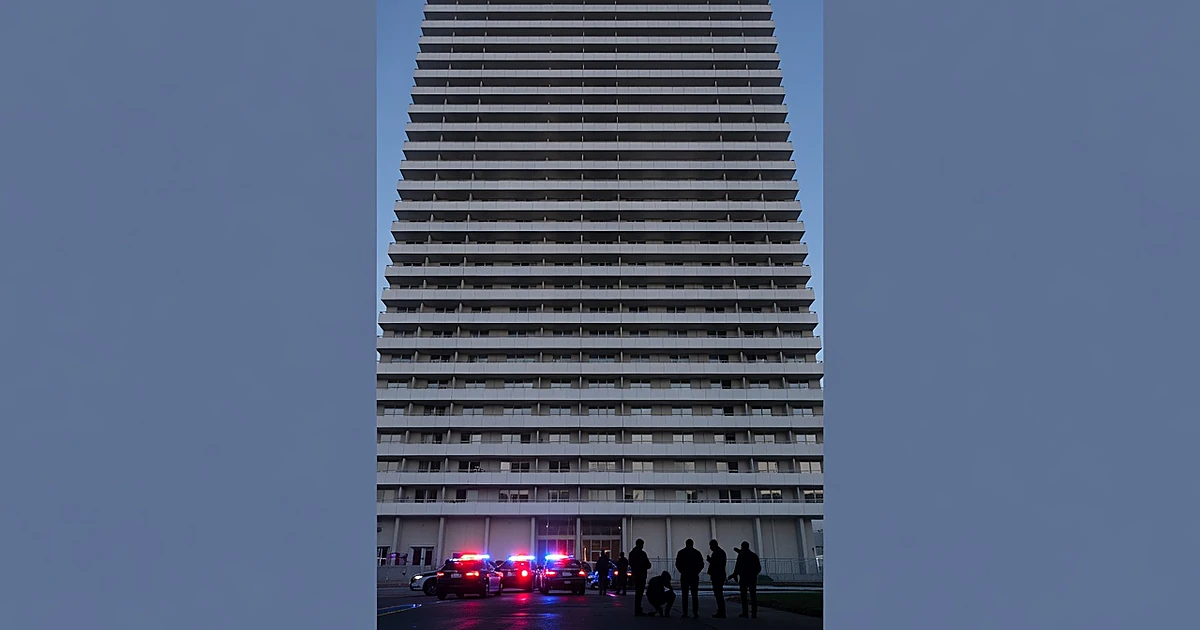

Judge John E. Steele, the Clinton-appointed federal judge who ordered a convicted plane hijacker released from immigration detention on July 8, is dead at 77. A law clerk for Chief Judge Marcia Morales Howard of the Middle District of Florida confirmed the death, which a legal source in Miami also corroborated. The circumstances remain unclear.
Steele's death came just days after he issued the ruling that freed Maikel Guerra Morales, a Cuban national who hijacked a commuter plane in 2003 and spent more than two decades in federal prison for aircraft piracy, from ICE custody. The ruling drew immediate condemnation from the Department of Homeland Security, a House impeachment resolution from Rep. Greg Steube (R-FL), and sharp questions about whether the federal judiciary has become a revolving door for dangerous illegal immigrants the executive branch is trying to remove.
Guerra Morales seized control of a Cuban commuter aircraft in 2003 and forced the crew to land at Key West International Airport. He was convicted of aircraft piracy and conspiracy to interfere with a flight crew, federal charges that carried a sentence of 22 years. After serving more than two decades behind bars, he was taken into ICE custody in December 2025 as the agency moved to deport him.
ICE intended to send Guerra Morales to Mexico. But as the New York Post reported, the agency could not deport him to Cuba because of an anti-torture convention, and Judge Steele found that ICE had provided no evidence it had even communicated with Mexico about accepting him.
In his July 8 order, Steele wrote that Guerra Morales's detention had exceeded six months and that there was "no significant likelihood of removal in the reasonably foreseeable future." He cited a landmark Supreme Court ruling on the detention of foreign nationals whose removal cannot be carried out, though the specific case was not named in public reporting.
Steele went further in his written opinion:
"The Government cannot lock individuals in a cell indefinitely as a workaround for a stalled deportation process."
He ordered Guerra Morales released under supervision.
The reaction from the Trump administration was swift. Acting Assistant Secretary Lauren Bis of DHS publicly condemned the decision, as Breitbart reported:
"This activist judge forced ICE to release a criminal illegal alien who was convicted and sentenced to 22 years for hijacking a plane back into American communities."
DHS framed the ruling as direct interference with the president's immigration enforcement mandate. Breitbart also noted that a DOJ immigration judge had already issued a final removal order for Guerra Morales on March 1, 2023, more than three years before Steele's order effectively circumvented it.
That timeline matters. A federal immigration judge determined years ago that Guerra Morales should be removed from the country. ICE took him into custody to carry out that order. And a single district court judge released him because the government's deportation logistics had stalled.
Guerra Morales himself appeared to understand the significance. Speaking to Telemundo after his release, he said: "If the judge didn't get tough, ICE wouldn't have let me go."
Rep. Greg Steube moved quickly. On Wednesday, days before the New York Post's July 16 report, the Florida Republican filed a House Resolution containing an article of impeachment against Judge Steele, accusing him of "high crimes and misdemeanors." The pattern of federal judges issuing controversial rulings in immigration and criminal cases has become a growing flashpoint in Washington.
Steube told Fox News that Steele's decision represented a broader problem.
"This is exactly the kind of activist judicial overreach the American people are sick of. Judge Steele had every legal justification to keep a convicted plane hijacker off our streets, and he chose to let him go instead."
The impeachment effort now faces an unusual procedural question: what happens to an article of impeachment when the subject dies before the House can act? That question remains open.
Steele's ruling did not occur in a vacuum. Federal judges appointed by Democratic presidents have repeatedly clashed with the Trump administration over immigration enforcement. Courts have ordered the administration to retrieve deported individuals, blocked deportation flights, and intervened in cases where ICE sought to hold dangerous criminal aliens pending removal.
The friction has grown intense enough that Justice Amy Coney Barrett recently told Congress that the threat level against federal judges "is really high," as she sought a nearly 10 percent budget increase for judicial security. The circumstances of Steele's death have not been disclosed, and no connection to any threat has been reported. But the timing, days after a ruling that drew national fury, will inevitably raise questions.
Other judges have drawn scrutiny for similar decisions. Some have blocked administration policies across a range of domestic issues, fueling a broader debate about whether life-tenured judges are substituting their own policy preferences for the law.
Several critical facts are still missing. No cause of death has been released. The exact date Steele died has not been publicly confirmed beyond the description "days after" his July 8 ruling. The current whereabouts and supervision status of Guerra Morales, a convicted hijacker now walking free, have not been disclosed.
Nor is it clear what legal mechanism, if any, could return Guerra Morales to custody now that the judge who ordered his release is dead. The ruling stands unless overturned on appeal or by another judge. ICE has not publicly stated whether it intends to challenge the order.
The identity of the unnamed legal source in Miami who confirmed Steele's death has not been revealed. And the Supreme Court precedent Steele relied on, involving the detention of foreign nationals whose removal cannot be carried out, was not identified by name in available reporting, making it harder for the public to evaluate whether the ruling was legally sound or a stretch.
Strip away the legal jargon and the procedural questions, and the core facts are plain. A man hijacked an airplane. He served his prison sentence. The government tried to deport him. A federal judge said the government was taking too long and put the hijacker back on the street.
The judge who made that call is now dead under unexplained circumstances. The impeachment resolution filed against him is procedurally moot. And Maikel Guerra Morales, a man convicted of one of the most serious federal crimes on the books, is out, somewhere in America, under some form of supervision that has not been publicly detailed.
DHS called it activist interference. Steube called it judicial overreach. Steele called it the law. The American public is left with a convicted hijacker walking free, a dead judge, and a system that seems to produce these outcomes with unsettling regularity.
When the bench becomes the last line of defense for people who hijack planes, the people who fly on them have every right to ask whose side the system is on.