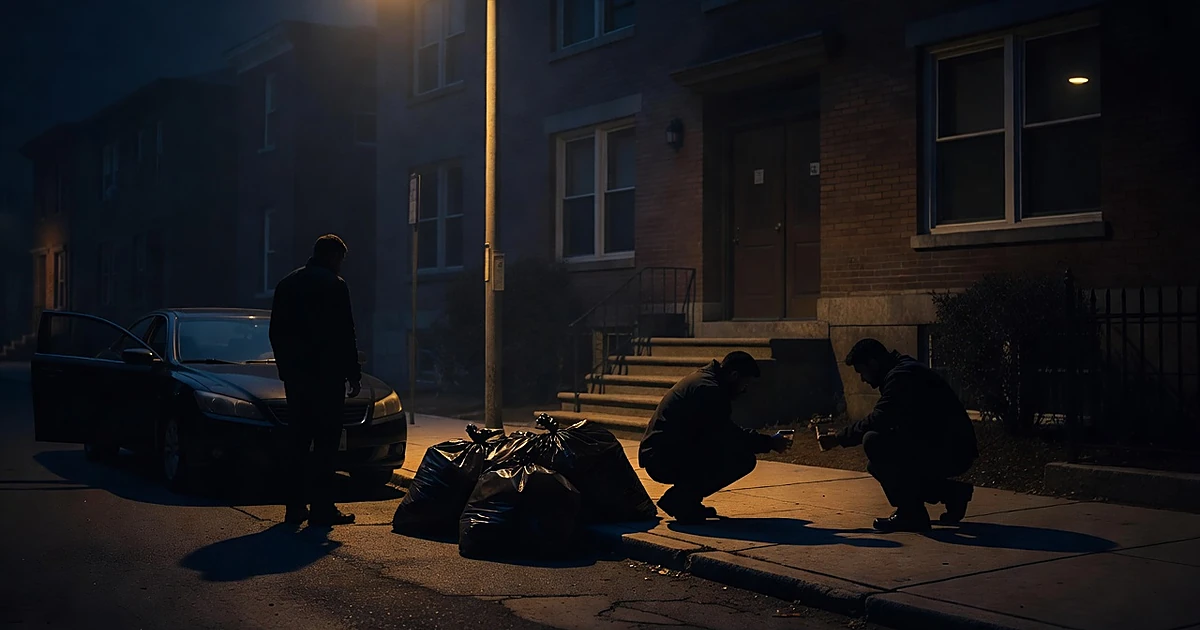





A 39-year-old Michigan man with a documented history of domestic violence killed five people across three locations in rural Missaukee County on Friday before he was found dead in the woods, leaving investigators with no one to charge and a community searching for answers.
Michigan State Police troopers responded to a home in Lake Township around 11:40 a.m. after a report that someone had been shot. When they arrived, they found three people dead inside and a fourth person in critical condition, the New York Post reported. The suspect, Chad Hickman, had already fled the property.
What followed was a large-scale manhunt across the rural county in northern Michigan. Police labeled Hickman an "armed and dangerous person of interest" and pushed alerts across the region. But Hickman never made it to a pair of handcuffs.
Two more victims turned up as the search widened. One was discovered in a wooded area near Whitlock Lake. A fifth was found dead inside a separate home. Just The News confirmed that six people died in total across the three scenes, five victims and Hickman himself, whose body was located in the same wooded area near Whitlock Lake where one of his victims lay. His vehicle was parked nearby.
Authorities have not said how Hickman died. The cause of death was described as "not immediately clear." The identities of the five victims have not been released, and investigators have not publicly stated Hickman's relationship to any of them.
Chad Hickman was no stranger to the local justice system. In 2010, the Missaukee County Sheriff's Department brought charges against him that resulted in a conviction for misdemeanor fourth-degree child abuse, a charge that under Michigan law covers reckless or negligent acts causing harm to a minor, and contributing to the delinquency of children. He served a year behind bars. His then-wife Katie Hickman initiated the complaint that led to those charges.
The marriage did not survive. Katie Hickman filed for divorce in September 2023, and the case went to trial in 2025. Judge Melissa Ransom, in a written opinion, noted that it was "uncontested" that the marriage included allegations of domestic violence attributed to both Hickman and his ex-wife. The judge wrote that the marriage had begun to "deteriorate significantly."
Katie Hickman's own account was blunter. She told the court her marriage to Chad "was characterized by control, coercion, and fear," as the Detroit News reported from court records.
None of this background answers the central question: what drove Hickman to three separate locations on a Friday morning and left five people dead. Police have not stated a motive. They have not named the victims. They have not described the weapon or weapons used.
Michigan State Police Lt. Ashley Miller acknowledged the weight of the day in a statement:
"This situation is heartbreaking for the community and challenging for the investigators involved. We remain committed to conducting a thorough investigation and will provide updates as new information becomes available."
Missaukee County sits in the northern Lower Peninsula, a largely rural area of lakes and timber where violent crime of this scale is rare. The three-scene shooting spree spread across enough geography to suggest planning rather than impulse, though investigators have offered no characterization either way.
The person found in critical condition at the first home was rushed to a hospital. Authorities have not provided an update on that individual's status, and it remains unclear whether a sixth victim may ultimately be added to the death toll.
Incidents like this one have become a grim pattern across the country. Just weeks earlier, a gunman wounded at least ten people in downtown Tucson before an officer stopped the attack. In each case, the same questions surface: what warning signs existed, and whether anyone with authority acted on them.
Hickman's criminal record and the detailed judicial findings from his divorce proceedings paint a picture of a man whose capacity for violence was documented in court filings years before Friday's rampage. A judge wrote about domestic violence. A sheriff's department secured a conviction for child abuse. The system processed him and moved on.
That pattern, where courts handle domestic violence offenders through misdemeanor convictions and short sentences, only to see escalation years later, is one that law enforcement officials and victims' advocates have flagged repeatedly. A mass shooting at a Seattle food festival and a house party shooting in Wichita have raised similar concerns about whether the justice system takes seriously enough the people most likely to turn lethal.
With Hickman dead, there will be no arrest, no trial, and no courtroom accounting for what happened in Missaukee County on Friday. The investigation continues, but the public may never receive the kind of definitive answers that a prosecution would force into the open.
What the public does know is limited: five people are dead, a sixth is fighting for life, and the man police believe responsible had a documented history of violence against his own family. His ex-wife described living under "control, coercion, and fear." A judge found those allegations uncontested. And a decade-old criminal conviction for child abuse resulted in just twelve months behind bars.
The victims' names remain withheld. The weapon remains unidentified. The motive remains unstated. For the families of five dead and a community that will carry this for years, the official record so far amounts to a handful of facts and a promise of "updates as new information becomes available."
When the system has someone's record in hand and still can't prevent the worst outcome, the question isn't whether the paperwork was filed correctly, it's whether anyone with authority treated the risk as real before it was too late.