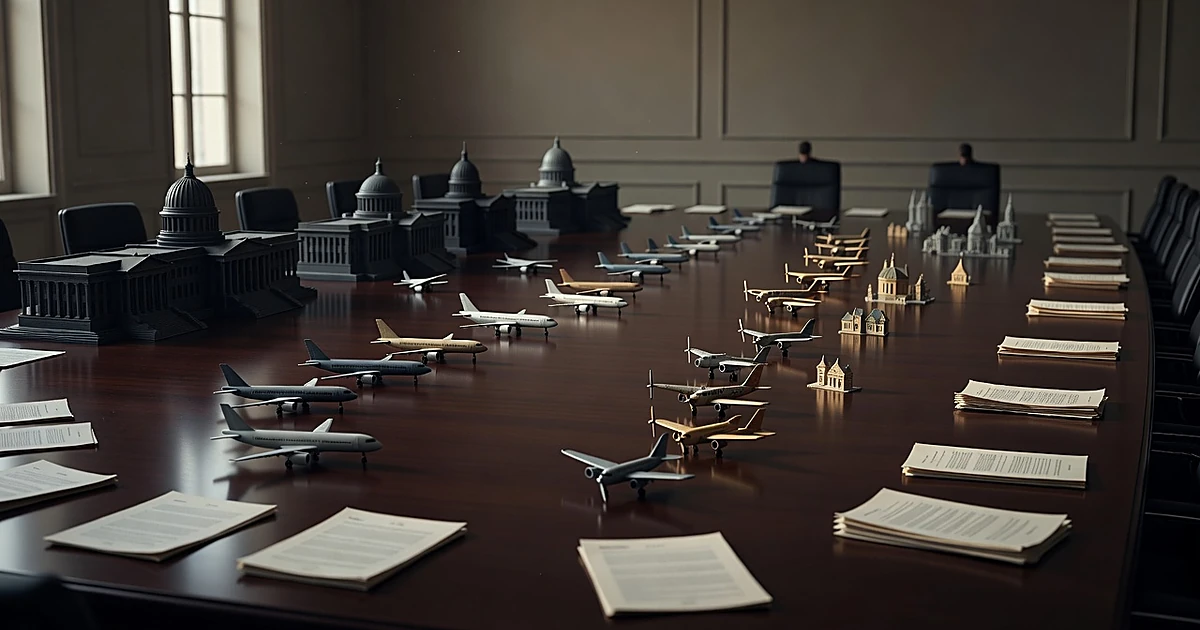


American B-2 Spirit stealth bombers are expected to touch down at U.K. military bases "in a matter of days," according to The Telegraph, citing unnamed senior Western officials. The $2 billion warplanes will join the U.S.-Israel campaign against Iran from staging points at Diego Garcia in the Indian Ocean and RAF Fairford in Gloucestershire.
The deployment follows a striking reversal by Prime Minister Keir Starmer, who had previously said he would not allow American forces to use U.K. bases for offensive operations in the region. He initially rebuffed a U.S. request to use British bases to attack Iran, according to The Associated Press. Then, on March 1, he signed off on the plan, clearing the U.S. to use those same bases for limited strikes on Iran's missile capabilities.
The question isn't whether Starmer made the right call. He did. The question is why it took public pressure from an American president to get Britain's prime minister to act like an ally.
The timeline matters, according to Fox News. On Feb. 28, the U.S. military launched Operation Epic Fury, using B-2 bombers armed with 2,000-pound bombs to strike "hardened" Iranian ballistic missile sites, as confirmed by U.S. Central Command. One day later, on March 1, Starmer finally authorized the use of British bases. On March 2, RAF Akrotiri in Cyprus was struck by a suspected drone reported to resemble an Iranian-made Shahed, causing minor damage to a base housing about 4,000 service members and their families.
That drone strike on a British base underscores what was already obvious: Iran does not care whether the U.K. participates willingly or reluctantly. It will target Western assets regardless. Starmer's initial hesitation did not buy goodwill in Tehran. It bought a drone attack on British soil.
The Ministry of Defense has since raised force-protection measures to the "highest level." The U.S. State Department elevated its travel advisory for Cyprus to Level 3 and authorized non-emergency embassy staff and family members to leave. Diego Garcia, the strategic Indian Ocean base hosting 2,500 U.S. military personnel, is now central to operations alongside RAF Fairford.
Starmer said the authorization was granted to protect U.K. and U.S. allies as the conflict escalated. U.K. Defense Secretary John Healey stated that Britain had "stepped up alongside the Americans." That framing deserves scrutiny.
You don't get credit for stepping up when you had to be dragged to the line. Starmer's government tried to have it both ways: maintain the veneer of restraint for a domestic audience skeptical of military entanglements while preserving the alliance that underwrites British security. The Associated Press reported that Britain was "uncooperative" before the reversal.
President Trump made his frustration public on March 3, when he blasted Starmer directly:
"This is not Winston Churchill we are dealing with."
The comparison stings because it's precise. Churchill understood that hesitation in the face of aggression is not caution. It is capitulation by installment. Starmer treated alliance obligations as something to be negotiated rather than honored.
Trump has also condemned Britain's agreement to hand over the Chagos Islands to Mauritius. That deal matters here because Diego Garcia sits in the Chagos archipelago. It is one of the two bases now preparing to receive B-2 bombers for strikes against Iran. The idea that Starmer's government would agree to surrender sovereignty over territory that hosts 2,500 American military personnel, during an active campaign in the region, tells you everything about the strategic incoherence at 10 Downing Street.
You cannot claim to be stepping up alongside your most important ally while simultaneously negotiating away the real estate that ally depends on for power projection. Those two positions cannot coexist. Starmer has tried to make them coexist anyway.
The B-2 Spirit is not a symbolic asset. It is the most capable strategic bomber on the planet, designed to penetrate the most advanced air defenses in the world, which is exactly why CENTCOM used it to hit hardened Iranian missile sites. Its deployment to British bases signals an escalation in tempo and a broadening of the operational footprint against Iran.
The drone strike on RAF Akrotiri also signals something. Iran and its proxies are willing to hit Western bases directly. That reality will test Starmer's resolve in ways that a single authorization letter cannot answer. Will he sustain the commitment when the political cost rises at home? Will Britain remain an active partner in this campaign, or will it quietly retreat to "limited" participation the moment Labour backbenchers start making noise?
For now, the bombers are on their way. Britain is in the fight. The pressure worked.
Whether Starmer stays in the fight without needing to be reminded who his allies are remains the open question.